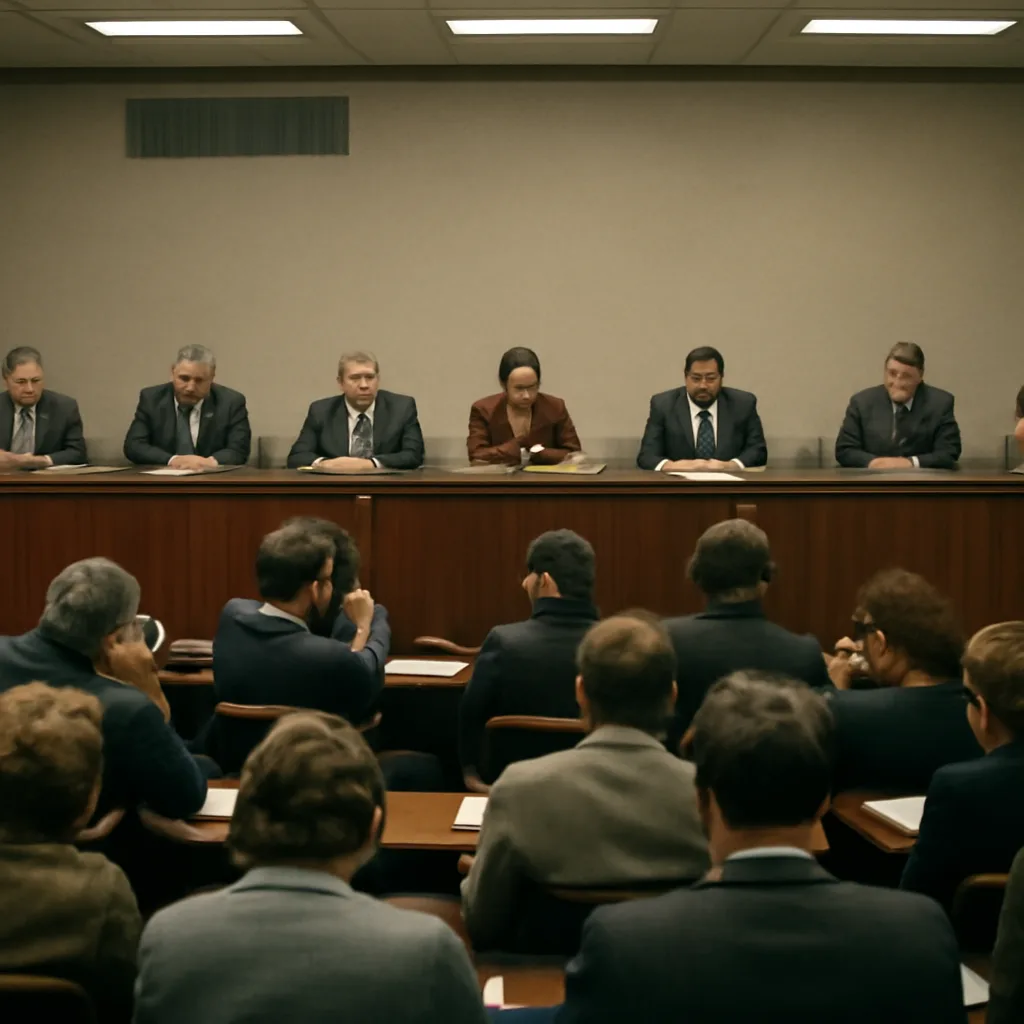
On February 26, 1971, the U.S. Senate’s judiciary subcommittee convened public hearings into the Pentagon Papers litigation, bringing previously secret U.S. government analyses of the Vietnam War into a courtroom and public forum amid a fierce debate over press freedom and national security.
On February 26, 1971, public hearings began related to the Pentagon Papers, the classified Department of Defense study officially titled "Report of the Office of the Secretary of Defense Vietnam Task Force." The hearings were part of legal and congressional proceedings that followed The New York Times and other newspapers’ publication of excerpts from the study beginning in June 1971. The documents had revealed internal government assessments and policy deliberations about the United States’ conduct in Vietnam from the 1940s through 1968, exposing instances where public statements by officials diverged from internal judgments.
The public phase of proceedings in early 1971 grew out of a complex interplay of legal battles and congressional interest. After newspapers began serializing the study, the Nixon administration sought court injunctions to halt further publication on grounds of national security. The initial legal contest culminated in the Supreme Court’s landmark decision in New York Times Co. v. United States (June 30, 1971), which ruled that prior restraint of the press was unjustified in that case. Congressional and subcommittee hearings, some of which were held publicly, aimed to examine both the content of the documents and the broader implications for executive secrecy, press freedom, and oversight.
The hearings brought together former officials, scholars, and attorneys who discussed the origins of the Pentagon Papers, the decision-making processes they documented, and the legal and ethical questions raised by their disclosure. While many speakers emphasized the importance of protecting classified information for operational and diplomatic reasons, others argued that the papers demonstrated serious governmental misjudgment and warranted public scrutiny. The hearings were attentive to balancing transparency with legitimate national-security concerns, and legislators sought to clarify how classified studies were prepared, circulated, and controlled within the executive branch.
Significance for press freedom and public trust was a central theme. The public airing of internal memos and analyses crystallized debates about the press’s role in holding government accountable and the limits of executive secrecy. For many members of the public and observers, the hearings affirmed the need for stronger congressional oversight of foreign policy and a reassessment of how secrecy was practiced in the Cold War era. For the executive branch, the proceedings highlighted vulnerabilities in information control and the political consequences of internal dissent and conflicting policy appraisals.
The Pentagon Papers episode had immediate and lasting effects. Legally, it reinforced high constitutional protection for publication of classified information absent clear, demonstrable harms that justify prior restraint. Politically, the revelations deepened public skepticism about the Vietnam War and accelerated congressional efforts to assert oversight over foreign-policy decisions. Institutional reforms and subsequent legislation sought to clarify classification procedures and strengthen congressional access to sensitive information, though debates over the proper balance between secrecy and transparency continued.
Historians view the public hearings and the wider Pentagon Papers controversy as a watershed moment in modern American governance: a collision of legal principle, political accountability, and public debate about wartime conduct. While the hearings did not resolve all tensions between national security and open government, they made the trade-offs vividly visible to the American public and shaped subsequent discussions about press freedom, executive power, and democratic oversight.
Note: Some details about the exact scheduling and composition of individual congressional sessions in 1971 vary among contemporaneous reports; this summary focuses on the broader public hearings and their context rather than reconstructing every specific testimony or closed-session proceeding.