
12/06/1962 • 6 views
Supreme Court Bars School-Sponsored Prayer in Landmark 1962 Decision
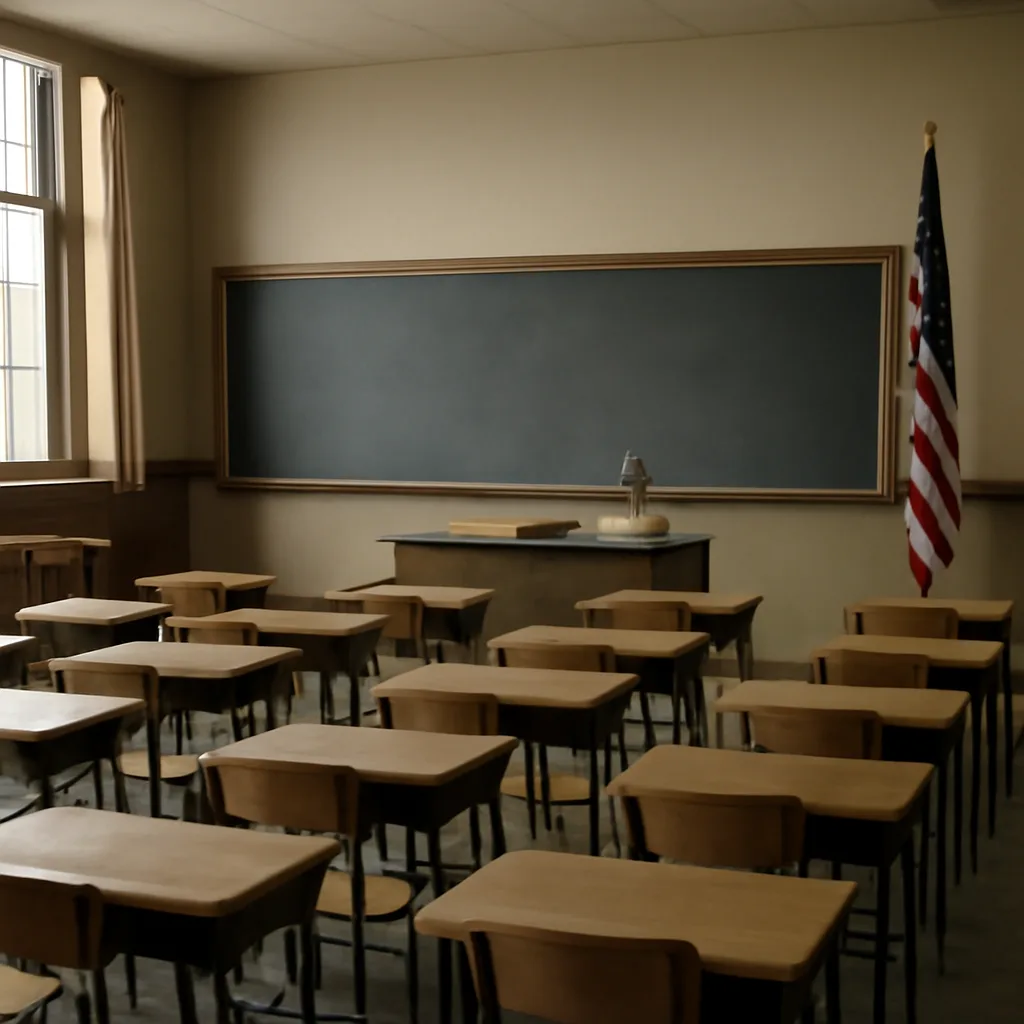
On December 6, 1962, the U.S. Supreme Court ruled that officially sanctioned prayer in public-school classrooms violated the Establishment Clause, marking a major moment in church–state jurisprudence.
Background
In the early 1960s, a short nondenominational prayer had been approved for use in New York public schools. The prayer, composed by the state Board of Regents, was intended to be voluntary and short; nevertheless, parents of several students challenged its constitutionality. The case reached the Supreme Court amid broader national debates about religion in public life during a period of social change.
The Decision
Writing for the majority, the Court concluded that government cannot constitutionally sponsor religious activities in public schools. The opinion emphasized that the Establishment Clause prohibits the state from composing official prayers and encouraging recitation in public-school settings. The Court rejected the argument that the prayer’s nonsectarian language or voluntary nature removed it from constitutional scrutiny, reasoning that governmental promotion or endorsement of prayer in schools inherently conflicted with the First Amendment’s command that government remain neutral in matters of religion.
Legal and Social Impact
Engel v. Vitale established a precedent that public schools could not organize or sponsor official prayers, and it became a foundational case in later Establishment Clause jurisprudence. The ruling prompted controversy: supporters of the decision viewed it as protection of religious liberty and pluralism by preventing government endorsement of religion, while critics argued it removed a public acknowledgment of religion from public life and infringed on community traditions.
The decision also influenced subsequent Supreme Court cases that further defined the limits of religious activity in public schools, including rulings on school-led Bible readings, prayer at school events, and policies for accommodating individual religious expression. Over time, the Court sought to balance prohibitions on government-sponsored religious activities with protections for private, voluntary religious expression by students.
Historical Context and Reception
The ruling came during a decade of expanding interpretations of constitutional protections for individual rights. The decision received both praise and criticism in the press, from religious organizations, and among lawmakers. Some states and school districts adjusted policies to remove organized, state-authored prayers while permitting private student-led religious expression in ways consistent with later Court guidance.
Limitations and Clarifications
Engel v. Vitale did not prohibit all mention of religion in public schools nor did it ban private, voluntary prayer by students. The ruling addressed direct government sponsorship and endorsement of prayer. Subsequent cases have clarified the boundary between impermissible government endorsement and permissible individual religious expression, a line that remains the subject of legal debate and periodic litigation.
Legacy
The December 6, 1962 ruling remains a landmark in American constitutional law. It is frequently cited in discussions about the Establishment Clause and the role of religion in public institutions. While interpretations and applications have evolved, Engel v. Vitale is widely recognized as a turning point that affirmed the principle that public schools, as government entities, may not compose or sponsor official prayers for students.