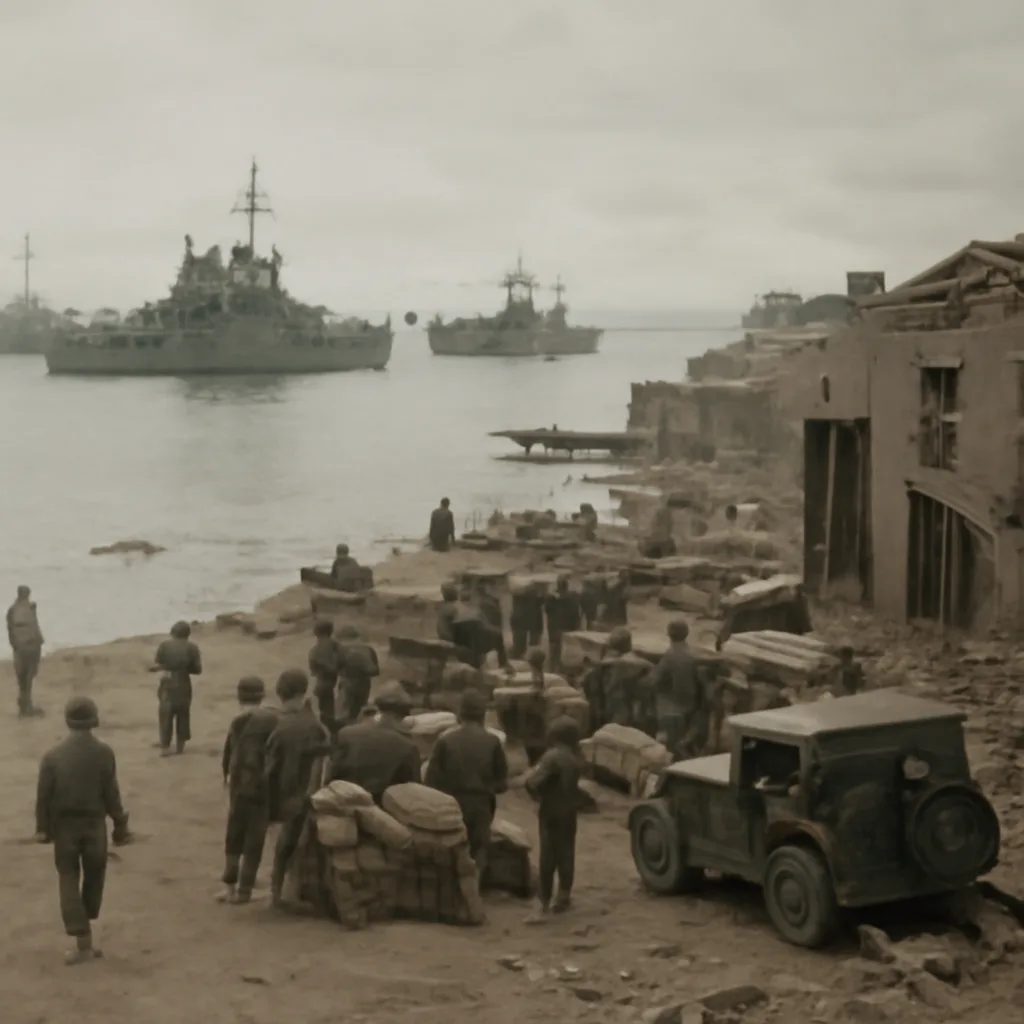
Japan Accepts Allied Terms, Ending World War II Hostilities
On August 14, 1945 (Japan time), Japan announced its acceptance of Allied terms, effectively bringing World War II to a close after years of conflict across the Pacific, Asia, and Europe.
Background and context
By mid-1945 the Third Reich had surrendered in Europe and Japan faced mounting military defeats, a sustained Allied blockade, strategic bombing that devastated many cities, and the invasion of Japanese-occupied territories. The Allies issued the Potsdam Declaration (July 26, 1945), calling for Japan’s unconditional surrender and outlining terms for occupation, demilitarization, and postwar governance.
Immediate events
Following the atomic bombings of Hiroshima (August 6) and Nagasaki (August 9), and the Soviet Union’s declaration of war on Japan (August 8) with subsequent invasion of Manchuria, the Japanese government was plunged into intense debate. On August 14, 1945 (August 15 in Japan by local calendar/time zone), Emperor Hirohito announced acceptance of the Potsdam terms through a recorded broadcast—an unprecedented public address by the sovereign—leading to the end of active hostilities between Japan and the Allied powers.
Terms and consequences
Japan’s acceptance led to Allied occupation under the authority of the Supreme Commander for the Allied Powers (SCAP), principally led by the United States. Key consequences included disarmament of Japan’s military, the arrest and prosecution of wartime leaders for crimes against peace and war crimes, major political and economic reforms, and the drafting of a new constitution that renounced war as a sovereign right. The occupation and reforms reshaped Japan’s political institutions, society, and economy over subsequent years.
Human and geopolitical impact
The surrender ended large-scale combat in the Pacific and allowed millions of prisoners of war and civilian internees to be liberated. Cities and infrastructure across East Asia and the Pacific required extensive reconstruction. The war’s close also accelerated decolonization in Asia, shifted global power balances—particularly strengthening the United States and the Soviet Union as superpowers—and set the stage for Cold War alignments in the region.
Historical notes and disputes
Historians note that Japan’s decision to accept surrender terms was driven by multiple factors—conventional military defeats, the Soviet entry into the war, and the atomic bombings—and scholars debate the relative weight of each. The use of atomic weapons and their role in prompting surrender remain subjects of substantial scholarly and ethical debate.
Legacy
The end of hostilities in August 1945 marked a major turning point in 20th-century history. It inaugurated a prolonged occupation and reconstruction that transformed Japan into a democratic, pacifist state aligned with Western powers. The events of this period continue to inform discussions of wartime responsibility, nuclear weapons policy, and regional memory.
Sources and verifiability
This summary is based on widely documented historical events and primary sources such as the Potsdam Declaration, wartime government records, and Emperor Hirohito’s surrender broadcast, as well as extensive secondary scholarship on the closing months of World War II in the Pacific.