
← Back
07/07/1848 • 4 views

Man Survives a Headshot and Returns to Civilian Life in 1848
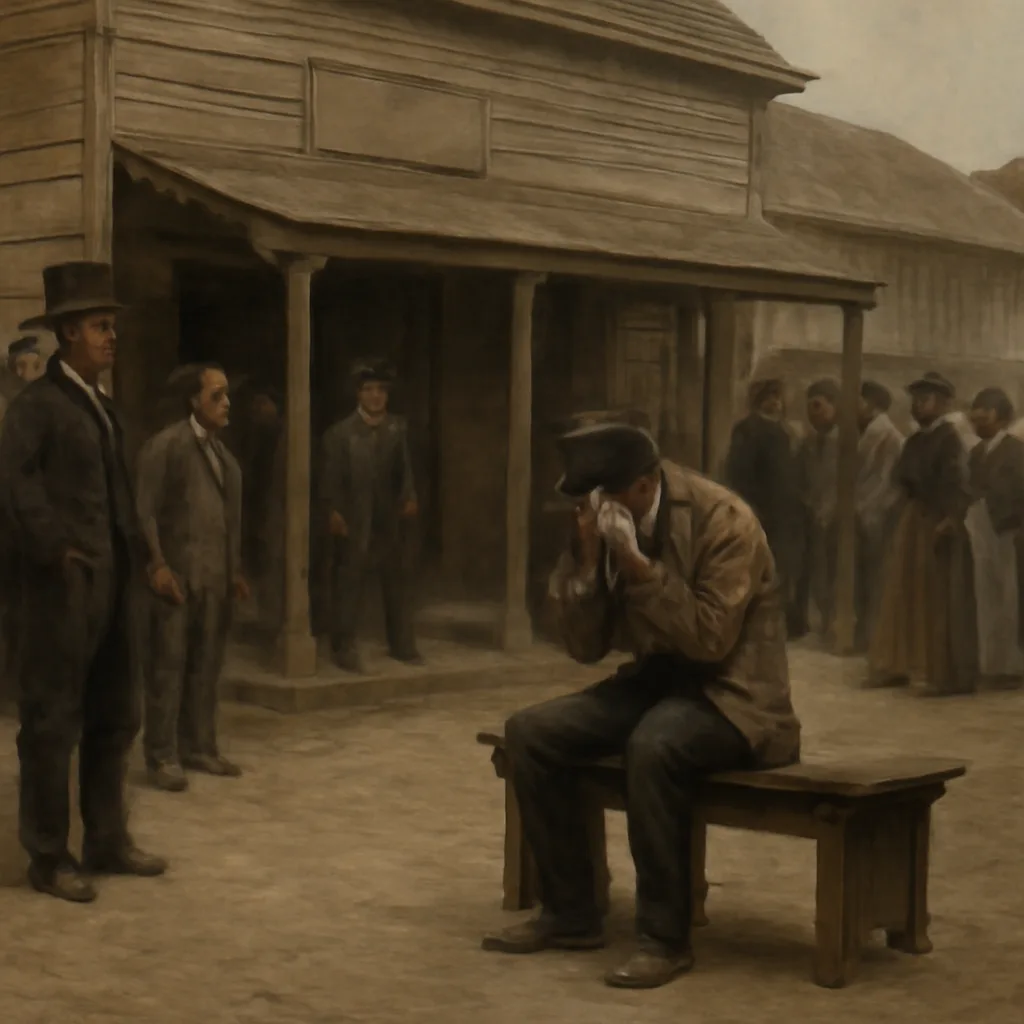
Mid-19th-century street scene with a small group gathered outside a wooden tavern; a man sits on a bench tending to his head while others look on, clothing and street details typical of 1840s America or Europe.

On July 7, 1848, a man reportedly survived a gunshot to the head and later resumed ordinary life. Contemporary accounts describe a remarkable recovery, though details and medical explanations remain limited and sometimes contradictory.


On July 7, 1848, newspapers and local accounts recorded an incident in which a man sustained a gunshot wound to the head yet survived and subsequently resumed his normal activities. Reports from the period vary in specifics—location, the man’s name, and precise medical treatment are not consistently recorded—but the episode attracted attention because it ran counter to prevailing expectations about cranial gunshot wounds in the mid-19th century.

Contemporary medical knowledge and battlefield experience in 1848 were limited compared with later decades. Civil and military surgeons understood that penetrating head injuries often proved fatal due to brain damage, infection, or secondary complications such as bleeding and abscess formation. Nevertheless, survivals were documented, particularly in cases where the projectile’s trajectory missed vital structures, lodged in noncritical areas, or where only scalp and skull were damaged superficially.

Accounts of the July 7 case emphasize the apparent improbability of survival. Some reports describe a bullet that entered the skull without producing immediate incapacitation; others suggest a grazing wound or a shot that struck the cranium but did not penetrate deeply. Period observers sometimes attributed recoveries to the man’s constitution, immediate care by nearby surgeons, or sheer luck. Because medical recordkeeping and journalistic standards varied widely in 1848, later historians must treat such accounts cautiously.

Treatment options at the time included wound cleaning, removal of bone fragments if accessible, and attempts to manage infection with whatever antiseptic understanding was available—well before germ theory and systematic antisepsis were widely accepted. Pain control relied on opiates like laudanum when available. If the patient survived the initial injury and avoided severe infection, gradual recovery with residual neurological deficits was possible.

Social reactions to such survivals were mixed. Surviving a head wound could grant the individual local notoriety and provoke curiosity, but it could also leave lasting physical and psychological effects that limited full return to preinjury life. Period sources sometimes focused on the sensational aspects—marveling at the man’s luck—while providing little follow-up about his long-term condition.

Because primary documentation for this specific July 7, 1848 incident is fragmentary and inconsistent, historians refrain from asserting precise medical details or definitive identity when sources conflict or are absent. The event stands as one of several mid-19th-century cases that illustrate both the limitations of medical knowledge at the time and the genuine, if sporadic, instances in which people survived severe cranial trauma.

In sum, the July 7, 1848 report of a man shot in the head who later returned to ordinary life is consistent with a small set of documented survivals from the era. The precise circumstances—wound trajectory, treatment provided, and long-term outcome—remain uncertain in surviving accounts, so the episode is best understood as a remarkable but not fully documented instance of 19th-century survival against expectations.

Share this

Email Share on X Facebook Reddit

Did this surprise you?