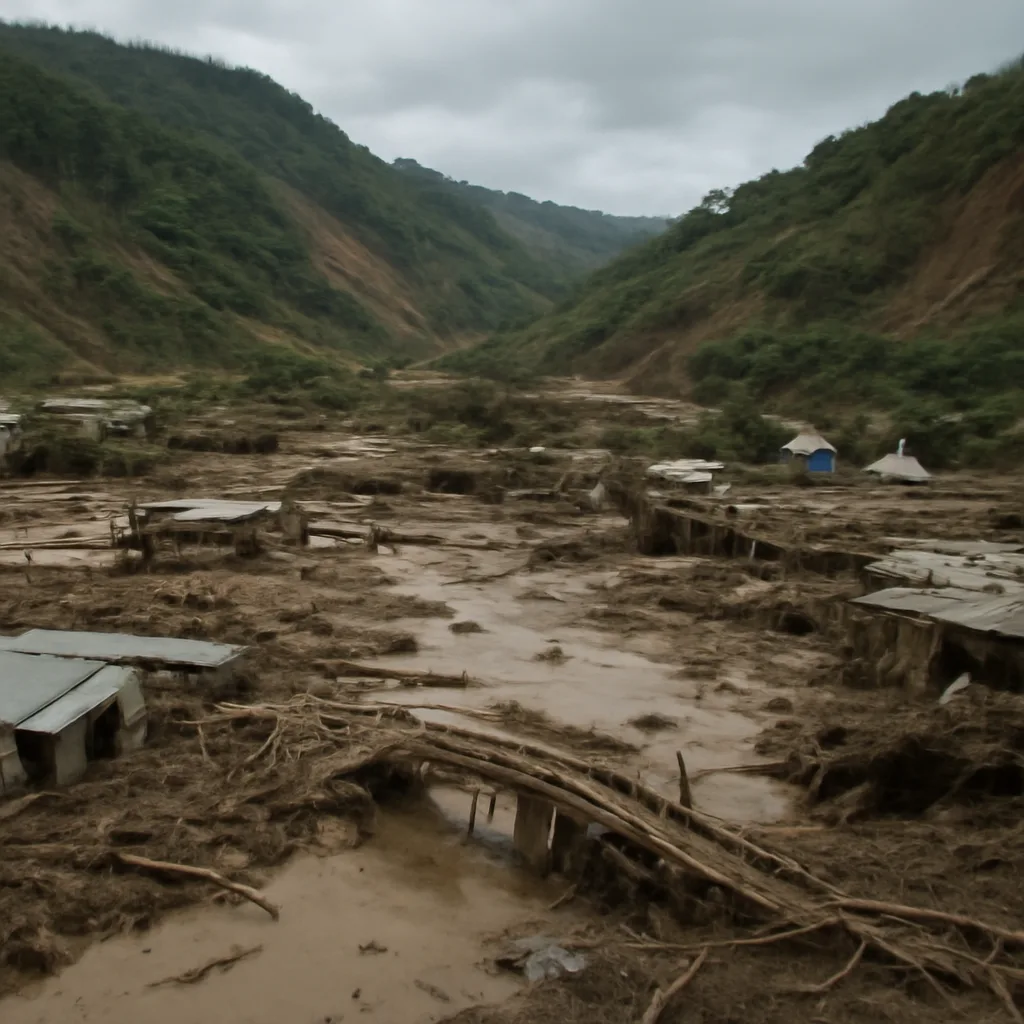
Hurricane Mitch: Deadly October Storm Levels Central American Communities
In late October 1998 Hurricane Mitch stalled over Central America, producing catastrophic rain, massive flooding and landslides that killed tens of thousands, displaced millions and caused widespread destruction across Honduras, Nicaragua and neighboring countries.
In late October 1998 Hurricane Mitch became one of the deadliest Atlantic hurricanes on record after it slowed and hovered near Central America, producing extreme rainfall that triggered catastrophic flooding and landslides. The storm’s core impacts were concentrated in Honduras and Nicaragua, but El Salvador, Guatemala, Panama and Belize also suffered serious damage. Official death tolls and estimates varied by country and source; combined fatalities are generally reported in the tens of thousands, with many more injured and missing, and roughly 2 million people affected or displaced.
Formation and track
Mitch formed as a tropical depression in mid-October 1998 in the western Caribbean. It quickly intensified into a major hurricane, reaching Category 5 strength over the northwestern Caribbean Sea. After peaking in intensity, the system turned southwest and weakened, but its slow movement and large circulation caused prolonged heavy rains over Central America from late October into early November. Rather than the violent sustained winds that cause coastal storm-surge damage, Mitch’s most devastating effects came from extraordinary rainfall inland.
Rainfall, flooding and landslides
Mitch produced some of the highest rainfall totals ever recorded in the region. Mountains and deforested slopes funneled runoff into river basins, causing rivers to overtop banks and obliterate low-lying towns and farmland. Enormous landslides buried whole villages in steep areas. Infrastructure—roads, bridges, hospitals and schools—was widely destroyed, isolating communities and hampering rescue and relief efforts. Agricultural losses were severe, destroying staple crops and livestock and damaging rural economies that were already fragile.
Human toll and displacement
Estimates of fatalities vary by source and were revised over time as recovery proceeded. Honduras and Nicaragua reported the largest losses. In Honduras, thousands died and tens of thousands were left homeless; whole towns were washed away or rendered uninhabitable. Nicaragua suffered extensive flooding, particularly around Lake Nicaragua and along major river valleys, with substantial loss of life and property. In total, government and international assessments put the number of people affected—those injured, displaced, or experiencing loss of housing or livelihood—at around 1.5–2 million across the region.
Response and recovery
International humanitarian organizations, foreign governments and local authorities launched large-scale emergency responses. Search-and-rescue teams, food, water and medical aid were provided, but access difficulties and damaged infrastructure complicated relief operations. The long-term recovery required rebuilding homes, roads and public services and restoring agriculture. Reconstruction and recovery efforts took years and prompted renewed attention to disaster preparedness, early warning systems and land-use practices in a region vulnerable to tropical cyclones and steep terrain.
Longer-term impacts and lessons
Mitch prompted policy debates about deforestation, watershed management and settlement in flood-prone and steep hillside areas. The disaster highlighted the vulnerability of impoverished and rural communities to intense rainfall and runoff, and spurred investments—albeit uneven—in meteorological capacity, early warning and community-level preparedness. Economically, the storm inflicted heavy losses on national economies already constrained by poverty and limited infrastructure, setting back development indicators in the hardest-hit areas.
Uncertainties and historical record
Fatality and damage figures from large-scale disasters like Mitch are often revised as more information becomes available, and different agencies used varying methodologies for casualty and economic-loss estimates. Some counts include missing persons presumed dead while others report only confirmed deaths; reported economic losses differ depending on whether agricultural, infrastructure and long-term development impacts are fully included.
Mitch remains an important reference point for disaster risk reduction in Central America: its large-scale human and economic costs influenced regional approaches to early warning, environmental management and international disaster response in the years that followed.