
← Back
10/29/1986 • 4 views

NASA confirms loss of Challenger crew after 1986 flight failure
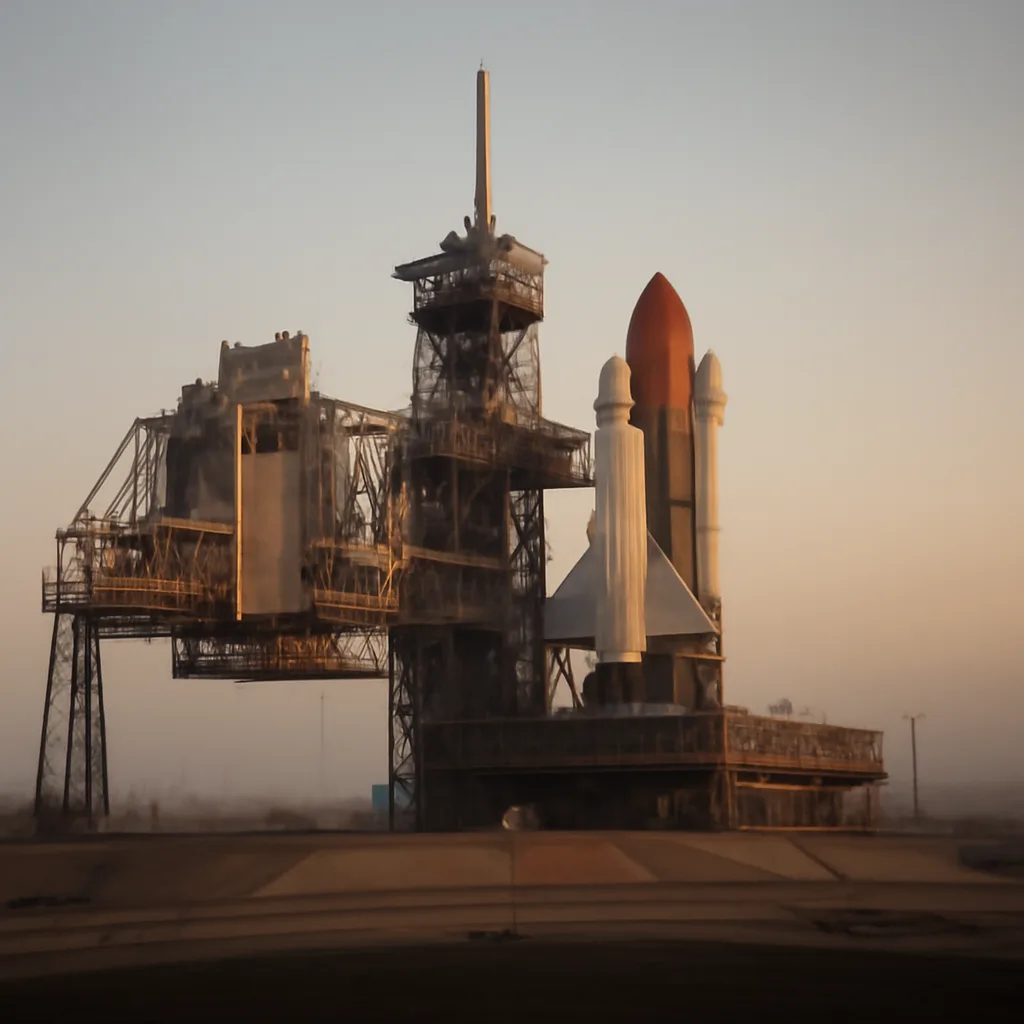
The space shuttle Challenger on the launch pad at Kennedy Space Center before liftoff, with smoke from launch preparations and ground support structures visible.

On Oct. 29, 1986, NASA announced that the seven-member crew of the space shuttle Challenger had been lost following the vehicle's in-flight breakup earlier that year; the announcement formalized findings from investigations into the accident.


On January 28, 1986, the NASA space shuttle Challenger (mission STS-51-L) broke apart 73 seconds after liftoff from Kennedy Space Center, killing all seven crew members aboard. In the months that followed, investigators from the Presidential Commission and the National Aeronautics and Space Administration examined the technical and organizational causes of the accident. On October 29, 1986, NASA publicly acknowledged the loss of the Challenger crew, reflecting the commission's findings and the agency's acceptance of responsibility for failures that contributed to the disaster.

The Rogers Commission—formally the Presidential Commission on the Space Shuttle Challenger Accident—was established by President Ronald Reagan within days of the accident. Its investigation identified a primary technical cause: the failure of an O-ring seal in a solid rocket booster joint, which allowed hot gases to escape and led to structural failure of the external tank and the orbiter. The commission's report also highlighted management and communication shortcomings within NASA and contractor Morton Thiokol, including decisions to launch despite engineers' concerns about O-ring performance in low temperatures at the launch site that morning.

Following the commission's report, NASA implemented a series of technical and organizational reforms. These included redesigning solid rocket motor joints, improving quality-control procedures, enhancing engineering voice within management, and establishing clearer launch decision protocols. Shuttle flights were suspended for nearly three years while modifications and safety reviews were completed; the next shuttle mission, STS-26, flew in September 1988.

The October 29, 1986 announcement served to formalize the agency's acknowledgement of the human cost of the accident as well as its institutional responsibility. The seven crewmembers—Francis R. Scobee (commander), Michael J. Smith (pilot), Ronald McNair (mission specialist), Ellison Onizuka (mission specialist), Judith Resnik (mission specialist), Gregory Jarvis (payload specialist), and Christa McAuliffe (payload specialist and the first teacher selected for spaceflight)—were memorialized across the nation. Investigations, congressional hearings, and subsequent reforms shaped NASA's culture and policies for decades, reinforcing the emphasis on safety and engineering rigor in human spaceflight.

While technical fixes addressed many immediate causes, the Challenger accident is also remembered for prompting broader debates about organizational behavior, risk communication, and the pressures of schedule and politics on engineering decisions. The commission's report and later analyses remain widely cited in studies of engineering ethics and safety management.

The loss of Challenger's crew had lasting effects on public perception of the space program, NASA's internal practices, and U.S. space policy. Memorials and educational programs have honored the crew's legacy, and the lessons from the disaster continue to inform training, design reviews, and decision-making processes in human spaceflight.

This summary reflects established findings from the Rogers Commission and subsequent NASA reports. Some discussions about the relative weight of specific management failures or individual decisions remain subjects of historical and technical analysis, but the core facts of the accident, its causes as identified by the commission, and the agency's formal acknowledgment of the crew's loss are well documented.

Share this

Email Share on X Facebook Reddit

Did this surprise you?