
← Back
10/29/1929 • 4 views

Wall Street plunges on Black Tuesday, signaling deepening market collapse
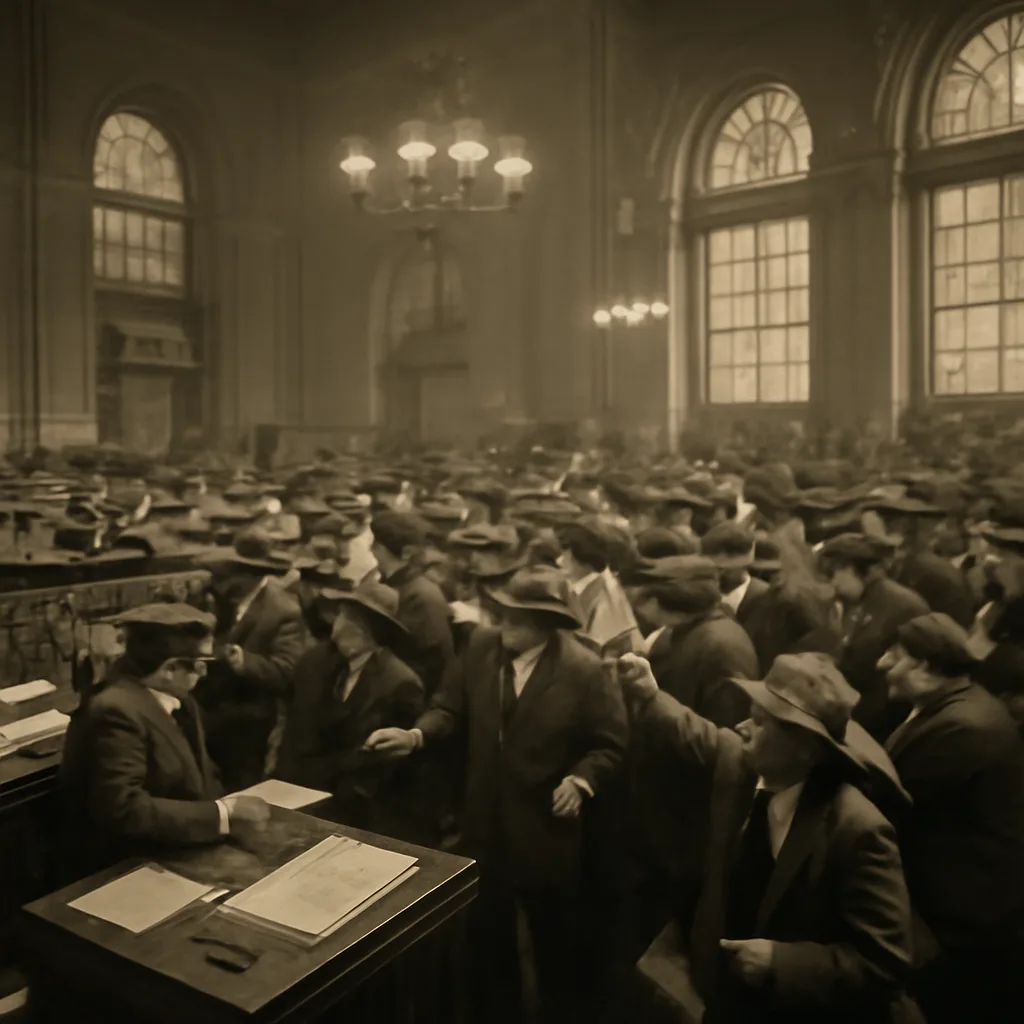
Crowds and brokers on the trading floor of the New York Stock Exchange in late 1920s attire amid a frantic trading session

On October 29, 1929—widely known as Black Tuesday—the New York Stock Exchange suffered a massive sell-off that accelerated the end of the 1920s bull market and helped trigger the global economic downturn that became the Great Depression.


On Tuesday, October 29, 1929—commonly referred to as Black Tuesday—stock prices on the New York Stock Exchange collapsed in one of the most dramatic single-day declines in U.S. financial history. The rout followed weeks of mounting speculation and volatility after the market’s earlier large declines in late October, and it marked a turning point in public confidence in the speculative boom that had characterized much of the 1920s.

Background
During the 1920s, rising stock prices, expanding margin buying, and widespread public interest in securities helped push market valuations to unprecedented levels. Many investors purchased shares on credit (margin), which amplified both gains and losses. Signs of overvaluation, coupled with uneven economic indicators in late 1929, made the market vulnerable.

The crash
In the days preceding October 29, panic selling intensified. On what became known as Black Tuesday, trading volumes surged; brokers and banks scrambled to meet margin calls as prices fell steeply across broad sectors. Historical accounts record that prices dropped sharply, wiping out substantial paper wealth. The scale and speed of the decline overwhelmed normal market mechanisms and precipitated widespread financial strain.

Consequences
The immediate aftermath included severe losses for investors, failures among brokerage firms that had extended large margin credit, and tighter credit conditions as banks sought to shore up reserves. While the crash did not by itself cause the Great Depression, it helped undermine confidence, contributed to reductions in consumer spending and investment, and exacerbated existing weaknesses in the U.S. and global economies. The economic contraction that followed involved rising unemployment, falling industrial output, bank failures, and prolonged hardship through the 1930s.

Historical interpretation
Scholars and contemporaries debate the relative weight of causes behind the ensuing Depression. The October 1929 collapse is widely seen as a critical catalyst that exposed structural vulnerabilities—overleverage, inadequate regulation, and fragile banking practices—but economists note that subsequent policy responses, international monetary conditions, and economic imbalances also played major roles. Retrospective analysis has informed later financial regulation and reforms aimed at reducing systemic risk.

Legacy
Black Tuesday remains a defining moment in American economic history. It entered public memory as a symbol of speculative excess and the dangers of unchecked credit expansion. The crash prompted political and regulatory changes in the following decade, including reforms to banking oversight and securities regulation, designed to stabilize financial markets and protect investors.

Notes on dates
Although “Black Tuesday” refers specifically to October 29, 1929, significant market declines occurred earlier that month (notably on October 24 and October 28). The event is therefore part of a broader series of market collapses in late October 1929.

Share this

Email Share on X Facebook Reddit

Did this surprise you?