
10/29/1929 • 4 views
Black Tuesday: The 1929 Stock Market Crash that Helped Trigger the Great Depression
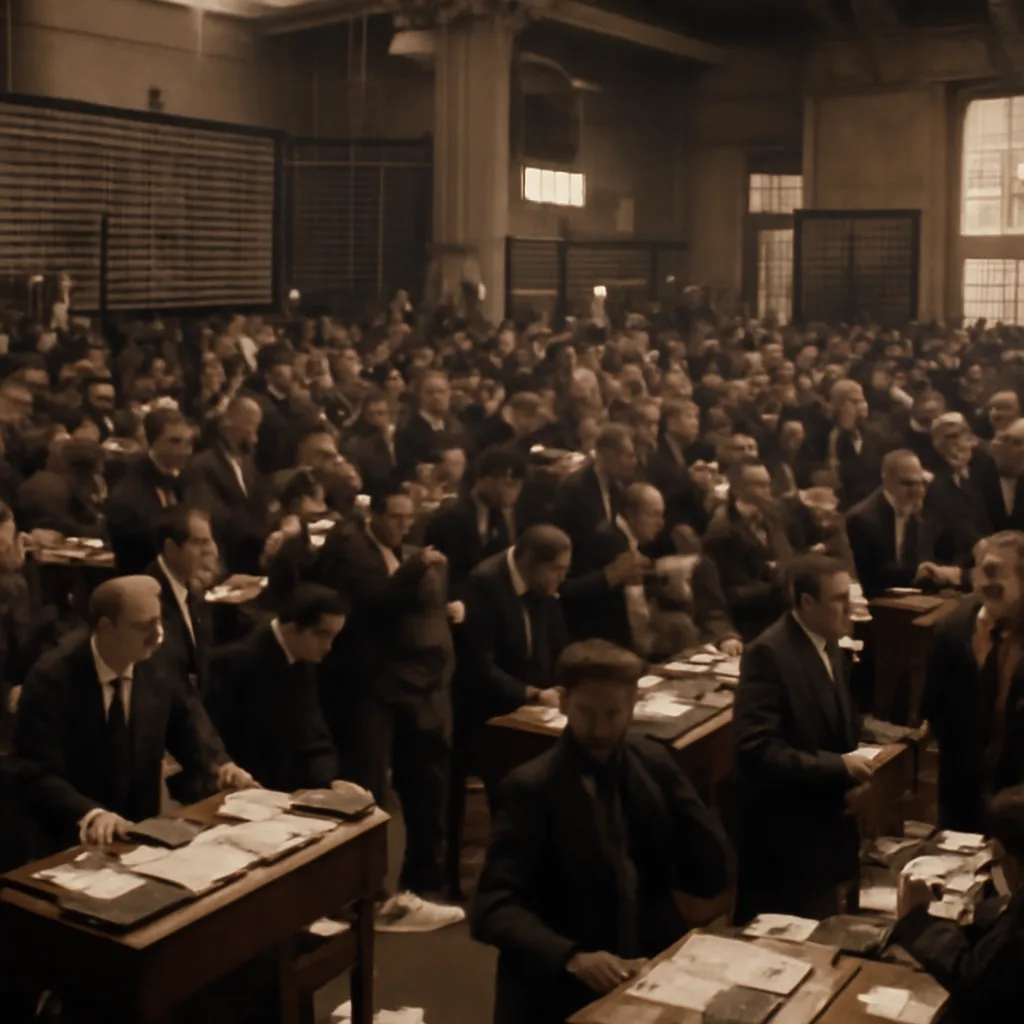
On October 29, 1929—known as Black Tuesday—U.S. stock prices plunged in a single day of frantic selling, marking a crucial turning point that accelerated an already weakening economy and contributed to the global Great Depression.
Causes and context
The crash did not arise from a single cause but from a combination of structural, economic and psychological factors. During the 1920s, stock ownership expanded rapidly, often financed by margin loans that allowed investors to borrow a large portion of the purchase price. This leverage magnified gains during the bull market and losses when prices turned. Corporate earnings growth slowed by the late 1920s, and signs of overproduction and uneven prosperity in agriculture and some industries created underlying economic vulnerabilities. Monetary policy, international debt and repayment issues following World War I, and limited regulatory oversight of securities markets also contributed to a fragile environment.
The course of the crash
The crash unfolded over several days. Beginning with heavy selling and recovery attempts on Black Thursday (October 24), the market dipped again on Black Monday (October 28) and then collapsed on Black Tuesday when panic selling accelerated. Trading volumes on the NYSE reached unprecedented highs as brokers and speculators attempted to liquidate positions. The turmoil spread beyond Wall Street: brokerage firms failed, banks faced runs in some areas, and businesses and consumers saw wealth and confidence decline.
Immediate and short-term effects
Although the stock market did not cause every aspect of the economic downturn that followed, the crash destroyed substantial household and business wealth, undermined confidence, and tightened credit conditions. Some banks had lent heavily to stock speculators or invested depositors’ funds in the market; when asset values fell, bank balance sheets weakened. Business investment and consumer spending contracted as uncertainty rose. The initial aftermath included reductions in industrial production and employment, and by the early 1930s the U.S. and many other countries experienced deep and prolonged economic contraction.
Longer-term consequences and debate
Historians and economists continue to debate the extent to which the 1929 crash alone caused the Great Depression versus serving as a catalyzing event amid broader weaknesses. The crash was a visible symbol of financial fragility and contributed to a cascade of events—bank failures, deflationary pressures, trade contractions after protectionist policies, and declines in global demand—that together produced the Depression. It also prompted later reforms: in the 1930s the U.S. federal government enacted banking reforms, securities regulation (including the Securities Act of 1933 and the Securities Exchange Act of 1934), and the creation of the Glass–Steagall separation between commercial and investment banking (partly reversed later).
Memory and legacy
Black Tuesday remains a focal point in public memory for the onset of the Great Depression. While modern scholarship emphasizes a more complex set of causes spread over time, the dramatic market collapse of late October 1929 stands as a cautionary episode about leverage, speculative bubbles, and the interplay between financial markets and the broader economy.
Notes on sources and certainty
Descriptions above draw on widely documented market timelines and mainstream economic histories. Specific figures for daily percentage losses and dollar amounts can vary between contemporary reports and later reconstructions; where precise numbers are required, consult primary sources such as contemporaneous NYSE records or published historical databases.