
← Back
06/25/1962 • 4 views

Supreme Court Rules School Prayer Unconstitutional
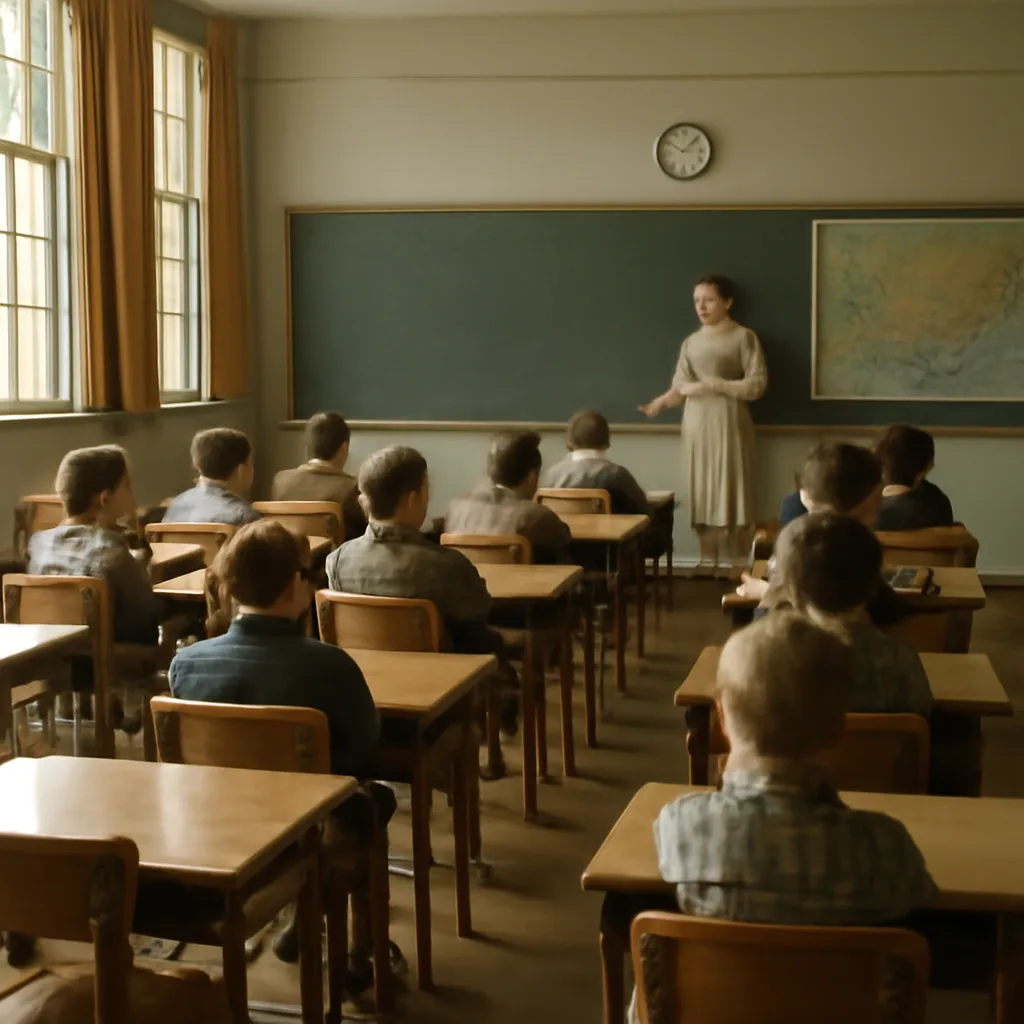
Children seated at desks in a 1960s-era public school classroom, teacher at front near a chalkboard, scene of an era-appropriate classroom without visible religious symbols.

On June 25, 1962, the U.S. Supreme Court ruled that school-sponsored prayer in public schools violated the Constitution’s Establishment Clause, removing organized prayer from official classroom activities.


On June 25, 1962, the United States Supreme Court issued a landmark decision that banned school-sponsored prayer in public schools as a violation of the First Amendment’s Establishment Clause. The case arose from a challenge to a New York public school practice that required students to recite a nondenominational prayer at the start of the school day. The Court’s ruling concluded that the state-sponsored recitation of prayer in public schools amounted to government endorsement of religion and therefore was unconstitutional.

Background: In the post–World War II period, public schools across the United States commonly included organized prayer and other religious observances as part of the school day. The practice prompted legal challenges arguing that compulsory or state-sponsored religious exercises infringed on religious liberty and amounted to governmental establishment of religion. The specific case decided on June 25, 1962, reached the Supreme Court after lower courts differed on whether the practice violated the Constitution.

The Decision: The Supreme Court held that school-sponsored prayer could not be reconciled with the Establishment Clause of the First Amendment. The ruling emphasized the principle that government must remain neutral with respect to religion and may not coerce participation in religious observance. While the decision did not prohibit private, voluntary prayer by students on school grounds, it barred official, organized prayer programs initiated or led by public school authorities.

Legal Reasoning and Impact: The Court’s reasoning rested on the text and history of the Establishment Clause and on precedent establishing that government action must not advance or inhibit religion. By distinguishing between private religious expression and state-sponsored practices, the decision protected students’ rights not to participate in religious exercises endorsed by public institutions. The ruling reshaped practices in public schools nationwide: sanctioned classroom prayers and officially led devotional activities were phased out, school districts revised policies, and guidance was issued on how to accommodate individual religious expression without government endorsement.

Aftermath and Continuing Debate: The 1962 decision marked a turning point in church–state jurisprudence, sparking political and public debate that continues in various forms. Opponents argued the ruling removed a traditional moral framework from schools, while supporters viewed it as essential to protecting religious freedom and pluralism in a diverse society. Subsequent Supreme Court cases have refined the boundaries between permissible private religious activity by students and impermissible school endorsement, producing a complex body of law that addresses prayer, religious clubs, and accommodation of religious practices in public education.

Historical Significance: The Court’s decision of June 25, 1962, is widely regarded as a foundational moment in modern Establishment Clause law concerning public education. It clarified that public schools, as government entities, cannot sponsor religious exercises, and it affirmed the constitutional principle of government neutrality toward religion. The ruling contributed to broader legal developments that define how government institutions may interact with religious expression while safeguarding individual freedoms.

Share this

Email Share on X Facebook Reddit

Did this surprise you?