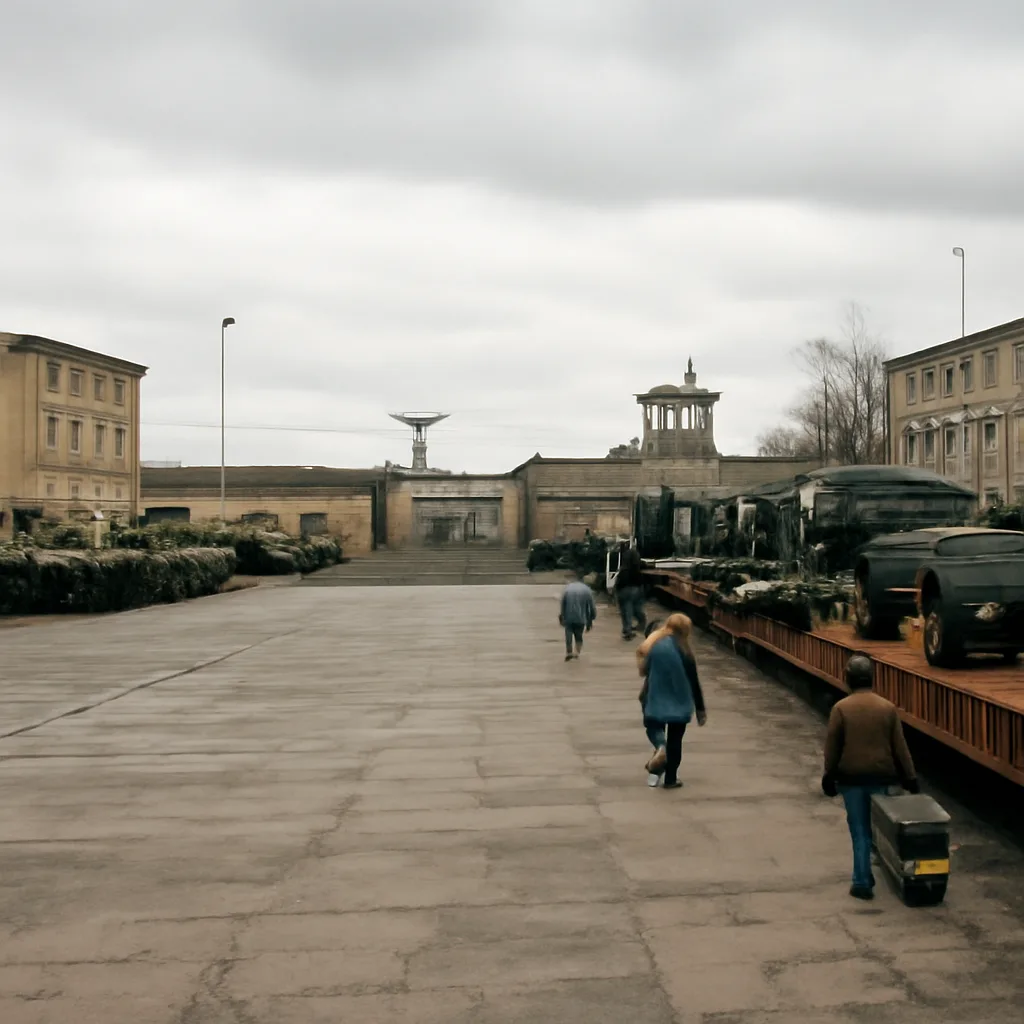
Russia Completes Withdrawal of Troops from Former East Germany
On June 25, 1994, Russia formally ended its military presence in the territory of the former German Democratic Republic, concluding a withdrawal that began after German reunification and the Soviet Union’s collapse.
On June 25, 1994, the Russian Federation officially completed the withdrawal of its troops from the territory of the former German Democratic Republic (East Germany), marking the end of nearly half a century of Soviet/Russian military presence in that part of Central Europe. The withdrawal followed agreements made after German reunification in 1990 and the dissolution of the Soviet Union in 1991, and it closed a major chapter in the Cold War legacy in Europe.
Background
After World War II, the Soviet Union established a substantial military presence in East Germany as the Group of Soviet Forces in Germany (GSFG), later renamed the Western Group of Forces (WGF). These forces were a central element of the Warsaw Pact’s forward posture during the Cold War. German reunification in October 1990 required new arrangements for foreign troops on German soil; treaties and negotiations among the two German states, the Four Powers (United States, United Kingdom, France, Soviet Union), and later the emerging Russian Federation addressed the timetable and legal framework for withdrawal.
Negotiations and Implementation
The Two Plus Four Treaty (Treaty on the Final Settlement with Respect to Germany), signed in September 1990, affirmed that unified Germany would have full sovereignty while also requiring that foreign troops and nuclear weapons be withdrawn in accordance with agreed timelines. After the Soviet Union dissolved in 1991, the Russian Federation assumed responsibility for the former Soviet forces and their withdrawal.
Logistical, financial and political challenges complicated the process. Russia and Germany negotiated details including the schedule for pulling out units, handling equipment, and issues related to environmental contamination at former bases. Troop reductions and the movement of heavy equipment required extensive coordination, rail and road transport, and base closures.
The Final Departure
The June 25, 1994, date is the commonly cited moment when the last Russian units left the former East German territory. With that departure the Western Group of Forces ceased to exist as an on-the-ground military formation in Germany. Personnel, dependent civilians, and materiel were repatriated to Russia or relocated. The withdrawal was accompanied by handover of numerous military installations to German authorities, some of which were later repurposed for civilian uses or NATO activities.
Significance
The completion of the withdrawal carried both symbolic and practical significance. Symbolically, it represented the visible end of an era of occupation and the normalization of Germany’s full sovereignty within the European security architecture. Practically, it removed a major forward-deployed formation from Central Europe and raised questions in Russia about the costs and consequences of rapidly contracting its military footprint amid domestic political and economic turmoil.
Legacy and Aftermath
Some issues remained contested or unresolved in subsequent years, including environmental cleanup at former bases and the fate of returned equipment. The withdrawal did not end all military ties between Russia and Germany, but it did alter the balance of forces and the nature of security cooperation in Europe. In later decades, evolving NATO-Russia relations and political developments would again change the security dynamics on the continent, but the 1994 withdrawal remains a defining post–Cold War milestone.
Sources and verification
This summary is based on widely documented historical events surrounding German reunification, the Two Plus Four Treaty, and the post–Cold War repositioning of Soviet/Russian forces in Europe. Where precise administrative or unit-level details vary among accounts, this account focuses on the broadly agreed historical facts: the negotiated withdrawal process and the commonly accepted 1994 completion of Russian troop departure from former East German territory.