
02/02/1967 • 4 views
First Known Human Cryonics Preservation: 2 February 1967
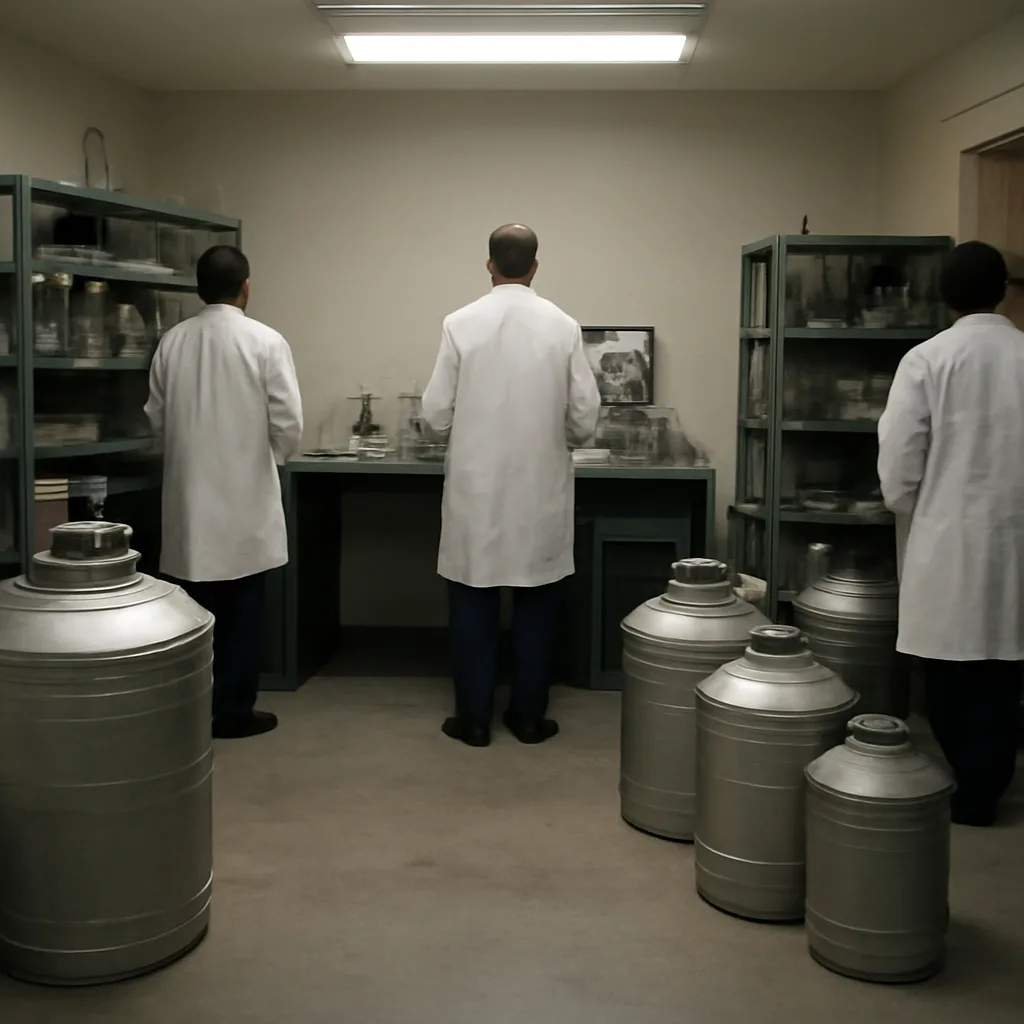
On 2 February 1967 a legally deceased man named James Bedford was placed in long-term low-temperature storage by researchers in an early cryonics effort—widely regarded as the first known human cryopreservation attempt. The case launched public and ethical debates that continue today.
Background: Cryonics arose from speculative but increasingly public discussions of suspended animation, preservation science, and longevity. In the early 1960s, a handful of physicians, engineers, and writers argued that rapid cooling and the use of cryoprotective agents might prevent structural damage during long-term storage. These ideas intersected with growing interest in life extension, and by the mid-1960s a small subculture of advocates had formed who were willing to fund or undergo preservation after legal death.
The Bedford case: James Bedford died on 12 January 1967 (some sources record his death date in January), and his body was subsequently prepared for low-temperature storage. On 2 February 1967 he was placed in a facility where his body was cooled and ultimately stored at dry ice temperatures and later transferred to liquid nitrogen storage. The procedure did not follow today’s more advanced vitrification protocols; it relied on early methods of cooling and partial use of cryoprotectants available at the time. Bedford’s case was coordinated by a small group of individuals involved in cryonics advocacy and research rather than by an established medical institution.
Immediate aftermath and significance: Bedford’s preservation attracted media attention and stimulated debate among scientists, ethicists, and the public about the plausibility and morality of cryonics. Skeptics pointed to the lack of demonstrated techniques for revival and to the cellular damage caused by ice formation during freezing. Supporters argued that the attempt represented a logical extension of emergency medicine and that early preservation—even if imperfect—might preserve anatomical information needed for future restoration.
Legacy and continuity: Bedford’s body remained preserved through organizational changes and is still maintained by cryonics organizations. The survival of his specimen into the 21st century has made the case a touchstone in discussions of cryonics’ claims and limits. Technological advances—such as vitrification to avoid ice crystallization and improved methods for organ preservation—have altered the practice since 1967, but no verified method for restoring a whole person from cryopreservation has been demonstrated as of the 2020s.
Historical context and caveats: Contemporary accounts and later histories agree that Bedford’s preservation was the first documented human case tied to cryonics advocacy, but records from the era are uneven, and details about exact procedures and dates vary among sources. Researchers and historians treat the case as historically significant while noting its experimental nature and the many scientific, legal, and ethical questions that remain unresolved.
Why it matters: The Bedford preservation illustrates how technological optimism, fringe scientific proposals, and personal choice intersected in the 1960s to produce a long-lived cultural and scientific movement. Whether judged as a hopeful experiment or a controversial gesture, the event established a tangible precedent for the cryonics community and continues to frame public and professional debate about the boundaries of medical intervention after death.