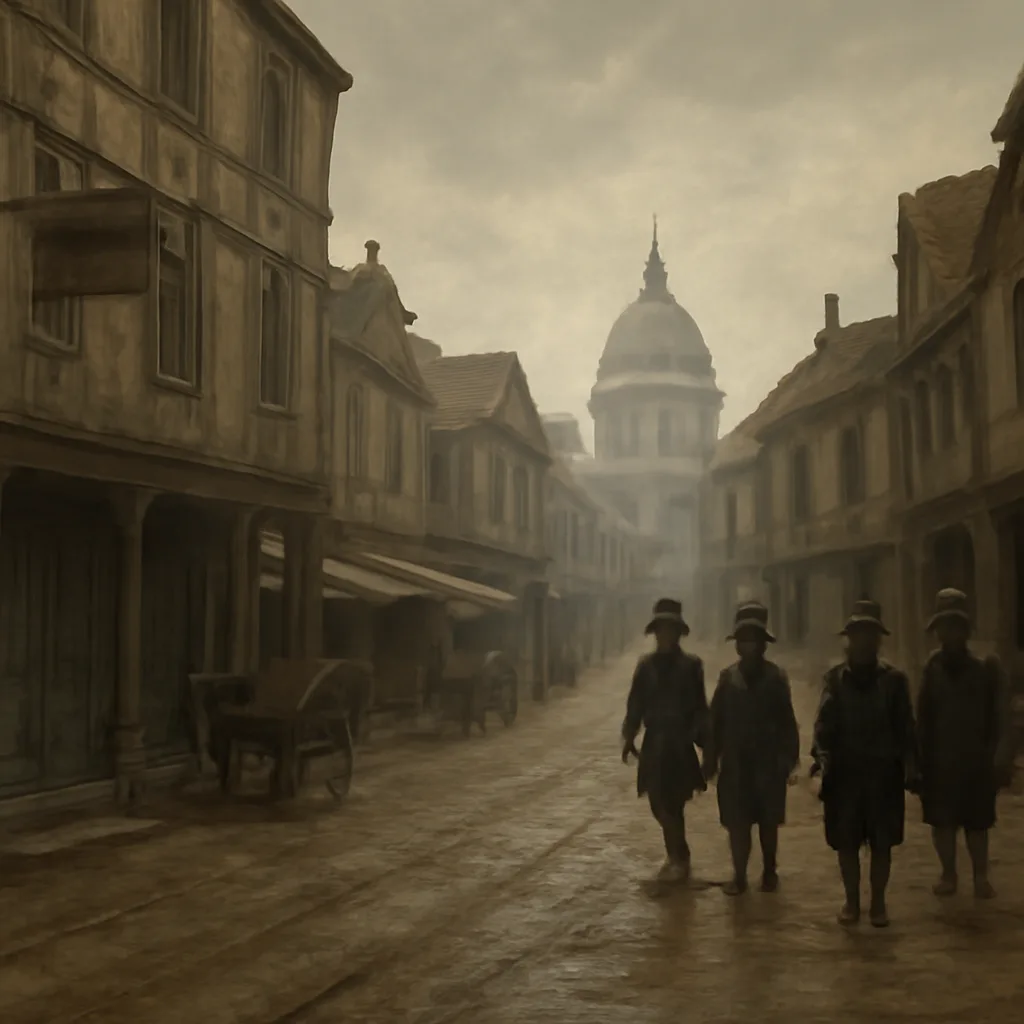
London Bans Public Gatherings as 1665 Plague Spreads
On 7 July 1665, London authorities prohibited public assemblies as the bubonic plague surged through the city, closing theatres, markets and public entertainments in an effort to limit contagion and maintain order.
In the summer of 1665, London faced one of the most severe outbreaks of the bubonic plague in its history. By early July the disease had reached levels that prompted civic officials to impose restrictions on public life. On 7 July 1665, authorities in the city moved to ban public gatherings — including theatre performances, fairs, and other entertainments — alongside other measures intended to curb transmission and preserve public order.
The municipal response built on longstanding practices for dealing with plague. Measures commonly used during earlier outbreaks were revived: the closing of playhouses, limits on large assemblies, the sealing of houses where infections occurred, and the appointment of searchers to certify deaths. The aim of banning gatherings was twofold: to reduce opportunities for person-to-person spread and to prevent panic and disorder in crowded settings. London’s social and economic life depended heavily on markets, inns, and public entertainments, so the ban represented a significant disruption.
Implementation of the ban fell to a mix of municipal officers and Crown representatives. Watchmen, constables and other officials were tasked with enforcing closures and dispersing crowds. Some venues complied voluntarily; others resisted until summonses or fines were applied. In practice enforcement varied by parish and by the resources available to local officials, and some clandestine meetings likely continued despite prohibitions.
The ban on public gatherings was only one part of a broader suite of interventions. Houses with infected residents were frequently boarded up and marked; households were sometimes quarantined with guards posted at doors. Burial practices changed to limit contact, with increased use of mass graves for those who could not afford private interment. Economic hardship followed: trades that relied on congregation — acting companies, taverns, and markets — saw income collapse, and many Londoners fled the city where they could.
Contemporary accounts and later studies emphasize both the limits and the importance of such measures. Closing theatres and other venues reduced obvious sites of congregation, but the understanding of disease transmission in 1665 did not include germ theory, so interventions reflected a mixture of practical precautions and prevailing medical theory (such as miasma and contagion concepts). The effectiveness of the ban therefore depended on timely implementation, public compliance, and accompanying measures like isolation of the sick and control of movement between households and parishes.
The ban must also be seen in its social context. London was densely populated and highly connected by trade and travel; public gatherings were central to commerce, politics and leisure. Shutting them down heightened social strain, amplified economic dislocation, and altered daily routines. For some households, particularly wealthier families, retreating to the countryside was possible; poorer residents often had no such option, making them more vulnerable to both disease and the economic consequences of closures.
By the following year, 1666, the Great Plague had largely subsided, although London then faced the Great Fire in September 1666, an event sometimes linked in popular memory to the plague years that preceded it. Historians note that measures such as banning gatherings were part of a patchwork response that varied in intensity and enforcement across the city but nonetheless reflected a concerted attempt by authorities to confront an acute public health crisis with the administrative tools available at the time.
Because records from 1665 are uneven and compliance varied, precise assessments of how much the ban on public gatherings reduced transmission are not possible. What is clear is that the prohibition represented a major interruption to London’s public life and formed one element of a broader, often harsh, response to an epidemic that had profound social and demographic consequences for the city.