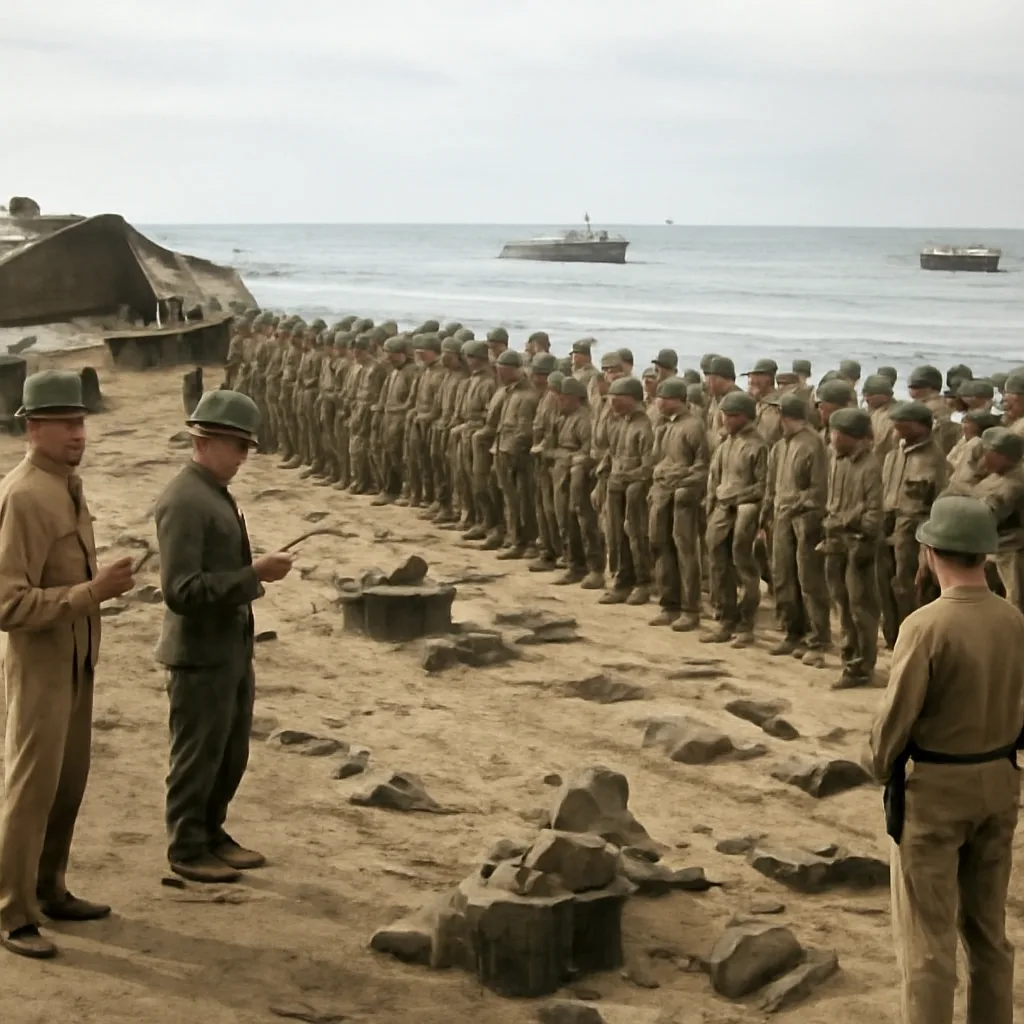
U.S. Forces Accept Formal Japanese Surrenders in Occupied Zones, September 2, 1945
On September 2, 1945, following Japan’s announcement of surrender, United States military authorities formally received the capitulation of Japanese forces across occupied Chinese, Korean and Pacific zones, beginning the transition from wartime occupation to Allied administration and demobilization.
On September 2, 1945—the day Japan’s Instrument of Surrender was signed aboard USS Missouri—United States military representatives began formally accepting the surrender of Japanese forces in multiple previously occupied zones. The formal acts of surrender and the immediate administrative arrangements that followed marked the start of Allied occupation and the dismantling of Japanese military governance in territories seized during the war.
Scope and context
Japan’s defeat in August 1945 followed the atomic bombings of Hiroshima and Nagasaki and the Soviet Union’s declaration of war against Japan. The Emperor’s radio broadcast on August 15 announced the decision to surrender, and Allied leaders negotiated terms that culminated in the formal signing on September 2 in Tokyo Bay. Parallel to that central act, U.S. commanders and other Allied representatives carried out localized ceremonies and surrender procedures across areas formerly under Japanese control, including parts of China, Korea, and numerous Pacific islands.
Procedures on the ground
Local surrender ceremonies typically involved Japanese commanders signing formal documents or making written pledges to lay down arms and cease hostilities, after which U.S. and Allied personnel assumed responsibility for security, disarmament, and the processing of Japanese troops. Immediate tasks included disarming Japanese units, securing ordnance, locating and assisting prisoners of war and civilian internees, restoring civil order, and beginning the logistical work of repatriation. In many locations U.S. forces acted as the primary Allied authority until military governments or other arrangements could be established.
Regional variations
- Korea: With Japanese colonial administration ending, U.S. forces accepted the surrender of Japanese forces in the southern part of the Korean Peninsula, while Soviet forces occupied the north; this division, initially intended as a temporary measure for surrender processing, later contributed to the peninsula’s political partition. - China: In areas of China previously occupied by Japan, U.S. officers and Chinese Nationalist representatives coordinated surrender and repatriation, though Chinese Nationalist forces sought to reassert control in many provinces, leading to tense and sometimes chaotic transitions. - Pacific islands and colonies: On many Pacific islands—some recently retaken by U.S. forces, others surrendered without further fighting—American officers secured former garrisons, tended to war-damaged infrastructure, and organized the evacuation or internment and eventual repatriation of Japanese military personnel.
Humanitarian and logistical challenges
The immediate aftermath presented major humanitarian and logistical problems. Millions of Japanese soldiers and civilians remained scattered across Asia and the Pacific. Allied authorities prioritized locating Allied prisoners of war and civilian internees, providing them medical care, and repatriating survivors. At the same time, food shortages, damaged transportation networks, disease, and civil unrest complicated relief and repatriation efforts.
Political consequences
The localized surrenders accepted by U.S. forces dovetailed with broader Allied occupation policies. In Japan proper, General Douglas MacArthur led the Supreme Commander for the Allied Powers, overseeing occupation, demilitarization, and political reforms. In liberated territories, the removal of Japanese rule reopened longstanding political disputes—most notably in Korea and China—affecting the postwar map of East Asia. The military surrenders thus set in motion both humanitarian operations and long-term geopolitical changes.
Historical notes and sources
The acceptance of Japanese surrenders outside Japan was not a single, uniform event but a series of coordinated local actions tied to the central surrender on September 2, 1945. Contemporary accounts and subsequent historical studies document variations in procedure and outcome by region. For detailed primary and secondary documentation, historians consult official Allied surrender documents, U.S. military after-action reports, diplomatic correspondence of the period, and archival collections held by national libraries and military history repositories.
Legacy
The formal surrender ceremonies and the actions taken by U.S. and Allied forces in occupied zones marked the beginning of demobilization and returned sovereignty struggles across East Asia and the Pacific. They also initiated processes—repatriation, occupation governance, and political reorganization—that shaped the region’s postwar trajectory.