
09/02/1945 • 5 views
Japan Signs Instrument of Surrender Aboard USS Missouri, Ending World War II
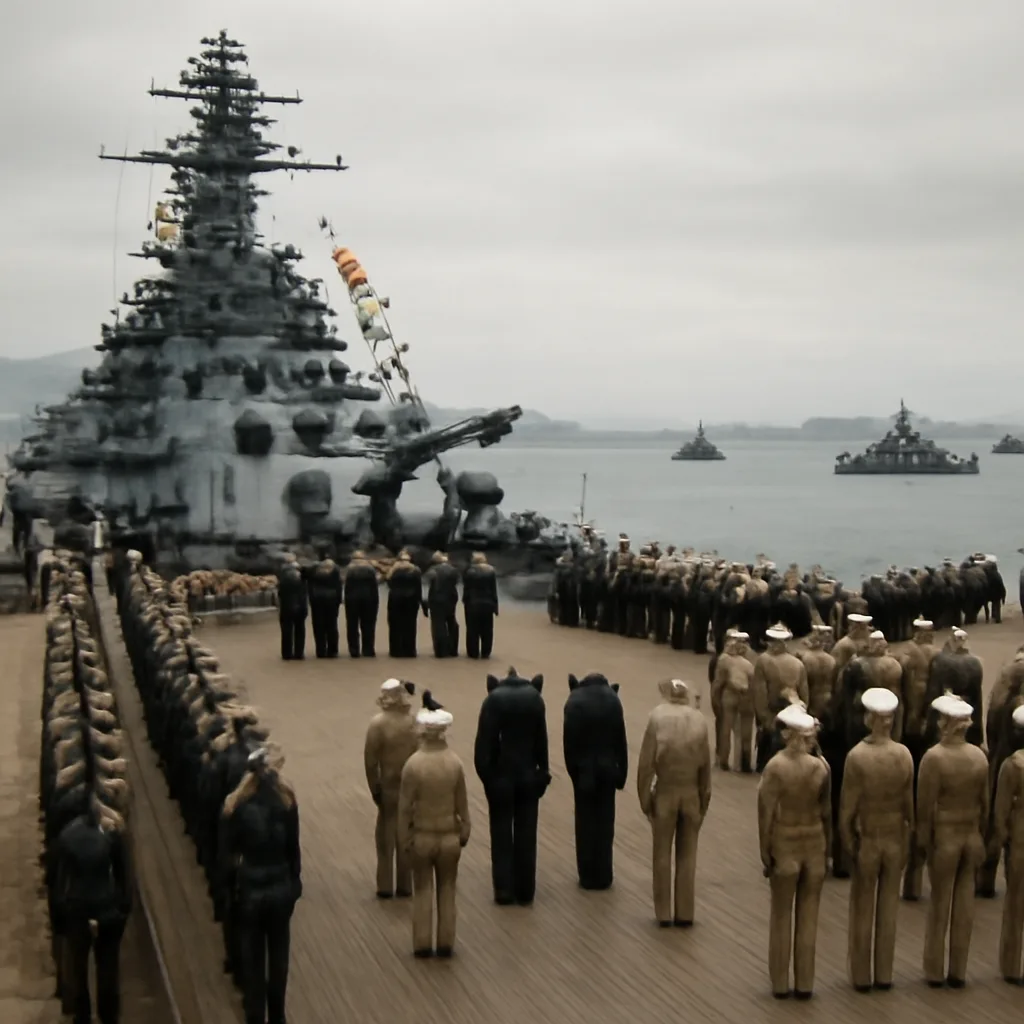
On September 2, 1945, representatives of Japan signed the Instrument of Surrender aboard the USS Missouri in Tokyo Bay, formally ending World War II hostilities between Japan and the Allied powers.
The surrender document was signed by Foreign Minister Mamoru Shigemitsu for the Japanese government and by General Yoshijirō Umezu for the Imperial General Headquarters. On the Allied side, General Douglas MacArthur, Supreme Commander for the Allied Powers, presided over the proceedings and signed on behalf of the Allied powers. Delegations from the United States, China, the United Kingdom, the Soviet Union, Australia, Canada, France, the Netherlands and New Zealand participated in the ceremony or signed the instrument, reflecting the multinational nature of the Allied coalition.
The ceremony took place on the forward deck of the USS Missouri (BB-63), anchored in Tokyo Bay, with a large assembly of Allied and Japanese officers and dignitaries aboard and numerous warships and small craft present in the bay. The atmosphere combined solemnity and relief; military bands played and flags were displayed while the formal legal language was read and the document signed. The Instrument of Surrender specified the unconditional surrender of the Japanese armed forces and called for cooperation with Allied authorities in implementing the terms.
The surrender set the stage for the Allied occupation of Japan, led by the United States under General MacArthur, which oversaw disarmament, repatriation of Japanese military personnel and civilians from abroad, war crimes prosecutions, and extensive political, economic and social reforms. The occupation and subsequent reconstruction transformed Japan’s political system, economy and international relations, culminating in the 1951 San Francisco Peace Treaty that restored Japan’s sovereignty in most respects.
Historical accounts of the surrender ceremony emphasize both its symbolic importance and its legal significance. While Japan had announced its intention to surrender on August 15 (V-J Day), the formal signing aboard the Missouri provided the clear, documented transfer of authority necessary for occupying forces and postwar administration. Details of the ceremony, including the signatories’ names, the text of the Instrument of Surrender, and the presence of Allied delegations, are documented in primary sources and official records from the period.
The USS Missouri subsequently became a widely recognized symbol of the war’s end. The ship has been preserved as a museum ship in later decades, and the Tokyo Bay surrender ceremony remains a focal point for historical study and public remembrance of World War II’s conclusion in the Pacific theater.