
← Back
12/08/2014 • 6 views

Mass protests in Hong Kong over proposed democracy reforms
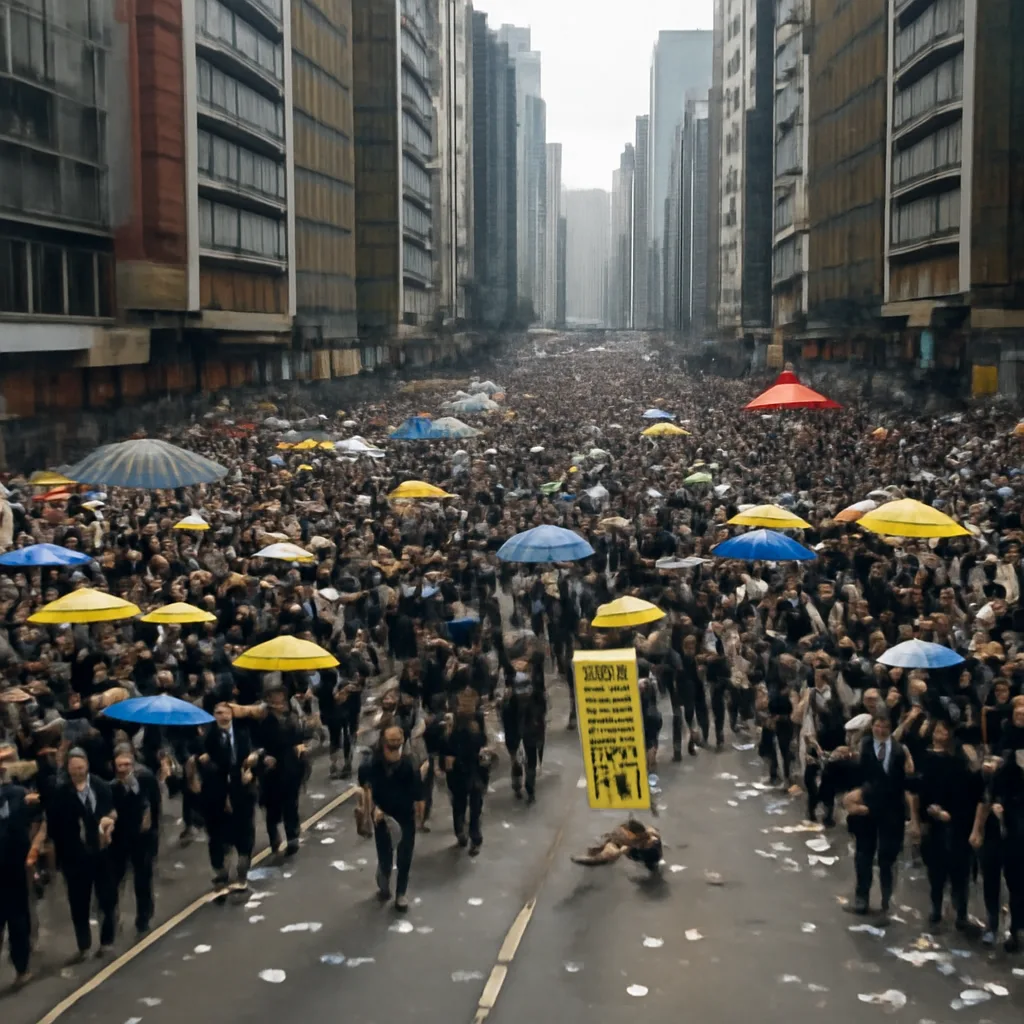
Crowd of Hong Kong protesters occupying a major city street near commercial buildings, with makeshift barricades, banners, and small tents visible; scene taken during daytime with many people and blocked traffic.

On December 8, 2014, mass demonstrations resumed in Hong Kong as protesters opposed a Beijing-backed framework for chief executive elections; sit-ins and marches disrupted business districts and transportation as calls for genuine universal suffrage continued.


On December 8, 2014, large-scale protests in Hong Kong continued to resist a decision by China’s National People’s Congress Standing Committee (NPCSC) that set conditions for 2017 chief executive elections. The NPCSC’s August 31, 2014 ruling had limited candidate nominations to a vetted nomination committee, a move protesters said fell short of “genuine universal suffrage” promised under the 1997 handover agreement. December demonstrations were part of a broader movement that began in late September 2014 and came to be known as the Umbrella Movement.

Protest methods and locations
Protesters used sit-ins, occupation of major thoroughfares, and organized marches. Occupied zones centered on key commercial and government areas, including Admiralty, Mong Kok and Causeway Bay. Demonstrators constructed barricades, set up makeshift stages and student-organized “open forums” to discuss tactics and demands. The occupations affected traffic and several transit nodes, leading to disruptions for commuters and local businesses.

Participants and organization
The movement comprised students, civic groups, activists and ordinary citizens. Student groups such as Scholarism and the Hong Kong Federation of Students (HKFS) played prominent roles earlier in the movement; smaller civil-society groups and new grassroots networks also mobilized. Leadership was decentralized, with consensus-based assemblies and street-level organizers coordinating sit-ins and outreach.

Demands and political context
Protesters demanded a nomination process allowing broader candidate selection and true universal suffrage without pre-screening by a pro-Beijing committee. Many invoked the Basic Law—the city’s mini-constitution—and the Sino-British Joint Declaration, arguing that the NPCSC decision violated Hong Kong’s promised high degree of autonomy and the spirit of democratic development. The government and Beijing maintained that the NPCSC interpretation was lawful and necessary to preserve stability and ensure that candidates were acceptable to Hong Kong society.

Government response and policing
Hong Kong authorities sought to clear some occupied areas through police operations and injunctions obtained by district councils or property owners. Police actions over the course of the movement included crowd-control measures such as arrests, use of tear gas earlier in the protests, and cordons around cleared zones. The government called for restraint and urged dialogue, while also criticizing prolonged occupation for harming the economy and daily life.

Public reaction and impact
Public opinion in Hong Kong was divided. Supporters of the protests argued the movement was a peaceful expression of political rights and civil disobedience in pursuit of democratic reform. Critics—including some business groups and residents affected by the occupations—said the protests caused economic losses, inconvenienced commuters and risked social polarization. International observers and foreign governments monitored developments closely, frequently calling for restraint and urging negotiation.

Aftermath and significance
Although the protests did not achieve immediate changes to the NPCSC decision, the Umbrella Movement shaped Hong Kong’s political landscape by galvanizing a new generation of activists, increasing political awareness, and influencing subsequent electoral politics and civil activism. The movement’s legacy includes debates over the limits of Hong Kong’s autonomy, the relationship between local demands and Beijing’s authority, and how dissent is negotiated within the framework of the Basic Law.

Notes on sources and certainty
This summary synthesizes widely reported facts about the 2014 protests and December actions within that period. Specific details about numbers of participants, precise sequences of events on particular days, and internal deliberations of protesters or officials are drawn from contemporaneous reporting and public records and may vary between sources. No fabricated quotes or sources are included here.

Share this

Email Share on X Facebook Reddit

Did this surprise you?