
← Back
01/30/1649 • 5 views

Execution of King Charles I at Whitehall, 1649
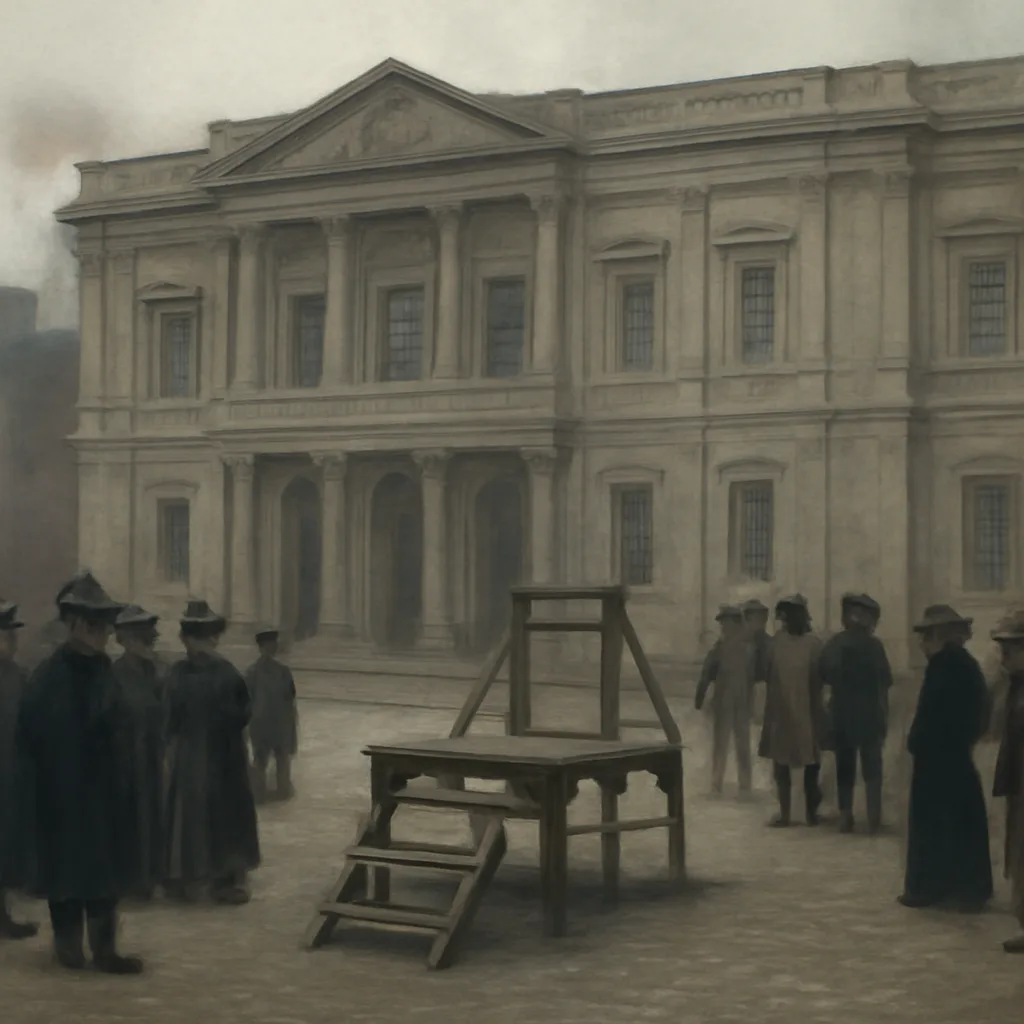
A scaffold outside the Banqueting House, Whitehall, January 30, 1649, with a small crowd and soldiers nearby; the scene is somber and period-appropriate.

On January 30, 1649, Charles I was executed outside the Banqueting House in Whitehall after being tried and convicted by a High Court of Justice, marking the temporary abolition of the monarchy and establishment of the Commonwealth of England.


On January 30, 1649, King Charles I of England, Scotland and Ireland was executed by beheading outside the Banqueting House in Whitehall, London. The event followed a sequence of political and military conflicts known as the Wars of the Three Kingdoms (including the English Civil Wars). After defeat by forces loyal to Parliament and the New Model Army, Charles was captured, tried, and convicted of high treason by a specially created High Court of Justice. The court declared that the king had “endeavoured to maintain his power to the prejudice of the safety and liberty of the people.”

Trial and conviction: Charles consistently refused to recognize the court’s jurisdiction, declining to enter a plea and refusing to acknowledge its legality. Proceedings began in late 1648 and continued into January 1649. The trial was politically charged: many members of Parliament opposed trying the king, while the army and its political allies pushed for accountability. On January 27, 1649, the court found Charles guilty. A death warrant, signed by 59 commissioners, was issued ordering execution.

Execution and immediate aftermath: Early on January 30, the king was taken from St James’s Palace to the scaffold erected outside the Banqueting House in Whitehall. Contemporary accounts report that Charles maintained composure, addressing the crowd in a short speech reaffirming his belief in the monarchy and his faith; he is recorded as asking for forgiveness and praying before the execution. He was beheaded with a single stroke. Following the execution, Charles’s body was buried in St George’s Chapel, Windsor Castle.

Political consequences: The execution shocked contemporaries across Europe and had profound constitutional consequences domestically. On February 7, 1649, Parliament abolished the monarchy and the House of Lords and declared England a commonwealth and republic under the Rump Parliament. The immediate effect was to place power with Parliament and the army leadership, notably figures such as Oliver Cromwell, who later became Lord Protector after the collapse of the republican experiment.

Legacies and contested interpretations: Historians debate motivations and responsibilities—whether the execution was primarily an act of justice, a political necessity to secure the republic, or an unlawful regicide driven by factional pressures. For royalists and many contemporaries, the act was sacrilegious and illegitimate; for supporters of Parliament and the army, it was a decisive break with absolutism. The monarchy was restored in 1660 with Charles II, and the legal and moral issues surrounding Charles I’s trial and execution continued to shape British political thought and constitutional arrangements.

Sources and evidence: The facts above are established in contemporary records: trial transcripts, the death warrant bearing commissioners’ signatures, eyewitness accounts of the execution, and parliamentary acts abolishing the monarchy. Interpretations and emphasis vary among historians; where judgments are disputed, this summary presents the broadly accepted factual sequence while noting areas of ongoing scholarly debate.

Share this

Email Share on X Facebook Reddit

Did this surprise you?