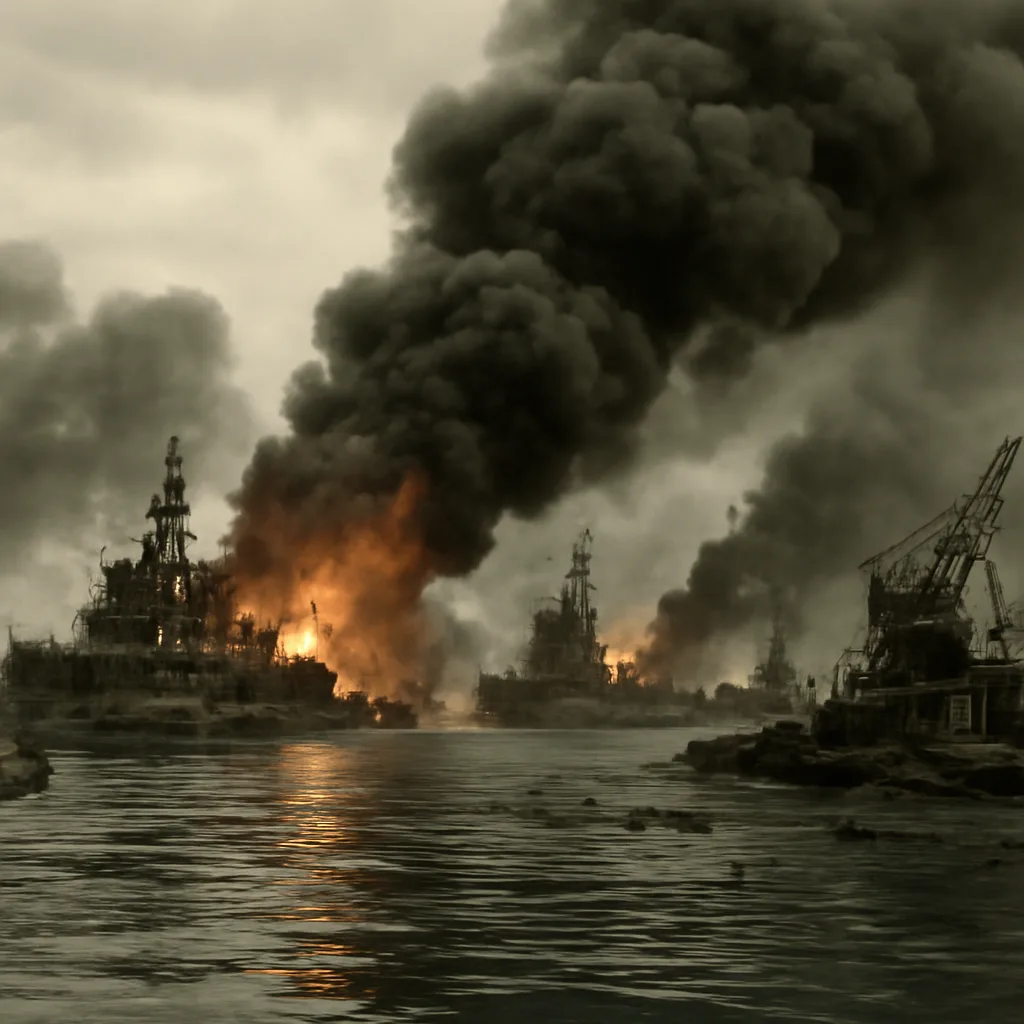
United States Declares War After Pearl Harbor Attacks
On December 8, 1941, the United States Congress declared war on Japan, formally entering World War II the day after the Japanese attack on Pearl Harbor. The declaration marked a decisive shift from neutrality to full U.S. military commitment in both the Pacific and, soon after, the Atlantic theaters.
On December 8, 1941, following the surprise Japanese attack on the U.S. Pacific Fleet at Pearl Harbor on December 7 (Hawaii time), President Franklin D. Roosevelt addressed a joint session of Congress and requested a declaration of war against Japan. Congress approved the measure almost unanimously—only one member, Representative Jeannette Rankin of Montana, voted against it—and the United States formally entered World War II.
Context and immediate causes
The U.S. had spent the 1930s and early 1940s maintaining official neutrality while increasingly supporting Allied nations through measures such as the 1939 Neutrality Act revisions and the 1941 Lend-Lease program, which supplied arms and material to Britain and other allies. Rising tensions with Imperial Japan over Japanese expansion in East Asia, economic sanctions, and the U.S. oil embargo contributed to deteriorating relations. The surprise aerial and naval attack on Pearl Harbor on December 7, which sank and damaged numerous ships and killed over 2,400 service members and civilians, was the immediate catalyst for the declaration of war.
Congressional action and legal formalities
President Roosevelt delivered his declaration request in a speech to Congress on December 8, famously calling December 7 “a date which will live in infamy.” Congress acted swiftly: the Senate voted 82–0 and the House voted 388–1 to grant the President authority to prosecute the war. The formal declaration authorized the President to use the armed forces of the United States against the Government of Japan and to employ all necessary measures to defend and protect national security and interests.
Military and strategic consequences
The declaration ended U.S. neutrality and initiated large-scale mobilization of American military, industrial, and human resources. The U.S. Navy and Army rapidly shifted to wartime footing in the Pacific, seeking to replace losses at Pearl Harbor, secure sea lanes, and prepare for offensive operations against Japanese forces. The U.S. also coordinated more closely with Allied governments, particularly Britain and China, to plan combined operations. Within days, Germany and Italy—Japan’s Axis partners—declared war on the United States, which led the U.S. to expand its war effort to the European theater as well.
Domestic impact
The declaration of war triggered broad national mobilization: millions more men entered the armed forces through enlistment and the draft, industrial production was converted to wartime production, and wartime agencies were created to allocate resources and direct labor. Public opinion, which had been divided over intervention prior to Pearl Harbor, consolidated into widespread support for the war effort.
Historical significance
The December 8, 1941, declaration marks the formal point at which the United States abandoned its prewar stance of nonbelligerency and became a principal combatant in World War II. The U.S. entry reshaped the course of the conflict by adding vast industrial capacity, manpower, and strategic reach to the Allied cause. The combined effect of American military and economic power over the ensuing four years was a decisive factor in the eventual defeat of the Axis powers.
Notes on sources and certainty
The broad sequence of events—Pearl Harbor attack on December 7, President Roosevelt’s address and the Congressional vote on December 8, and subsequent declarations by Axis powers—are well documented in official records and contemporary reporting. Specific casualty and damage figures from Pearl Harbor have been the subject of detailed archival accounting and are frequently cited in historical works; the figure of over 2,400 killed is the commonly accepted total.