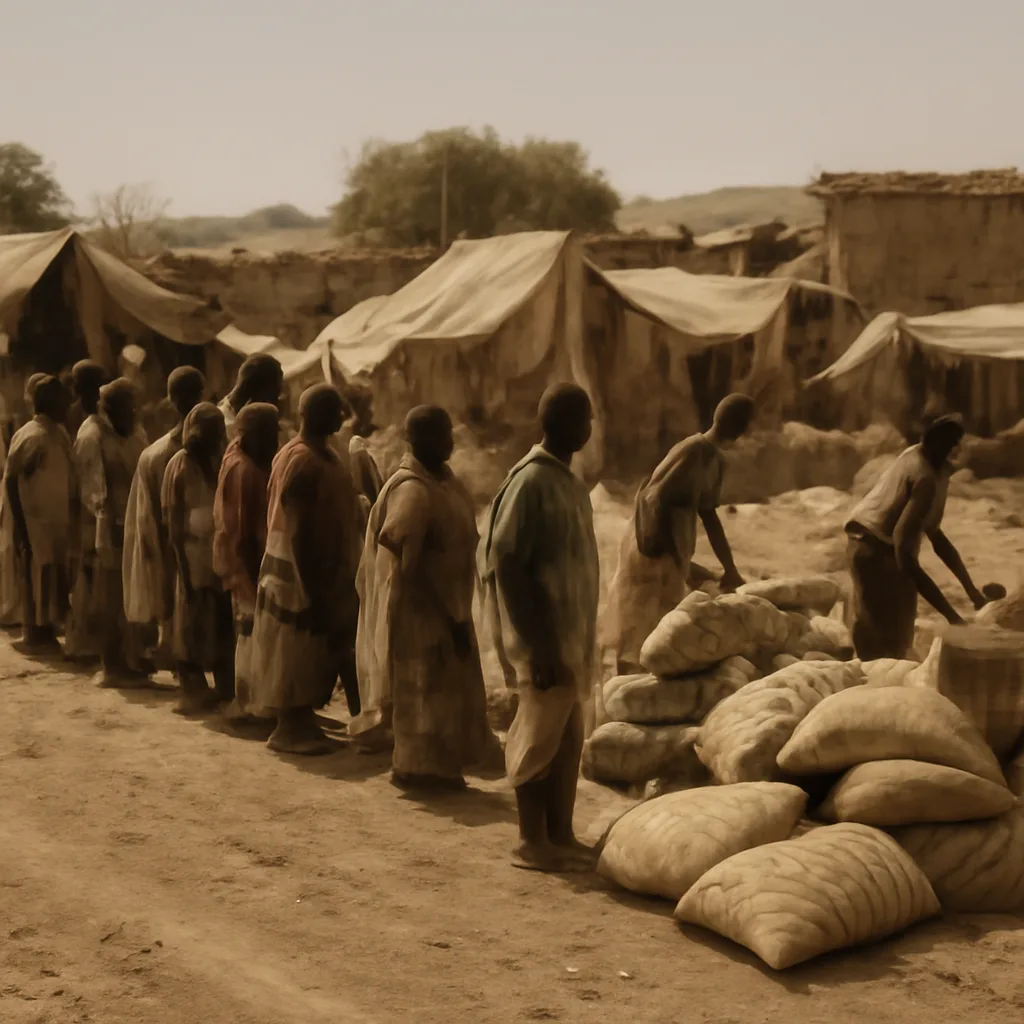
A severe famine that intensified across Ethiopia in 1984, driven by drought, conflict and policy failures, led to mass starvation, large-scale displacement and an international humanitarian response that reshaped media coverage and aid coordination.
In 1984 Ethiopia entered a catastrophic famine that became one of the most visible humanitarian crises of the late 20th century. The disaster principally affected northern provinces, including Tigray and Wollo, though food shortages spread to other regions. A combination of factors—prolonged drought, agricultural collapse, economic mismanagement and the effects of civil conflict—contributed to widespread crop failure and the breakdown of markets and local support systems.
Early in the year, reports from relief agencies and journalists described rapidly increasing numbers of malnourished children, abandoned villages and large movements of people seeking food and aid. The Ethiopian government of the time imposed restrictions on humanitarian operations in some areas and prioritized security concerns during an ongoing counterinsurgency campaign. Those political and logistical constraints, along with limited infrastructure, hindered timely distribution of assistance where it was most needed.
International awareness grew as images and dispatches from the affected regions reached global media outlets. Coverage by newspapers, television and magazines prompted public campaigns, high-profile benefit events and increased funding to non-governmental organizations and United Nations agencies. One of the most notable outcomes was a surge in global fundraising and emergency shipments of food, medical supplies and water, alongside a major scaling up of famine monitoring and relief coordination mechanisms.
Humanitarian responders faced enormous challenges: inaccessible terrain, seasonal rains that damaged roads, shortages of transport and storage facilities, outbreaks of disease such as measles and diarrheal illnesses in displaced populations, and the sheer scale of nutritional emergency among children and adults. Relief agencies emphasized the need for both immediate food aid and longer-term interventions to restore agricultural production, rehabilitate rural livelihoods and address public health needs.
Estimates of mortality and displacement varied among organizations and have been subject to later research and debate. What is widely documented is that tens to hundreds of thousands of Ethiopians died or suffered severe malnutrition, and many more were displaced. The crisis also exposed limitations in early-warning systems and international response mechanisms, prompting reforms in humanitarian funding, logistics and media engagement in subsequent years.
The 1984 famine had lasting political and social consequences inside Ethiopia and internationally. Domestically, it intensified hardship and grievances that intersected with the country’s ongoing conflicts and political transformations. Internationally, it contributed to changes in how relief operations are coordinated—encouraging stronger partnerships between UN agencies, NGOs and donor governments—and shaped public expectations about rapid global responses to humanitarian emergencies.
Historical assessments emphasize that the famine was not solely the result of natural factors like drought. Scholars and analysts point to a complex interplay of environmental stress, economic policies, population pressures and armed conflict that amplified vulnerability. Ongoing research continues to refine understanding of the crisis’s causes, its human toll and lessons for famine prevention and response.
The 1984 Ethiopian famine remains an instructive case for policymakers, aid organizations and journalists: it demonstrated the importance of combining emergency relief with measures to protect civilians, maintain humanitarian access during conflict, invest in early-warning and resilient agricultural systems, and ensure sustained support for recovery and development to reduce the risk of future famines.