
← Back
08/10/2005 • 6 views

France erupts in unrest after police death of young man
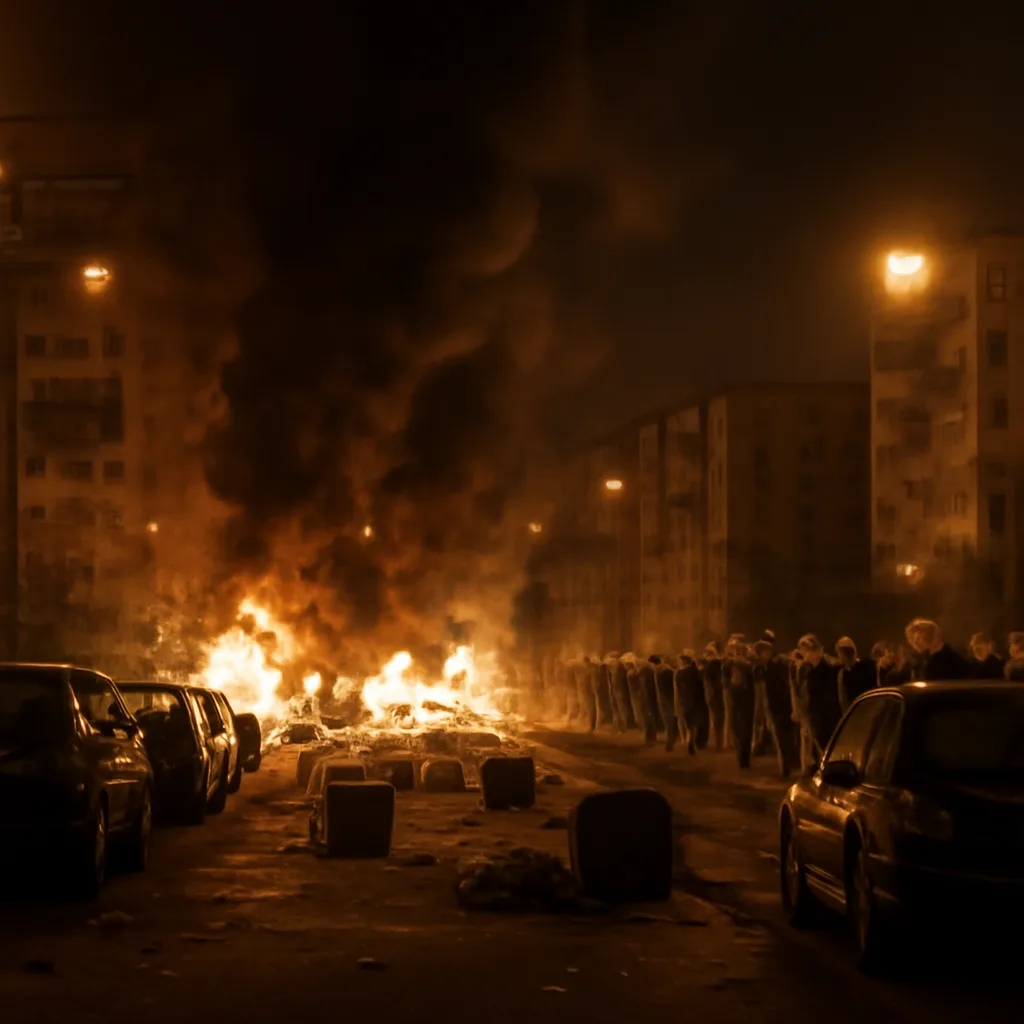
Burning vehicles and smoke in a Paris suburb street at night during 2005 unrest, with damaged buildings and police presence in the background.

In August 2005 nationwide riots erupted in France after the accidental deaths of two young men in Clichy-sous-Bois following a police encounter; the unrest reflected long-standing tensions over policing, marginalization and integration in French suburbs.


On the evening of October 27, 2005 — though the events that sparked the unrest began earlier in October — France experienced its most widespread urban unrest in decades after the deaths of two teenagers, Bouna Traoré and Zyed Benna, and the subsequent hospitalization of a third, Mohamed Benmouna. The three young men, of North and West African descent, were in Clichy-sous-Bois, a suburb northeast of Paris, on October 27 when they attempted to avoid a police identity check. Two of the youths entered an electricity substation and were electrocuted; a third was seriously injured. The deaths and the circumstances surrounding police actions and the official inquiries that followed provoked outrage in many suburban communities.

Protests and confrontations began locally but quickly spread nationwide. Over the following weeks, primarily young people in a number of Paris suburbs and other French cities set vehicles and buildings on fire, clashed with police, and attacked public infrastructure. The unrest peaked in early November and led to curfews in several areas, the deployment of thousands of additional police and gendarmes, and political debate at the highest levels of government. President Jacques Chirac and Prime Minister Dominique de Villepin condemned the violence and called for restoration of order; Interior Minister Nicolas Sarkozy took a hardline approach that included increased policing and a proposal to strengthen penalties for riots.

Underlying the immediate trigger were long-standing issues in France’s banlieues: high unemployment, especially among young people; poor housing and urban neglect; and perceptions of discriminatory policing and limited social mobility for many residents of immigrant-background communities. The riots prompted national reflection and policy proposals focused on urban renewal, policing practices, and youth employment, but critics argued that reforms were insufficient or slow to address structural inequalities.

Media coverage at the time documented both peaceful demonstrations demanding justice and episodes of violent confrontation. Official counts reported thousands of vehicles and hundreds of buildings damaged across the country; thousands of arrests were made during the unrest. Several investigations and legal proceedings followed concerning police conduct and responsibility for the deaths in Clichy-sous-Bois, with debates over whether the initial police stop was conducted appropriately and whether emergency response had been adequate.

The 2005 riots had lasting political and social repercussions in France. They exposed deep fractures in French society and raised questions about the country’s model of secular republicanism, integration, and equal treatment under the law. Subsequent years saw continued attention to policing practices, urban policy, and efforts—some limited, some more substantial—to improve social conditions in marginalized suburbs. Historians and social scientists continue to study the 2005 unrest as a focal point for understanding contemporary issues of identity, citizenship and inequality in France.

Note: Some details—such as the exact sequence of events during the initial police encounter and the range of responses in affected neighborhoods—were contested at the time and subject to differing accounts and legal scrutiny. This summary reflects widely reported facts and identifies areas of dispute without asserting unverified specifics.

Share this

Email Share on X Facebook Reddit

Did this surprise you?