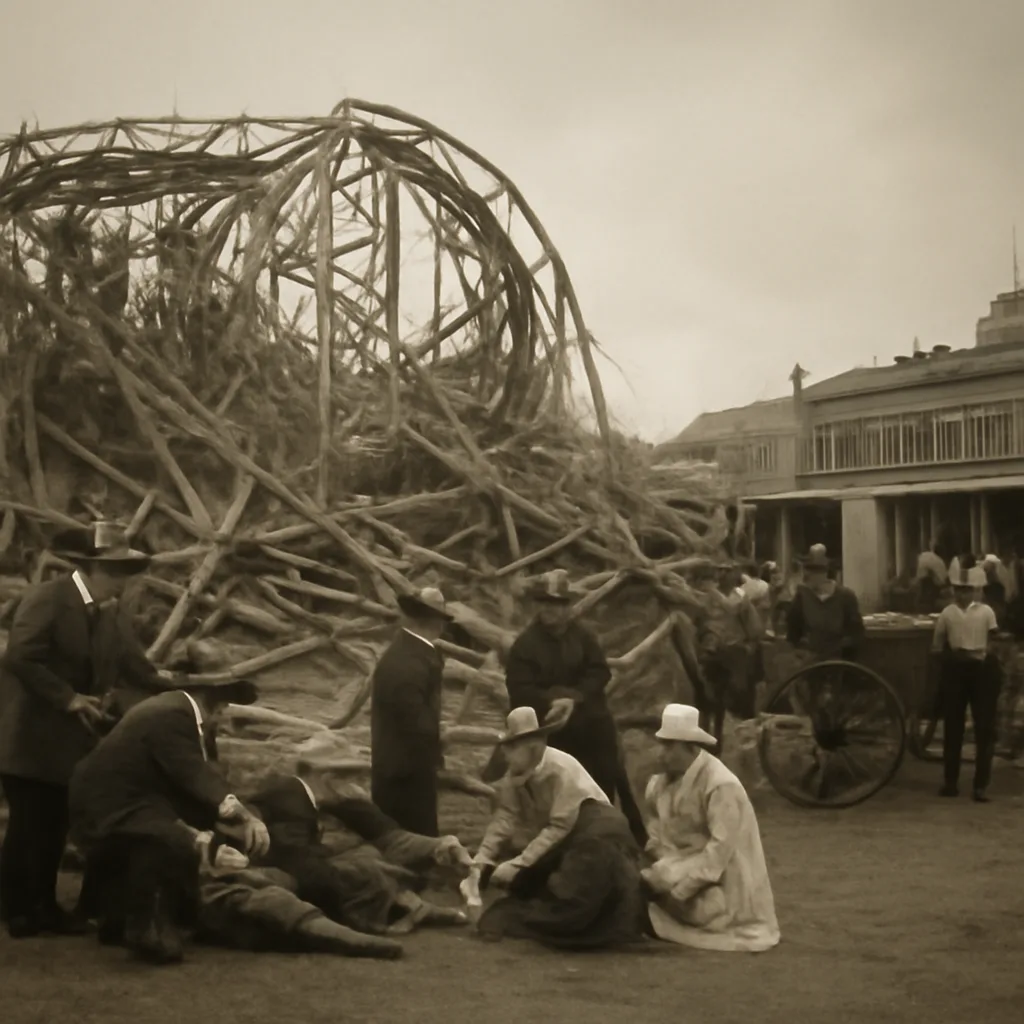
Fatal Roller Coaster Collapse at New York’s Luna Park, May 23, 1912
On May 23, 1912, a catastrophic structural failure on a wooden attraction at Luna Park, Coney Island, killed and injured riders, marking one of the first widely reported fatal accidents on a modern amusement-park thrill ride and prompting debate about ride safety and oversight.
On May 23, 1912, Luna Park on Coney Island — one of the era’s most famous amusement resorts — suffered a deadly accident when a wooden roller coaster-like attraction experienced a structural failure that resulted in multiple deaths and injuries. Contemporary newspapers described the ride as having collapsed or derailed, sending cars and riders into a heap of splintered timber. The event received broad attention because Luna Park was emblematic of the new mass-entertainment industry that had developed around mechanized thrills, electric lighting, and grand spectacle.
The early 20th century saw rapid innovation in amusement rides: switchback railways and scenic railways evolved into increasingly ambitious roller coasters using higher speeds and more complex structures. Safety standards, engineering codes, and governmental oversight had not yet caught up with the pace of invention and commercialization. Operators and builders frequently relied on proprietary designs and wood-frame construction, materials and techniques familiar from other industries but now placed under repetitive dynamic loads from ride operation.
Accounts from the time vary in detail — as is common with rapidly reported incidents — but they agree on the essential facts: the ride failed while carrying passengers, resulting in fatalities and numerous injuries. The victims included men, women and children; reports emphasized the suddenness of the collapse and the chaotic rescue efforts that followed. Local first responders, bystanders and park staff worked to pull survivors from wreckage. Hospitals and emergency facilities in Brooklyn treated the injured, and coroner inquiries followed.
The accident intensified public scrutiny of amusement-park safety. Newspapers and civic leaders questioned the adequacy of inspection regimes, the qualifications of ride designers and builders, and the responsibilities of park owners. Some editorials called for stricter municipal oversight or state-level regulation of mechanically propelled rides. Operators countered that such incidents were rare and often blamed on isolated causes such as material defects, overloading, or maintenance lapses.
Historically, the 1912 Luna Park disaster sits within a broader pattern of early amusement-park mishaps that gradually produced clearer engineering standards and regulatory responses. Over subsequent decades, iterative improvements — including better structural designs, standardized track and restraint systems, routine inspections, and formal licensing of engineers and inspectors — reduced but did not eliminate fatal accidents. The events of 1912 contributed to public awareness that the modern amusement park, while a source of wonder and leisure, also required systematic attention to safety.
Because contemporary reporting and later retellings sometimes conflated distinct incidents across Coney Island’s multiple parks and attractions, certain specifics — exact ride name, precise casualty counts, and the technical cause of the structural failure — are reported with some variation in primary sources. Coroner records, municipal reports and some newspaper archives provide the most reliable primary documentation for researchers who wish to examine the incident in detail.
The Luna Park accident of May 1912 is remembered not only for its immediate human toll but also for its role in catalyzing conversations about risk, responsibility and the limits of unregulated amusement. It stands as an early, tragic example of how rapid technological novelty in public entertainment can outpace the safety frameworks needed to protect patrons.