
08/10/1977 • 6 views
France’s Last Execution by Guillotine: 10 August 1977
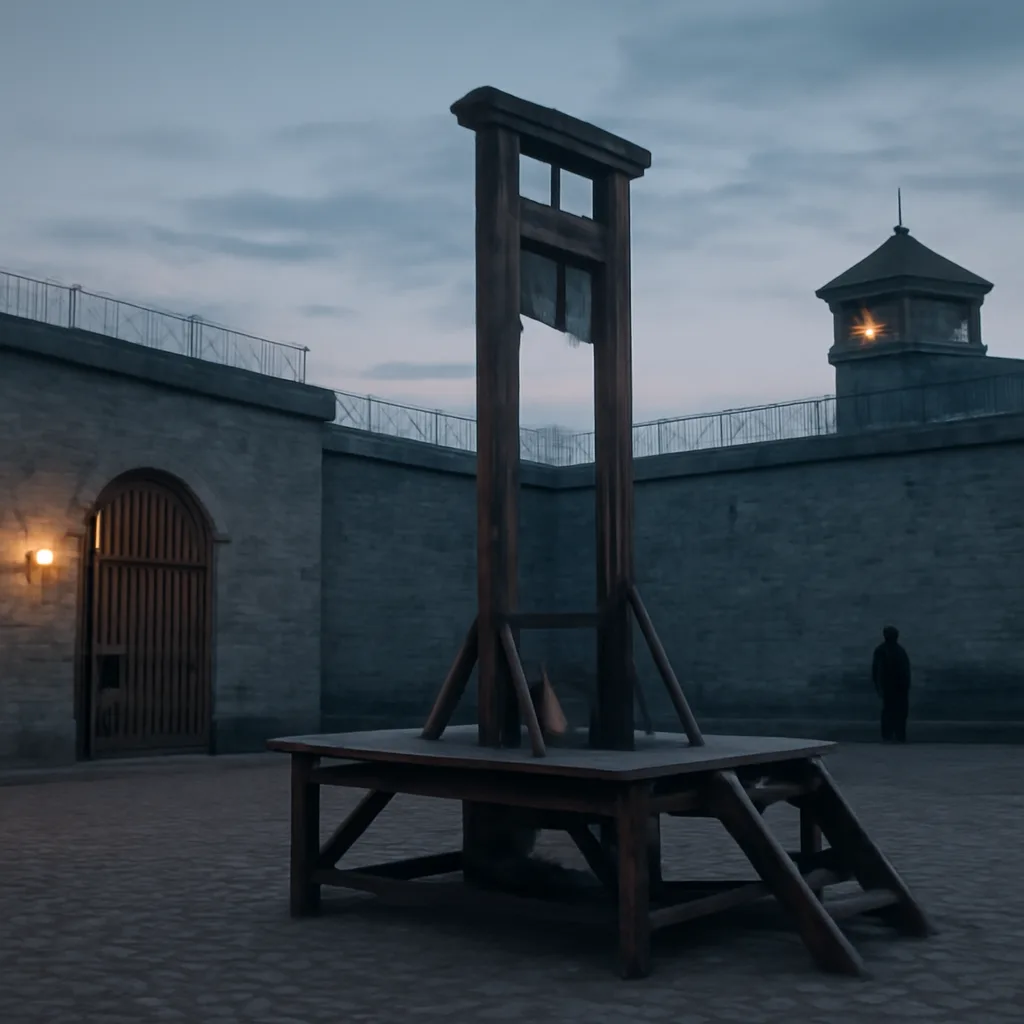
On 10 August 1977 France carried out the country’s final execution by guillotine, marking the end of a centuries-old method of capital punishment amid growing debate over the death penalty.
The guillotine had been France’s legally prescribed method of capital punishment since the late 18th century, introduced during the French Revolution as a supposedly more humane and egalitarian means of execution. Over the following centuries it became a powerful symbol of both revolutionary justice and state-sanctioned killing. Executions by guillotine continued on and off through the 19th and 20th centuries, even as attitudes toward capital punishment evolved.
By the 1970s, France was experiencing intensified public and political debate over the death penalty. Human rights concerns, shifting moral views, and international trends toward abolition created a climate increasingly hostile to capital punishment. Prominent intellectuals, politicians, and legal figures advocated abolition or at least suspension, arguing that the state should not have the authority to take life. At the same time, some segments of the public and political class supported retaining the death penalty for particularly heinous crimes.
Djandoubi’s case and execution occurred against this contentious backdrop. He was convicted for the murder of his former partner, including evidence of torture. After his appeal and requests for clemency were denied, the execution proceeded. The event drew attention both within France and internationally, fueling abolitionist arguments by providing a concrete, recent instance of capital punishment in a modern European democracy.
Less than a decade later, France abolished the death penalty. In 1981, following the election of President François Mitterrand and under the government of Prime Minister Pierre Mauroy, the French National Assembly voted to abolish capital punishment. Justice Minister Robert Badinter, a leading advocate for abolition, played a central role in the legislative process. The law formally ending the death penalty was enacted in 1981, making executions like Djandoubi’s a closed chapter in French criminal justice.
Historians note that while Djandoubi’s execution is commonly cited as the last guillotine execution in France, it is part of a broader timeline of gradual legal and cultural change. The abolition of the death penalty reflected decades of legal reform, international human rights developments, and shifting public sentiment. The guillotine itself remained a potent historical symbol—appearing in literature, film, and public memory—linked to questions about justice, equality, and the power of the state.
The legacy of the guillotine and of the last execution is contested and debated. For many abolitionists, the 1977 execution underscores the urgency that drove the 1981 reform. For others, the case is recalled in discussions about severe criminal punishment and victims’ rights. Contemporary France commemorates the abolition as part of a human rights trajectory that included joining international treaties and norms opposing capital punishment.
While the guillotine is no longer used, its historical presence continues to prompt reflection on how societies punish the most serious crimes, how legal practices change over time, and how symbolic instruments of justice can carry complex and evolving meanings.