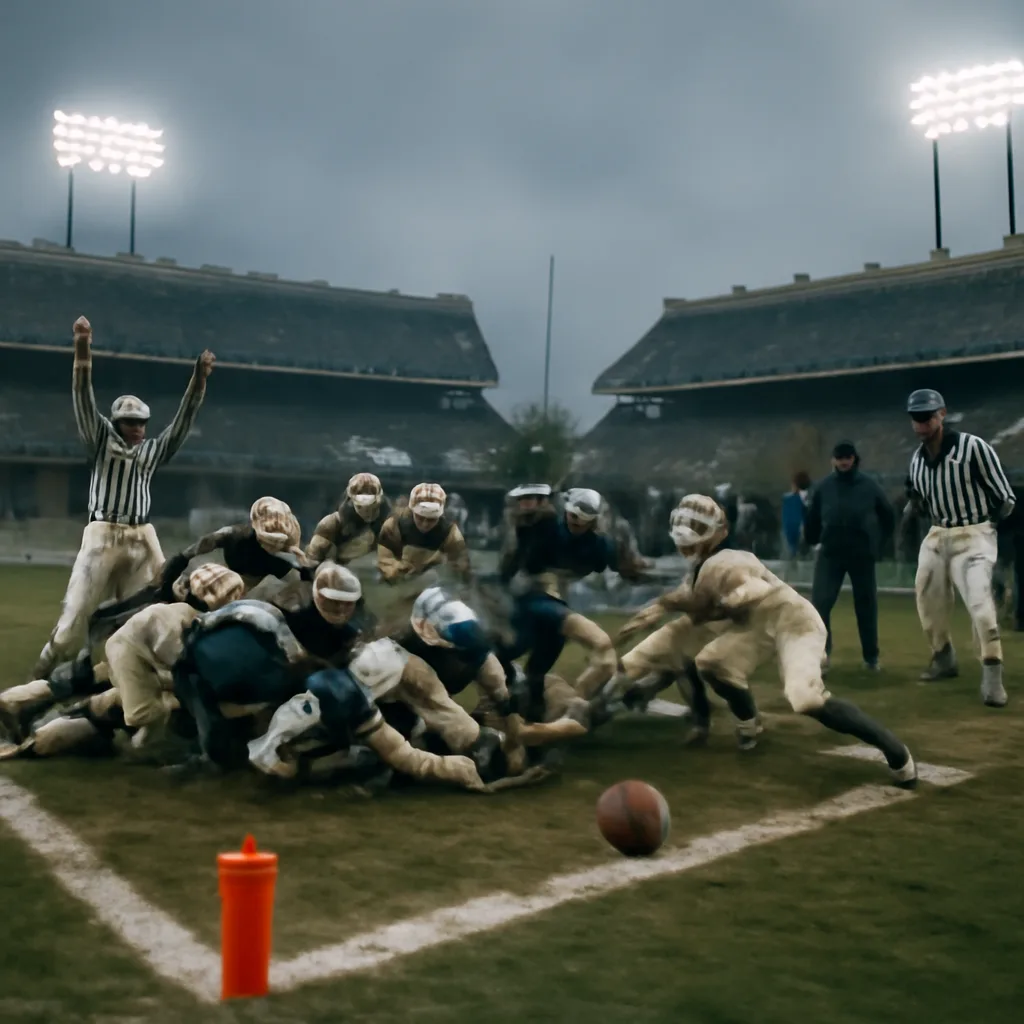
Leon Lett's premature celebration costs Cowboys a touchdown
On January 31, 1993, Dallas Cowboys defensive lineman Leon Lett celebrated what he thought was a recovery on Miami's fumbled kickoff, only to touch the ball before it crossed the goal line; the Dolphins recovered and scored, turning a potential Cowboys clincher into a tense finish.
On January 31, 1993, during the AFC/NFC Divisional Round playoff game between the Dallas Cowboys and the Miami Dolphins at Texas Stadium, a late-game sequence involving defensive lineman Leon Lett altered the closing minutes and became one of the most replayed gaffes in NFL postseason history.
The Cowboys led 14–13 late in the fourth quarter when Miami returned a blocked field-goal attempt on the opening play of the second half and later, on a kickoff, Dolphins returner Tony Martin fumbled the ball near the goal line. Cowboys players initially celebrated what they believed was a recovery in the end zone. Replays showed, however, that the ball had not yet broken the plane of the goal line and was still live while rolling along the turf.
Leon Lett, who had begun celebrating with teammates and appeared to assume the play was over, approached and made contact with the loose ball. Because Lett touched the ball while it remained in the field of play and had not been clearly recovered by Dallas behind the goal line, officials ruled that the ball remained live for Miami. Dolphins lineman J.B. Brown recovered the ball in the end zone, and Miami was awarded a touchdown. The Dolphins then led 20–14 after the ensuing extra point.
The mistake shifted momentum and forced the Cowboys into a final drive to try to regain the lead. Dallas mounted a late comeback, culminating in an Eddie Murray field goal that sent the game to overtime at 20–20. In overtime, the Cowboys won on a Murray field goal, 23–20, ending the game and eliminating Miami from the playoffs. Despite the final result favoring Dallas, Lett’s premature celebration is remembered for creating a near-disastrous overturning of what had been assumed a turnover for the Cowboys.
The play had broader consequences for perceptions of situational awareness and professionalism in the NFL. Coaches and analysts pointed to the sequence as an example of the need for players to play through uncertainty until officials stop the clock or rule the play dead. For Lett personally, the error became an enduring part of his public image, frequently referenced in highlight reels and discussion of noteworthy postseason miscues. He remained a member of the Cowboys and contributed to the team’s continued success; Dallas went on to win the Super Bowl that season.
The incident remains a cautionary tale in football circles about the risks of celebrating prematurely and the importance of maintaining focus until a play is definitively over. It is also an example of how a single split-second decision can become a lasting part of sports lore even when it does not ultimately change the outcome of a game.