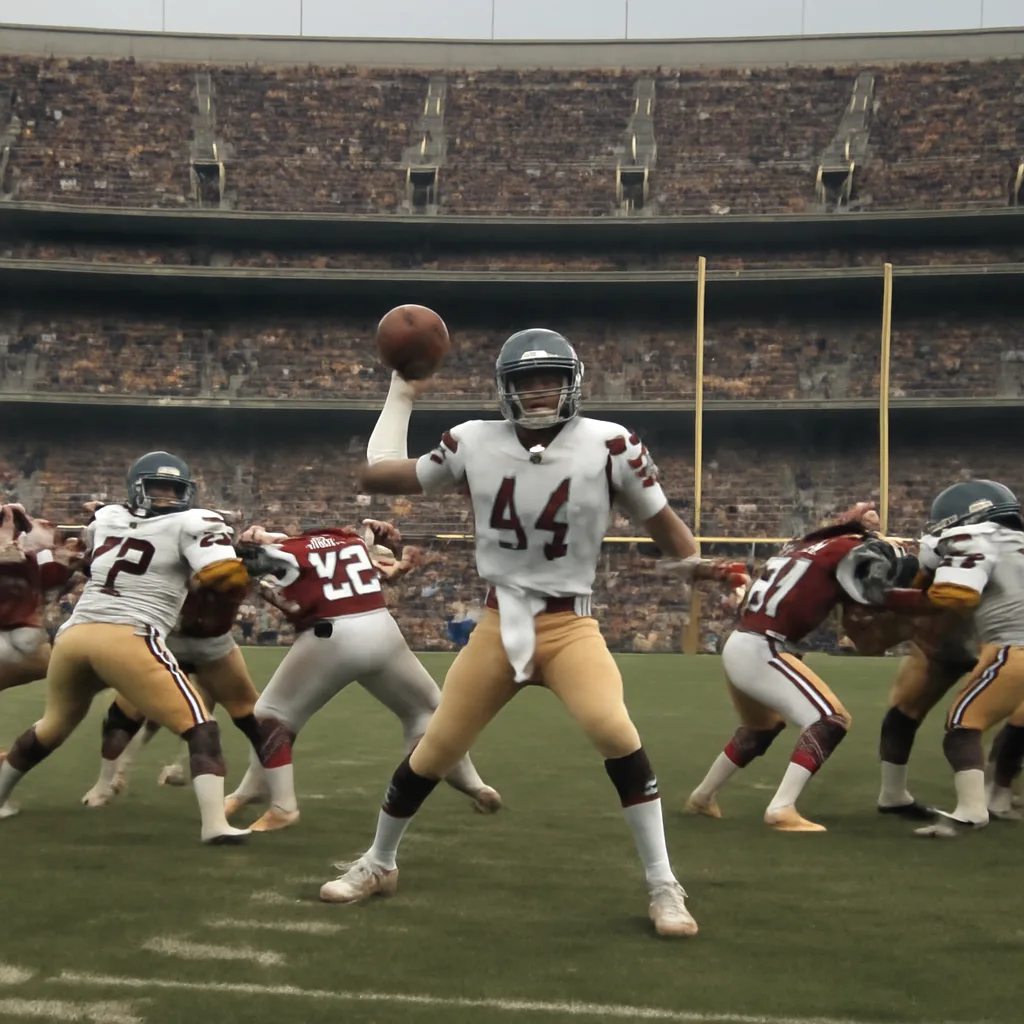
Doug Williams Leads Redskins to Super Bowl XXII Victory, First Black QB to Win the Title
On January 31, 1988, Doug Williams guided the Washington Redskins to a 42–10 win over the Denver Broncos in Super Bowl XXII, becoming the first Black quarterback to start and win a Super Bowl.
On January 31, 1988, Super Bowl XXII concluded with the Washington Redskins defeating the Denver Broncos 42–10 at Jack Murphy Stadium in San Diego. Doug Williams, the Redskins’ starting quarterback, completed 18 of 29 passes for 340 yards and four touchdown passes, and was named Super Bowl MVP. His performance included a remarkable second-quarter surge in which he led Washington to 35 unanswered points, transforming a 10–0 halftime deficit into a dominant victory.
Williams’s achievement carried profound sporting and cultural significance. He became the first Black quarterback both to start and to win a Super Bowl and to be awarded Super Bowl Most Valuable Player. Those distinctions marked milestones in the NFL’s evolving acceptance of Black athletes in the quarterback position, a role historically constrained by racial stereotyping and limited opportunities. Williams’s success challenged prevailing assumptions about leadership and decision-making at the position and provided a visible exemplar for future generations of Black quarterbacks.
Doug Williams’s path to the 1988 Super Bowl reflected both talent and perseverance. A former collegiate standout at Grambling State under Hall of Fame coach Eddie Robinson, Williams entered the NFL in the late 1970s but spent early professional years with limited opportunities. After a stint in the Canadian Football League and time as a backup and starter with the Tampa Bay Buccaneers, Williams signed with the Redskins in 1986. Under head coach Joe Gibbs, Williams formed an effective partnership with offensive coordinator Joe Bugel and a supporting cast that included playmakers such as wide receiver Ricky Sanders and running back Timmy Smith, whose own Super Bowl performance was notable.
The game itself is often remembered for Washington’s explosive second quarter. Trailing 10–0 at halftime, Washington scored 35 points in the second quarter alone. Williams connected on multiple deep passes and orchestrated quick-strike scoring drives, repeatedly finding receivers on timing routes and exploiting Denver’s defensive lapses. The Redskins’ offense combined efficient passing with opportunistic defense and special teams play, while Denver struggled to contain Washington’s tempo. Williams’s poise under pressure and his ability to capitalize on momentum were central to the turnaround.
Historical assessments place Williams’s Super Bowl performance in the broader context of African American quarterbacks’ struggles for recognition. While Black players had played quarterback in professional football before Williams, they often faced positional segregation and skepticism about their leadership in the role. Williams’s MVP performance in the NFL’s biggest game became a visible counterexample to such biases and is frequently cited in narratives about the gradual diversification of the quarterback position.
Scholars and sports historians note that Williams’s accomplishment did not erase ongoing challenges; progress was incremental, and systemic barriers persisted for years. Nonetheless, the 1988 Super Bowl win is widely regarded as a landmark moment. Subsequent generations of Black quarterbacks have cited Williams as an inspiration, and his success contributed to shifting public perceptions and team evaluations of quarterbacks from diverse backgrounds.
In the decades since, the NFL has seen an increasing number of Black quarterbacks attain starting roles and achieve championship success. Retrospectives on Super Bowl XXII emphasize both the athletic excellence on display that day and the event’s cultural resonance. Williams’s MVP performance remains a frequently referenced moment in histories of the sport, commemorated in game footage, contemporary reporting, and later historical accounts.
This account focuses on verifiable events from Super Bowl XXII and Williams’s role in the game and its aftermath. Where interpretation touches on social impact, scholars note a range of views about pace and extent of change; the milestone is nevertheless commonly identified in credible sources as a significant breakthrough for Black quarterbacks in professional football.