
05/22/1915 • 5 views
First Large-Scale Chemical Attack Reported During Second Battle of Ypres
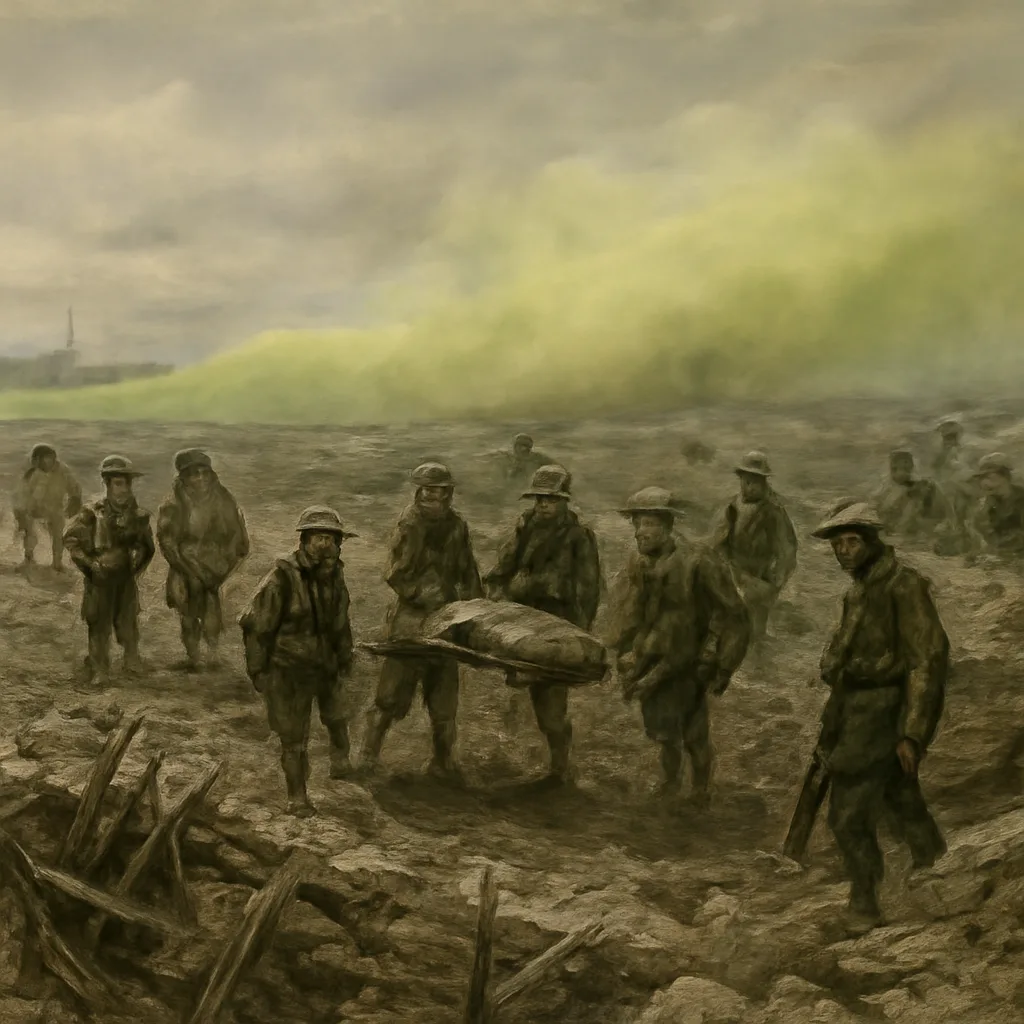
On 22 May 1915, Allied and German forces at Ypres reported the first large-scale use of chemical weapons in modern warfare when German troops released chlorine gas along a broad front, producing significant casualties and marking a grim new chapter in World War I.
Contemporary reports and later historical analyses identify chlorine as the primary agent used in this attack; chlorine gas causes damage by reacting with moisture in the respiratory tract to form hydrochloric acid and hypochlorous acid. Accounts from survivors and medical officers describe coughing, choking, severe eye irritation, and pulmonary edema in severe cases. Casualty figures for the event vary by source and are disputed, but it is clear the attack inflicted notable numbers of fatalities and many more nonfatal injuries and cases of temporary incapacitation.
The use of gas at Ypres did not come as an isolated experiment but followed research and planning: Germany had studied chemical agents and delivery methods in the years before and during the early months of World War I. The gas released from cylinders depended on favorable wind conditions to move across no-man’s-land, a delivery method that was both unpredictable and dangerous to the user. Subsequent developments in chemical warfare—such as artillery-delivered gas shells, persistent and nonpersistent agents, and protective respirators—were rapidly pursued by all major combatants after May 1915.
The psychological impact of the Ypres attack was immediate and profound. Soldiers unprepared for chemical attack experienced panic, and the sight and smell of the advancing greenish-yellow cloud left strong impressions in memoirs and official reports. Military medical services worked to treat victims and to develop protective measures; improvised gas masks and later standardized respirators became a priority. International reaction was mixed: while some legal and political authorities condemned the use of poison as contrary to established wartime norms, other belligerents soon adopted chemical weapons themselves, citing reciprocity and military necessity.
Historians emphasize several important points about the May 22 action. First, it marked a transition from limited, experimental use of noxious gases to deliberate, tactical employment intended to break the enemy front. Second, it demonstrated both the tactical utility and the logistical and ethical dilemmas posed by chemical warfare. Third, the attack accelerated arms-race developments in offensive agents and defensive equipment that would result in more extensive and varied gas use later in the war.
Although chlorine at Ypres was the most prominent example in 1915, it was not the only chemical agent considered or used during World War I. Over the subsequent years, belligerents introduced phosgene, mustard gas, and other compounds that increased lethality and suffering. After the war, the scale and horror of chemical warfare contributed to international efforts to restrict or ban such weapons, culminating in treaties such as the 1925 Geneva Protocol, which prohibited the use—but not the development or stockpiling—of chemical and biological agents in war.
Scholars continue to debate aspects of the 22 May attack—exact casualty figures, the degree of premeditation versus opportunism, and the influence of the event on later policy decisions—but its significance as the first large-scale successful use of gas in modern industrial warfare is widely acknowledged. The episode at Ypres remains a sobering milestone in military and humanitarian history, evidencing how technological innovation can produce catastrophic consequences when applied to killing at scale.