
02/11/1990 • 5 views
Nelson Mandela Released After 27 Years in Prison
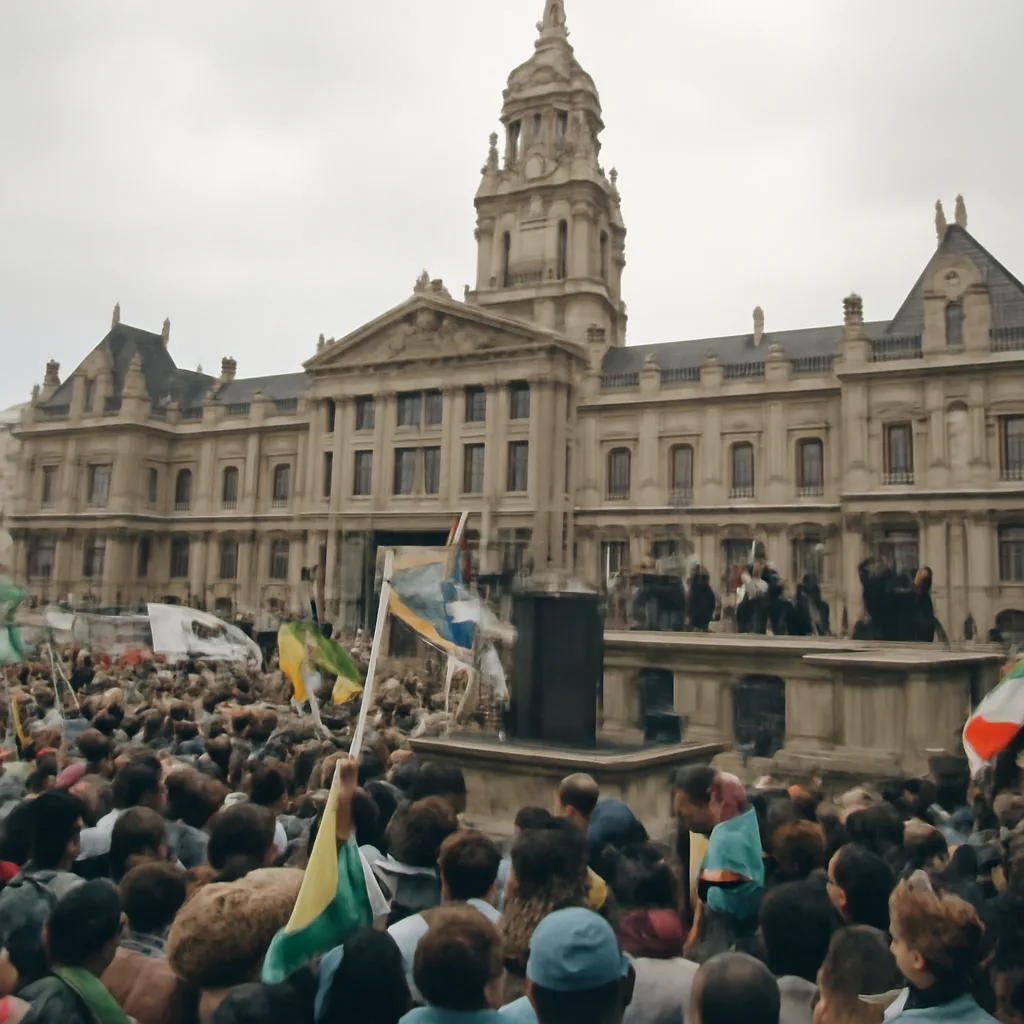
On February 11, 1990, Nelson Mandela was released from Victor Verster Prison after 27 years behind bars, marking a pivotal step in South Africa’s transition away from apartheid and beginning negotiations for majority rule.
Mandela left Victor Verster in a low-security setting rather than the maximum-security Robben Island where he spent much of his sentence. His release was the result of sustained internal resistance to apartheid, international pressure including economic sanctions, and behind-the-scenes talks between the government and anti-apartheid leaders. After leaving the prison, Mandela appeared on the balcony of Cape Town City Hall on February 11 and addressed an estimated crowd, calling for negotiation and reconciliation rather than retribution. He urged South Africans to work together toward a democratic society, while continuing to press for the release of other political prisoners and the dismantling of apartheid laws.
Mandela’s release did not immediately end political violence or resolve constitutional questions. The period that followed was marked by complex negotiations, intermittent violence, and political maneuvering among the ANC, the National Party, and other groups. Mandela became a central figure in the transition process, engaging in talks that led to the unbanning of political organizations, the repeal of key apartheid statutes, and ultimately the 1994 multiracial elections in which he was elected president.
Historians emphasize that Mandela’s moral stature and willingness to negotiate contributed to a relatively peaceful transition compared with many other decolonization and post-conflict processes, though the era was not free of bloodshed or injustice. Debates continue among scholars about the compromises made during negotiations, the speed of reforms, and the long-term socioeconomic legacies of apartheid that persisted after political power changed hands.
Mandela’s release remains one of the most widely recognized moments in late 20th-century history, symbolizing both the end of an era of legally enforced racial segregation in South Africa and the start of a challenging path toward national reconciliation and democracy.