
07/14/1789 • 4 views
Storming of the Bastille Marks a Turning Point in the French Revolution
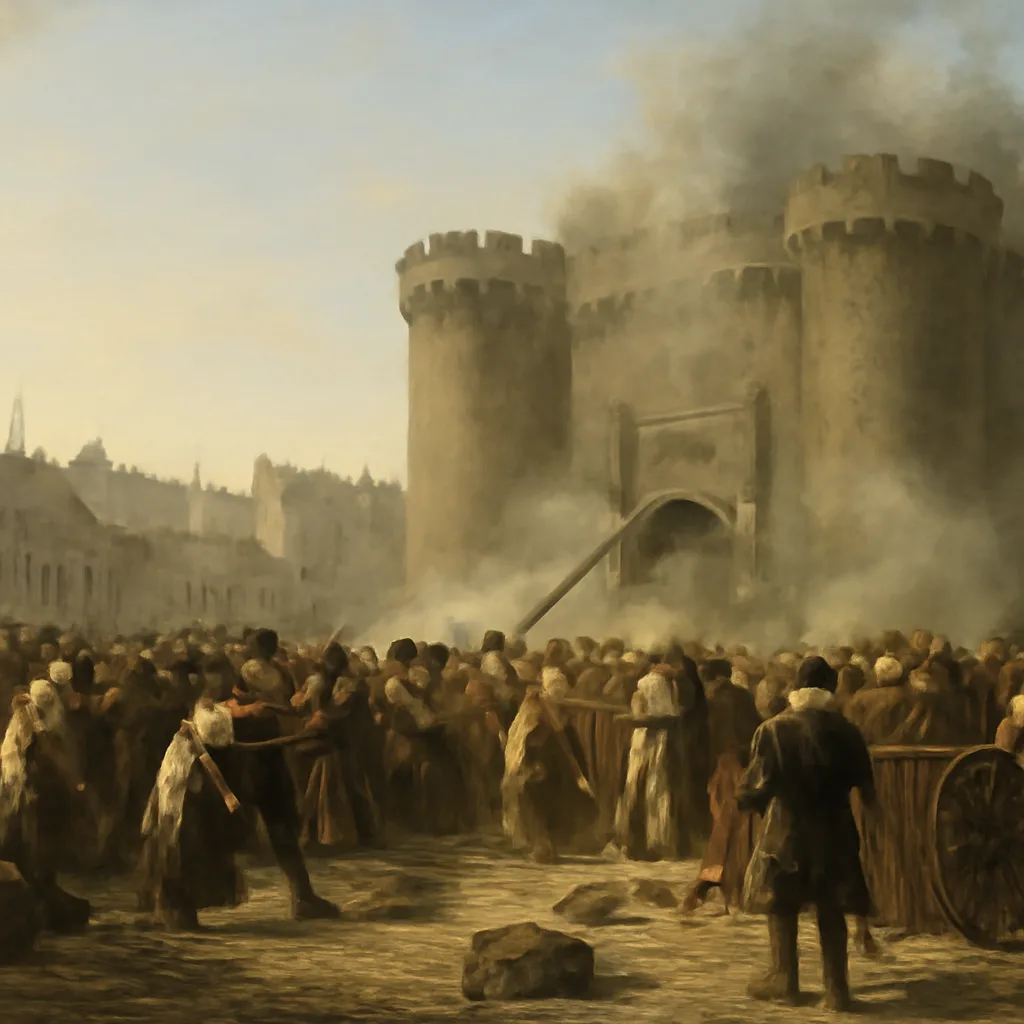
On 14 July 1789 Parisians stormed the Bastille prison, seizing weapons and freeing a handful of detainees; the event became a potent symbol of popular revolt against royal authority and accelerated revolutionary change across France.
Tensions in Paris escalated through early July after the dismissal of the popular minister Jacques Necker and the arrival of royal troops near the capital. Crowds gathered to demand arms and to resist perceived royal intervention. On 14 July, a large, agitated crowd assembled around the Bastille with the intent to obtain gunpowder and munitions. Negotiations between the governor, Bernard-René de Launay, and the crowd broke down. After several hours of exchange, fighting began. The governor surrendered in the afternoon; de Launay was subsequently killed by the crowd. The number of prisoners inside the Bastille at the time was small—historical records indicate seven or fewer detainees, most of them common criminals rather than prominent political prisoners.
Although the strategic military value of the Bastille was limited, its fall had immense symbolic significance. News of the event spread quickly through Paris and the provinces, strengthening the revolutionary cause and inspiring further uprisings and the creation of local militias (later organized as the National Guard). The king, confronted by the upheaval, recalled Necker and on 17 July accepted the appointment of the Marquis de Lafayette to command the National Guard; Louis also briefly appeared before a crowd at the Paris city hall and was greeted with cries of support, signaling a temporary rapprochement.
Historians debate the extent to which the storming of the Bastille was a planned act versus a spontaneous explosion of popular fury. Contemporary accounts vary in detail and emphasis; some participants saw themselves as defending the city, others as attacking a symbol of tyranny. In the months that followed, the event was commemorated and mythologized by revolutionaries, contributing to its enduring status as a founding moment of the French Revolution.
The immediate physical consequences included the looting of arms and powder, the dismantling of parts of the fortress in the years after, and a surge in political mobilization. Longer-term effects were political and cultural: the fall of the Bastille became a touchstone for republican and anti-monarchical movements, and 14 July was later institutionalized as France’s national holiday (Bastille Day) in the 19th century. While the precise details of the confrontation—casualty counts, individual actions, and motives—remain subjects of scholarly inquiry, the capture of the Bastille on 14 July 1789 stands as a pivotal episode in the revolutionary upheavals that transformed France.