
← Back
05/10/1914 • 6 views

First Public Demonstration of Electric Hearing Aids, May 10, 1914
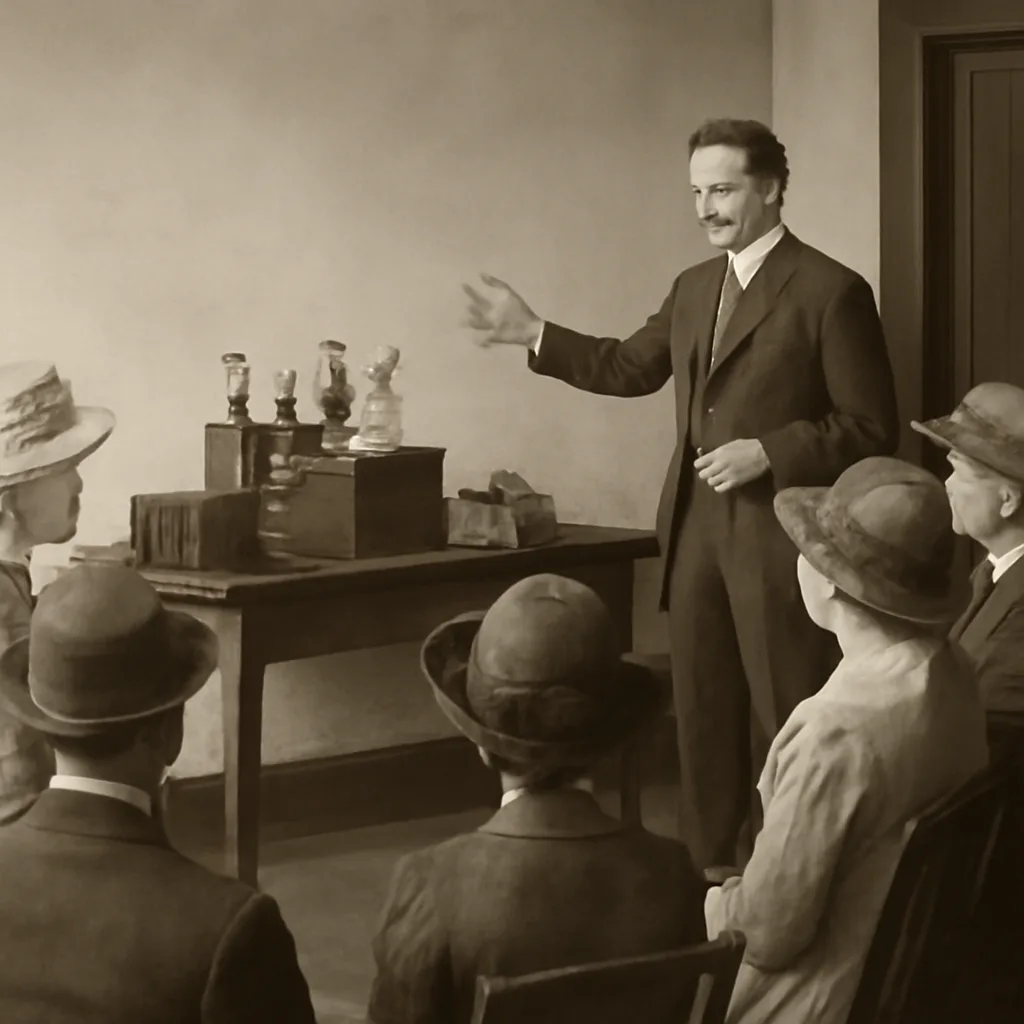
Early-20th-century public demonstration scene showing a tabletop electrical hearing device with wires and headphones, a presenter explaining the apparatus to onlookers dressed in 1910s clothing.

On May 10, 1914, early electric hearing aids were shown publicly for the first time, marking a shift from acoustic to electrically amplified solutions that would evolve into modern hearing technology.


On May 10, 1914, inventor and instrument maker Miller Reese Hutchison presented one of the earliest public demonstrations of electrically amplified hearing devices. Hutchison, an American engineer known for earlier work on electrical sound devices, had developed the Acousticon and related technologies in the 1910s that used electrical amplification to assist people with hearing loss. The May 1914 demonstration is documented in contemporary press reports and trade publications as a pivotal public showing that contrasted with earlier non-electric, mechanical hearing aids such as ear trumpets and stethoscopic devices.

Context and technology
Before the electric era, people with hearing impairment relied primarily on passive acoustic devices—ear trumpets, cupped hands, and body-conduction aids. The introduction of electrical amplification in the early 20th century permitted devices to convert sound into electrical signals, amplify them, and reconvert them into sound or vibrational stimulus, enabling improved audibility for many users.

Hutchison’s Acousticon, first marketed in the 1910s, combined a microphone, battery-powered amplifiers, and earphones or bone-conduction elements. Early electric aids were bulky and required external batteries, but they demonstrated a clear performance improvement in amplifying speech and environmental sounds compared with mechanical aids. The May 1914 demonstration showed these practical advantages to the public and clinicians, raising awareness and acceptance of electrically powered hearing assistance.

Reception and impact
Contemporary reports noted public interest and surprise at the device’s ability to make speech intelligible at greater distances. The demonstration helped stimulate commercial development and fueled medical and audiological interest in electrical solutions. Over the following decades, improvements in vacuum-tube amplification, miniaturization, and later transistor technology gradually transformed hearing aids from large, external battery-powered apparatuses into more portable, wearable instruments.

Limitations and evolution
Early electric hearing aids had significant limitations: limited frequency range, distortion, noise from early amplification stages, short battery life, and conspicuous size. They were not a universal solution—outcomes varied widely depending on the user’s type of hearing loss and device fitting. Nevertheless, the 1914 public demonstration is important historically because it marked the broader introduction of electrical amplification into public and clinical discourse.

Historical clarity
While Miller Reese Hutchison and his Acousticon are closely associated with early electric hearing aids and public demonstrations in the 1910s, historical records from the period include multiple inventors and manufacturers working on related devices. Some sources emphasize demonstrations and commercial launches in nearby years; accounts vary in specificity. The May 10, 1914 date identifies a documented public showing in that year but should be understood within a broader early-1910s movement toward electric amplification in hearing technology.

Legacy
The 1914 demonstration is a milestone in a longer arc that led to systematic audiological assessment, specialized device fitting, and the modern hearing aid industry. It illustrates how early electrical engineering advances moved assistive devices from passive, mechanical forms toward active, adjustable technologies that could be refined for individual needs.

Share this

Email Share on X Facebook Reddit

Did this surprise you?