
05/10/1933 • 7 views
Reichstag Declared Unsafe After Bombing
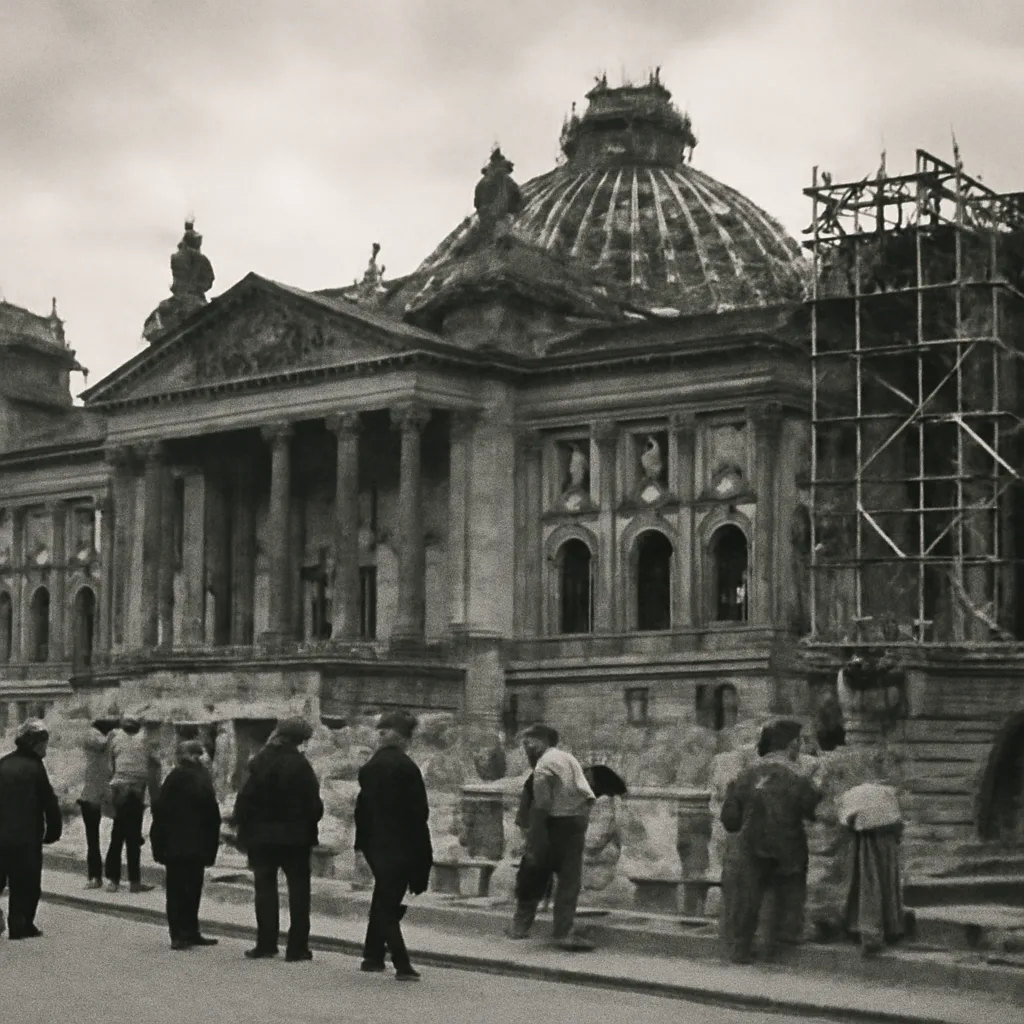
On 10 May 1933 the Reichstag building in Berlin was declared unsafe following a bombing incident; authorities closed the chamber and began structural assessments amid a tense political atmosphere.
The Reichstag, completed in 1894 and the seat of the German national legislature, had long been a potent symbol of parliamentary governance. Damage to the building thus carried both practical and symbolic consequences. After the bombing, authorities focused first on ensuring that remaining masonry, galleries, and load-bearing elements posed no imminent collapse risk; cordons were placed around visibly affected areas and temporary supports were installed where necessary.
The incident occurred in a period of acute political upheaval. In early 1933 the new government, led by Chancellor Adolf Hitler, had moved rapidly to consolidate power. The declaration that the Reichstag was unsafe came amid heightened concerns about public order and security, and it intersected with the administration’s broader efforts to limit political opposition and expand state authority. Practical steps taken after the bombing included inventorying damage, preparing repair plans, and coordinating with police and fire services to secure the site.
Reporting at the time varied in detail, and contemporary accounts emphasized different aspects: some focused on the technical dimensions of the damage and the work of engineers and laborers; others underlined the political ramifications of an incapacitated parliamentary building. Repair timelines depended on the severity of structural harm identified during inspection. Temporary measures—such as bracing, shoring, and clearing loose debris—were prioritized to prevent further deterioration while longer-term restoration planning proceeded.
Beyond immediate repairs, authorities had to decide how and where legislative and administrative functions would continue while the Reichstag was out of use. In similar historical episodes, parliamentary business has been relocated to alternative venues or conducted in a limited capacity until the primary building could be certified safe. The security posture around the Reichstag precinct remained elevated during the assessment and repair period.
Historians viewing the event note that damage to a national legislature’s building tends to have significance beyond physical repair: it can affect public morale, provide opportunities for political actors to reshape institutional routines, and become a focus of public debate. The precise causes, perpetrators, and motivations associated with the 10 May incident were subjects of contemporary investigation and remain matters for careful historical sourcing. Where accounts conflict or lack documentary confirmation, scholars treat those points with caution.
Restoration work on historic legislative buildings typically aims to balance structural safety with conservation of original fabric and symbolic features. Any decisions about reconstruction or alteration would have involved architects, engineers, and cultural officials charged with preserving the building’s historical character while meeting modern safety requirements.
In summary, the declaration on 10 May 1933 that the Reichstag was unsafe marked the start of a period of restricted access, engineering assessment, and repair planning. The event occurred against a backdrop of intense political change, and contemporary and later observers have considered both its immediate practical consequences and its broader political and symbolic implications.