
02/22/1945 • 6 views
First Successful Use of an Artificial Kidney, February 22, 1945
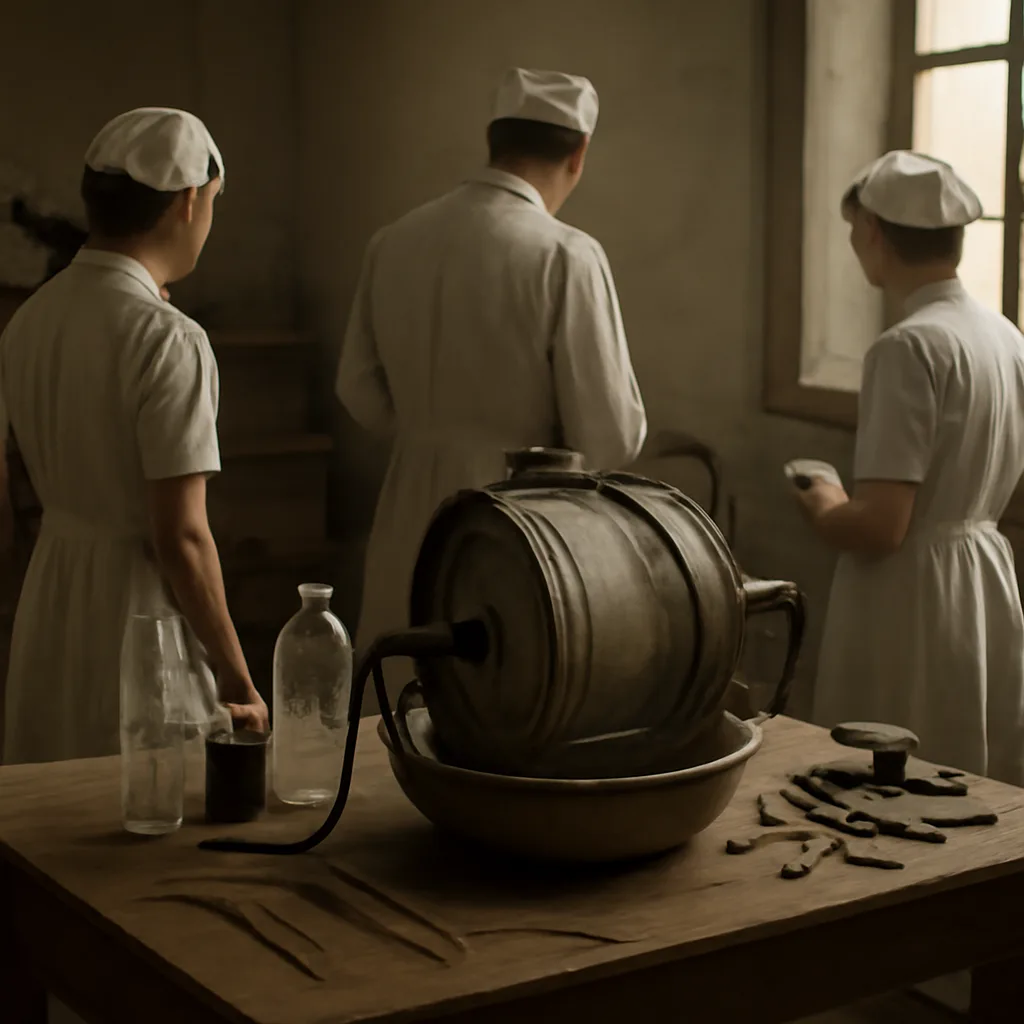
On February 22, 1945, Dutch physician Willem Kolff performed the first successful clinical treatment using a rotating drum artificial kidney—an early dialysis machine—marking a milestone in renal therapy during wartime Netherlands.
Kolff’s work built on earlier physiological and experimental research into dialysis and membrane diffusion, but his design was the first to be applied successfully in a clinical setting with a patient who survived—demonstrating that extracorporeal removal of uremic toxins could sustain life. He faced extreme constraints: material shortages forced him to improvise parts from available supplies, and he relied on local technicians and nurses to operate and maintain the apparatus. The early treatments were complex and risky, involving vascular access and anticoagulation management that were still being perfected.
The immediate context was wartime medical care in the occupied Netherlands, where standard resources were scarce and many hospitals were overloaded. Kolff’s perseverance and pragmatic engineering produced a functional machine whose principles—semipermeable membrane diffusion and countercurrent dialysate flow—became foundational for future hemodialysis technology. After the war, Kolff continued to refine and promote dialysis techniques, and others built on his prototype to create more reliable, safer, and commercially produced machines.
Historical assessments note that while Kolff’s February 1945 treatment is widely cited as the first successful clinical dialysis, the development of renal replacement therapy was incremental and involved contributions from multiple researchers in different countries. The Kolff drum is nonetheless a clear turning point because it proved that artificial removal of uremic waste could save a patient’s life and paved the way for modern dialysis programs and long-term maintenance therapies.
By the 1950s and 1960s, improvements in membrane materials, vascular access, anticoagulation, and fluid management transformed dialysis from an experimental rescue therapy into an established medical treatment, enabling chronic dialysis and ultimately kidney transplantation as complementary options. Kolff’s 1945 achievement is therefore remembered both for its technical ingenuity under hardship and for launching a century of rapid advances in nephrology and biomedical engineering.