
← Back
07/15/1986 • 4 views

NASA Clears Space Shuttle Challenger for Future Flights After Post-Disaster Review
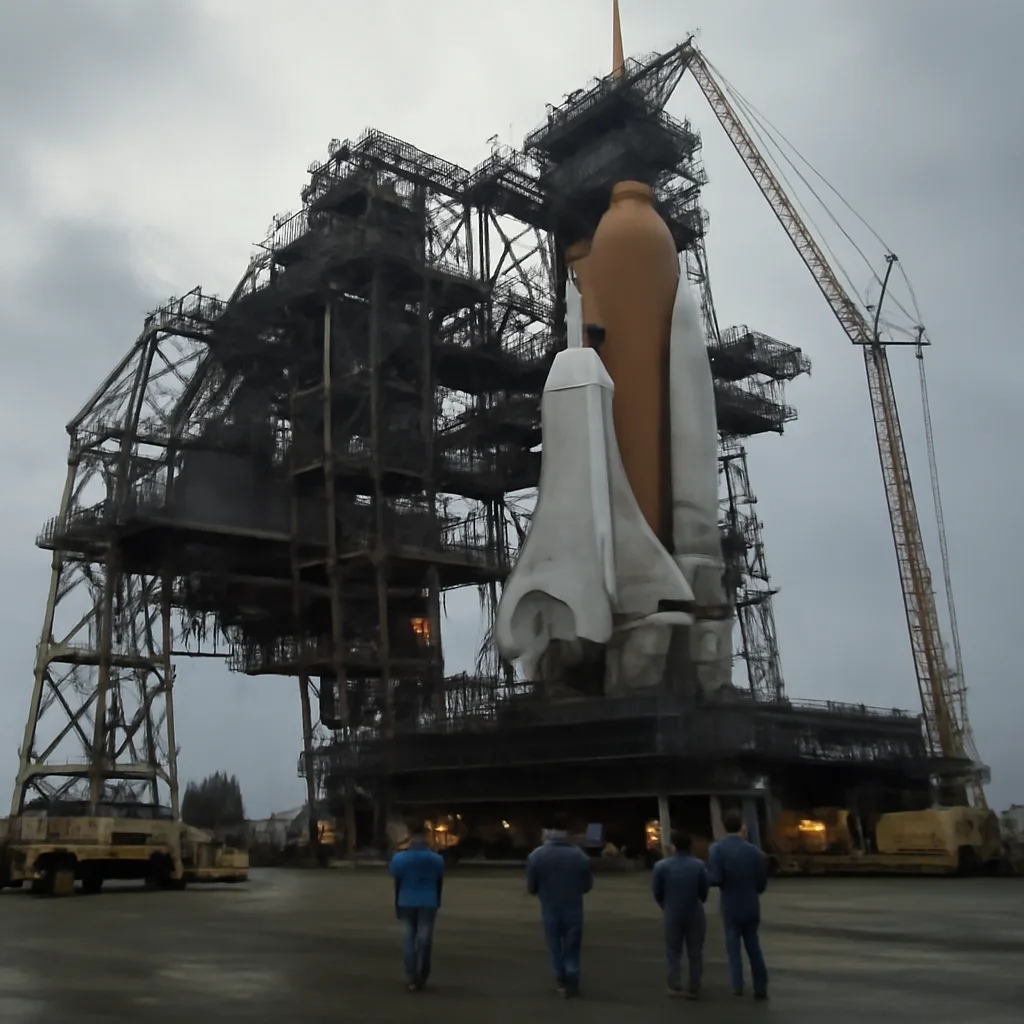
Space Shuttle on the launch pad with ground crew and engineering equipment nearby, viewed from a low angle; scene conveys post-accident testing and inspection activity at a 1980s launch complex.

On July 15, 1986, federal and agency reviews concluded that Space Shuttle Challenger could return to flight pending implementation of technical and managerial changes following the January disaster. The decision emphasized corrective actions and continued investigation into organizational causes.


Background and context
On January 28, 1986, the Space Shuttle Challenger broke apart 73 seconds after liftoff, killing seven crew members and prompting a sweeping suspension of the shuttle program. The subsequent investigation centered on both technical causes—most prominently failure of an O-ring in a solid rocket booster joint—and systemic problems in how NASA and contractors assessed and managed flight risk.

Investigations and recommendations
The Rogers Commission, established by President Ronald Reagan, issued a report identifying the immediate technical failure in an aft field joint of a solid rocket booster and documenting decision-making and communication failures inside NASA and its contractor Morton Thiokol. The commission recommended redesigns of the solid rocket booster joints, improvements in safety culture and communications, establishment of independent safety oversight, and changes to management practices.

July 15 decision
By mid-1986, federal and agency reviews had evaluated corrective engineering work, planned procedural changes, and proposals for improved oversight. On July 15, 1986, officials announced that Challenger could be cleared for future flights contingent on completing required technical modifications to the solid rocket boosters, implementing management and safety reforms, and satisfying independent review criteria. The clearance was not an authorization for an immediate launch; it was a conditional determination that return-to-flight was achievable once stipulated changes were verified.

Technical and managerial changes required
Key technical tasks included redesigning the booster joint seals and verifying their performance under expected temperature ranges, revising inspection and quality-control practices, and enhancing testing and validation of critical components. Managerial and organizational reforms focused on changing how safety concerns were raised and addressed within NASA, improving lines of independent review, and ensuring that contractor dissenting opinions received formal consideration in launch decisions.

Significance and caveats
The July 15 announcement marked an important step in returning the shuttle fleet to operation: it acknowledged progress on implementing the Rogers Commission recommendations and signaled a pathway back to flight. However, officials and observers treated the clearance as conditional and provisional; full return to flight required rigorous testing, certification, and demonstrated cultural change. The Shuttle program remained grounded until technical work and oversight measures were completed and further certification milestones were met.

Aftermath
Over the following months, NASA and contractors carried out redesigns, tests, and organizational changes. The shuttle program ultimately returned to flight with STS-26 in September 1988, following thorough verification of engineering fixes and procedural reforms. The Challenger disaster and the subsequent reforms had enduring effects on NASA’s approach to safety, risk communication, and program oversight.

Notes on sources and accuracy
This summary synthesizes findings and timelines established by the Rogers Commission report, subsequent NASA technical reviews, and contemporaneous federal announcements. Where decisions were described as conditional or contingent, that reflects official characterizations at the time rather than an unconditional resumption of flight.

Share this

Email Share on X Facebook Reddit

Did this surprise you?