
← Back
07/15/1958 • 6 views

U.S. Marines Land in Lebanon During 1958 Crisis
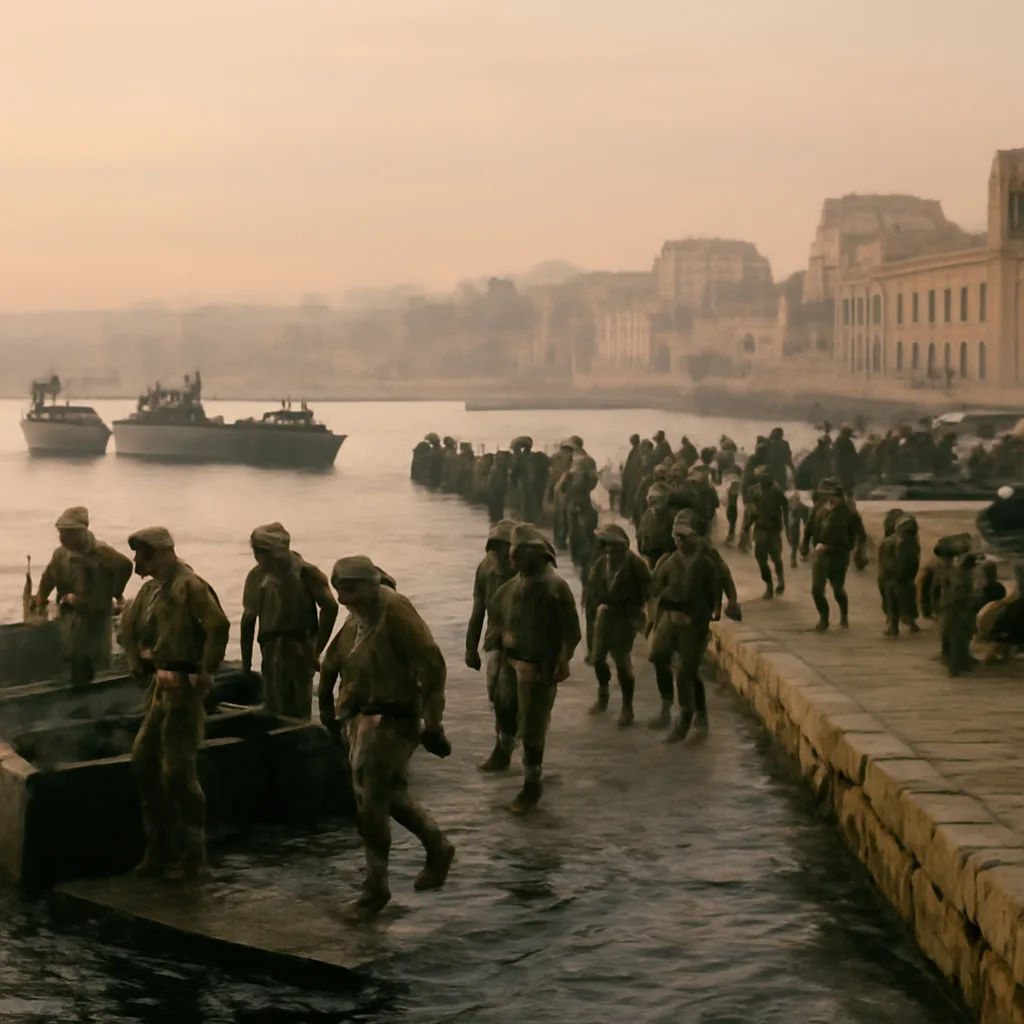
U.S. Marines disembarking from landing craft onto a Beirut waterfront in July 1958, with military vehicles and modest coastal buildings in the background.

On July 15, 1958, U.S. Marines landed in Lebanon after President Camille Chamoun requested U.S. assistance amid mounting internal unrest and regional tension during the Cold War. The deployment aimed to stabilize the government and deter perceived external intervention.


Background
In 1958 Lebanon faced political polarization and street violence fueled by domestic disputes over President Camille Chamoun’s bid for a second term, economic grievances, and the wider Arab Cold War context following the creation of the United Arab Republic (a union of Egypt and Syria) and rising Arab nationalism. Chamoun, a Maronite Christian, feared opposition forces might seek support from regional actors; many Muslim and leftist groups opposed his presidency and pro-Western orientation.

Request and Decision
On July 15, 1958, amid escalating demonstrations and clashes, President Chamoun requested military assistance from the United States. The U.S. government, citing concerns about regional stability and the possibility of communist or Nasserist influence, responded under the Eisenhower administration. The intervention was framed by U.S. officials as a limited effort to protect American citizens and property and to support the Lebanese government upon its request.

Operations and Forces
The initial landings involved elements of the U.S. Sixth Fleet and Marine units. Marines landed at Beirut’s port and other coastal areas to secure key points, including the airport and government installations, and to evacuate U.S. citizens where necessary. The operation was coordinated with naval gunfire support and air reconnaissance. U.S. forces operated alongside and in support of Lebanese security forces; they avoided large-scale offensive operations against Lebanese factions.

Political and Diplomatic Context
The intervention occurred amid delicate diplomacy. The Eisenhower administration emphasized that U.S. forces were acting at the invitation of Lebanon’s government and aimed to deter external intervention rather than to impose a particular domestic political outcome. Regional reactions were mixed: some Arab states and nationalist movements denounced the landing as foreign interference, while Western allies viewed it as a stabilization measure during a volatile period.

Outcome and Aftermath
The U.S. presence helped stabilize Beirut and allowed time for political negotiations. In September 1958 a political compromise was brokered: General Fuad Chehab, commander of the Lebanese armed forces, was elected president, and U.S. forces began a phased withdrawal. By October 1958 most U.S. troops had left Lebanon. The crisis underscored Lebanon’s vulnerability to regional dynamics and demonstrated the United States’ willingness during the Cold War to intervene militarily in the Middle East to counter perceived threats.

Historical Notes and Contested Points
Historians note that U.S. officials framed the intervention in Cold War terms, but Lebanese domestic politics and sectarian divisions were central drivers of the crisis. Some contemporaries and later critics characterized the landing as an overreach of U.S. influence in the region; others argue it prevented wider bloodshed and external military involvement. The operation remained limited in scope compared with later Cold War interventions.

Sources and Further Reading
This summary is based on declassified U.S. government documents, contemporaneous news reporting, and scholarly histories of Lebanon and U.S. foreign policy in the 1950s. For detailed archival sources, consult U.S. Department of State records and histories of the 1958 Lebanon crisis by established historians.

Share this

Email Share on X Facebook Reddit

Did this surprise you?