
07/15/1965 • 5 views
Mariner 4 Returns First Close-Up Photographs of Mars
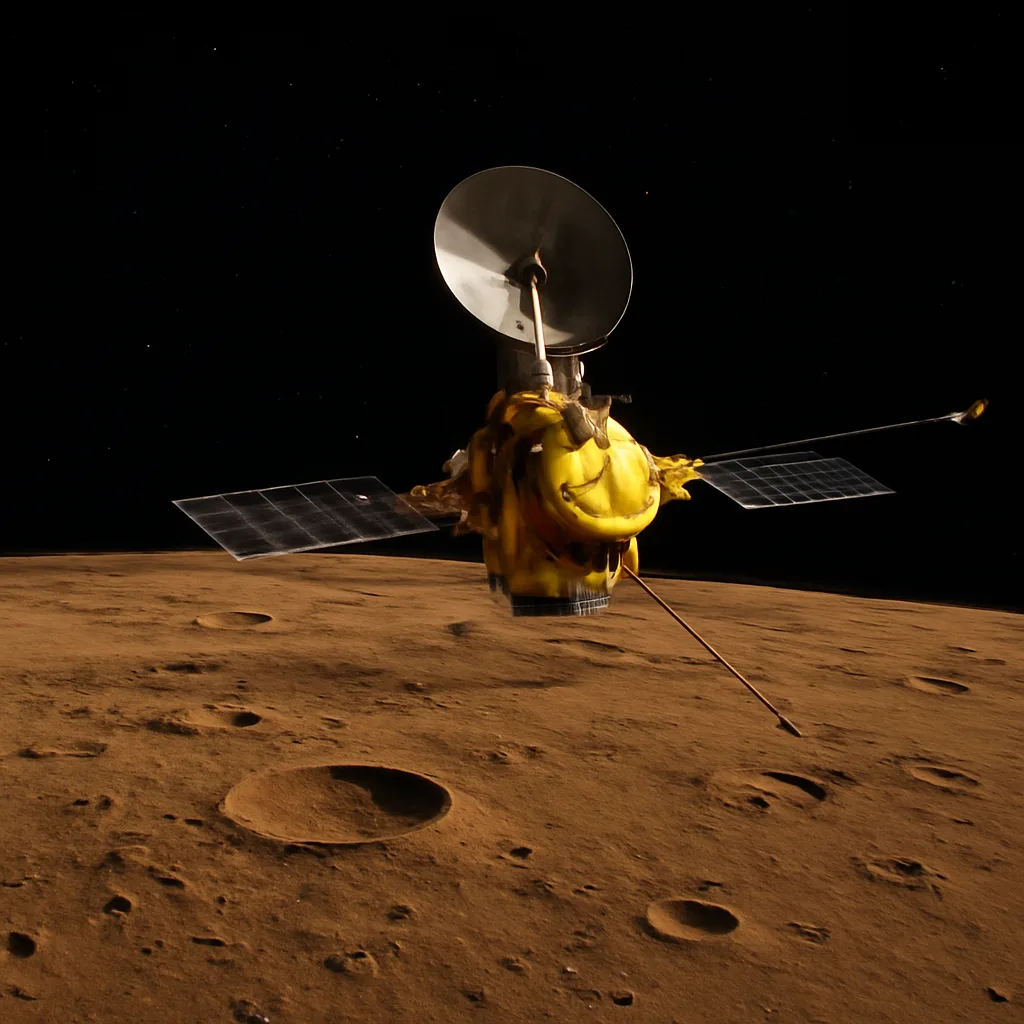
On July 15, 1965, NASA's Mariner 4 transmitted the first close-up images of Mars, revealing a cratered, Moon-like surface and providing the first direct data on the Martian atmosphere and environment.
The photographs showed a heavily cratered terrain that resembled the Moon more than the previously imagined vegetated or canal-crossed landscapes proposed by some earlier observers. The images and accompanying telemetry indicated a thin Martian atmosphere, with surface pressures far lower than Earth's and insufficient to support liquid water at the surface under present conditions. Mariner 4's instruments also measured cosmic radiation levels and detected a weak magnetic field, providing the first in situ data that would shape scientific understanding of Mars for years to come.
Mariner 4's radio and telemetry systems relayed both image and scientific data to Earth. Due to bandwidth and onboard memory limitations, the images were transmitted slowly and in partial sequences, requiring subsequent assembly and processing by mission teams. The visual record challenged popular and scientific expectations about Mars: instead of canals or abundant vegetation, the planet appeared cold and cratered, prompting a reassessment of hypotheses about Martian habitability.
The mission had broader significance beyond the photographs. Mariner 4 demonstrated that interplanetary spacecraft could reach and return meaningful data from another planet, validating key engineering approaches for deep-space navigation, telemetry, thermal control, and long-duration operations. The spacecraft's results influenced planning for subsequent Mariner missions and later Mars exploration efforts by highlighting the need for more comprehensive atmospheric and surface studies.
While later missions revealed more varied Martian geology—evidence of ancient fluvial features, ice deposits, and complex mineralogy—Mariner 4 remains historically important as the first mission to provide humans with close-range images and direct measurements of Mars. Its findings marked the start of an era of systematic, spacecraft-based exploration of the Red Planet and reshaped scientific and public expectations about our nearest planetary neighbor.