
← Back
11/12/1973 • 5 views

UN General Assembly Condemns South African Apartheid Regime
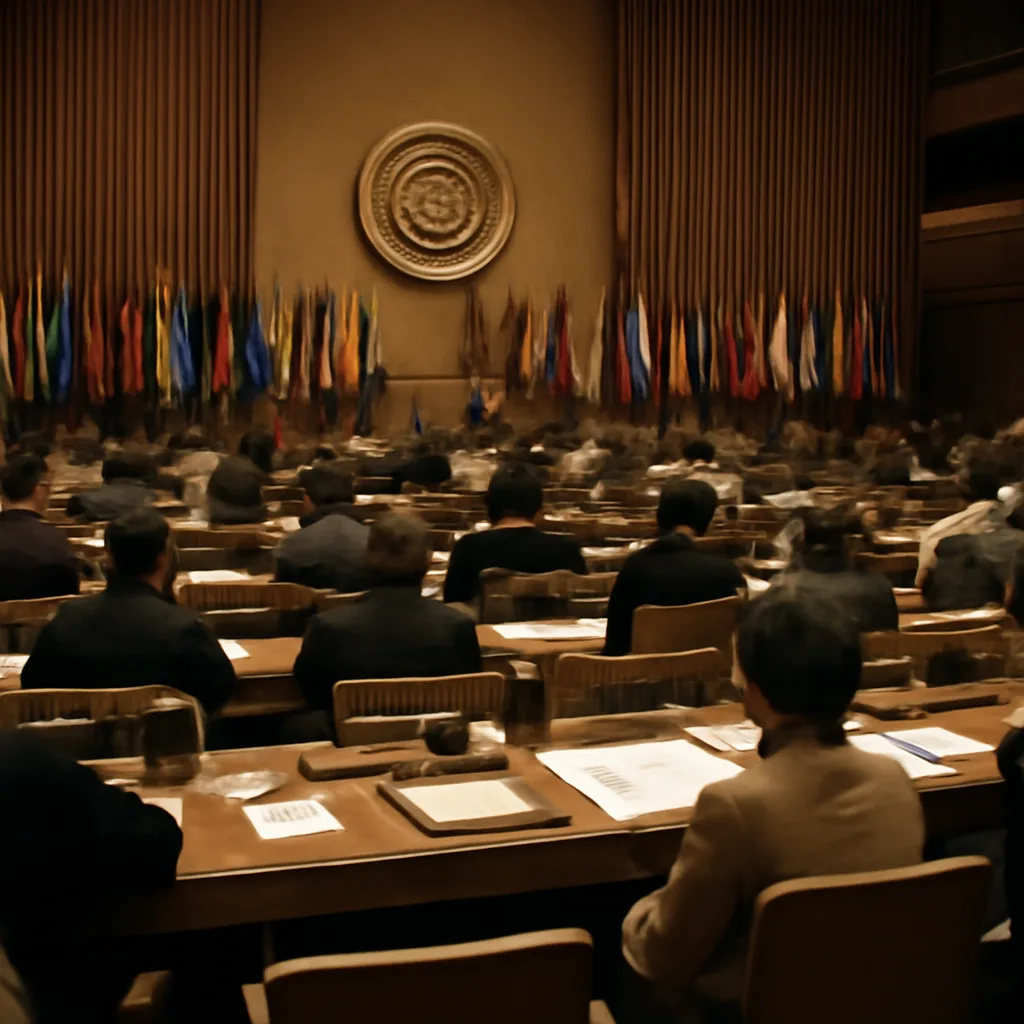
Delegates at a United Nations General Assembly session in the early 1970s, with desks and placards showing country names, capturing a moment of international debate over apartheid policies.

On 12 November 1973 the United Nations General Assembly adopted a resolution condemning South Africa’s apartheid policies, reinforcing international censure and expanding measures aimed at isolating the Pretoria government.


On 12 November 1973 the United Nations General Assembly adopted a resolution condemning the apartheid policies of the government of South Africa. The vote reflected growing international impatience with the system of racial segregation and discrimination instituted by the white-minority government in Pretoria, and it formed part of a succession of UN actions throughout the 1960s and 1970s that increasingly framed apartheid as a matter of international concern and human rights.

Background

Apartheid, the system of legal racial segregation introduced and expanded by successive South African governments after 1948, entrenched political, social and economic discrimination against the nonwhite majority. From the late 1950s onward, African states, newly independent nations in Asia and elsewhere, and transnational anti-apartheid movements pushed for international instruments to isolate and pressure the South African regime. The UN General Assembly had previously adopted resolutions criticizing apartheid, and the Security Council had considered measures including arms embargoes and sanctions, though Cold War divisions and Western reluctance limited enforcement.

The 1973 resolution

The November 1973 General Assembly action reaffirmed and amplified earlier condemnations. It characterized apartheid as a violation of the UN Charter and of the principles of human rights and fundamental freedoms. The resolution called on member states to take measures to end support for apartheid, condemned acts of racial discrimination and oppression, and reaffirmed the right of peoples subject to colonial and racial domination to self-determination. It also urged intensified efforts to bring about the end of apartheid through diplomatic, economic and other peaceful means.

International context and impact

The 1973 vote occurred amid expanding global anti-apartheid activity: United Nations bodies, the Organization of African Unity (OAU), and civic movements worldwide coordinated pressure through public diplomacy, economic measures, and calls for cultural and sporting boycotts. While General Assembly resolutions are not legally binding in the same way as Security Council decisions, they carry significant political weight and helped legitimize subsequent initiatives—such as calls for mandatory arms embargoes and international disinvestment campaigns—that intensified in later decades.

Limitations and subsequent developments

Despite mounting criticism, immediate enforcement against the apartheid state was uneven. Many Western countries maintained economic ties with South Africa, citing strategic, commercial, or anti-communist considerations. Nevertheless, the cumulative effect of repeated UN condemnations, growing multilateral pressure, and internal resistance within South Africa contributed to the regime’s increasing international isolation in the 1980s. Over time, this isolation—combined with internal political change and negotiations—played a role in the dismantling of apartheid and the country’s transition to majority rule in the early 1990s.

Historical significance

The UN General Assembly’s 12 November 1973 resolution is part of a documented trajectory in which global institutions framed apartheid as incompatible with international human rights norms. While the resolution did not by itself end apartheid, it reinforced an international consensus that underpinned later diplomatic, economic and social pressures. For historians and human rights scholars, the action exemplifies how transnational advocacy and multilateral institutions interacted with local struggles to delegitimate institutionalized racial oppression.

Share this

Email Share on X Facebook Reddit

Did this surprise you?