
← Back
11/12/1970 • 6 views

1970 Bhola Cyclone in Bangladesh Kills Hundreds of Thousands
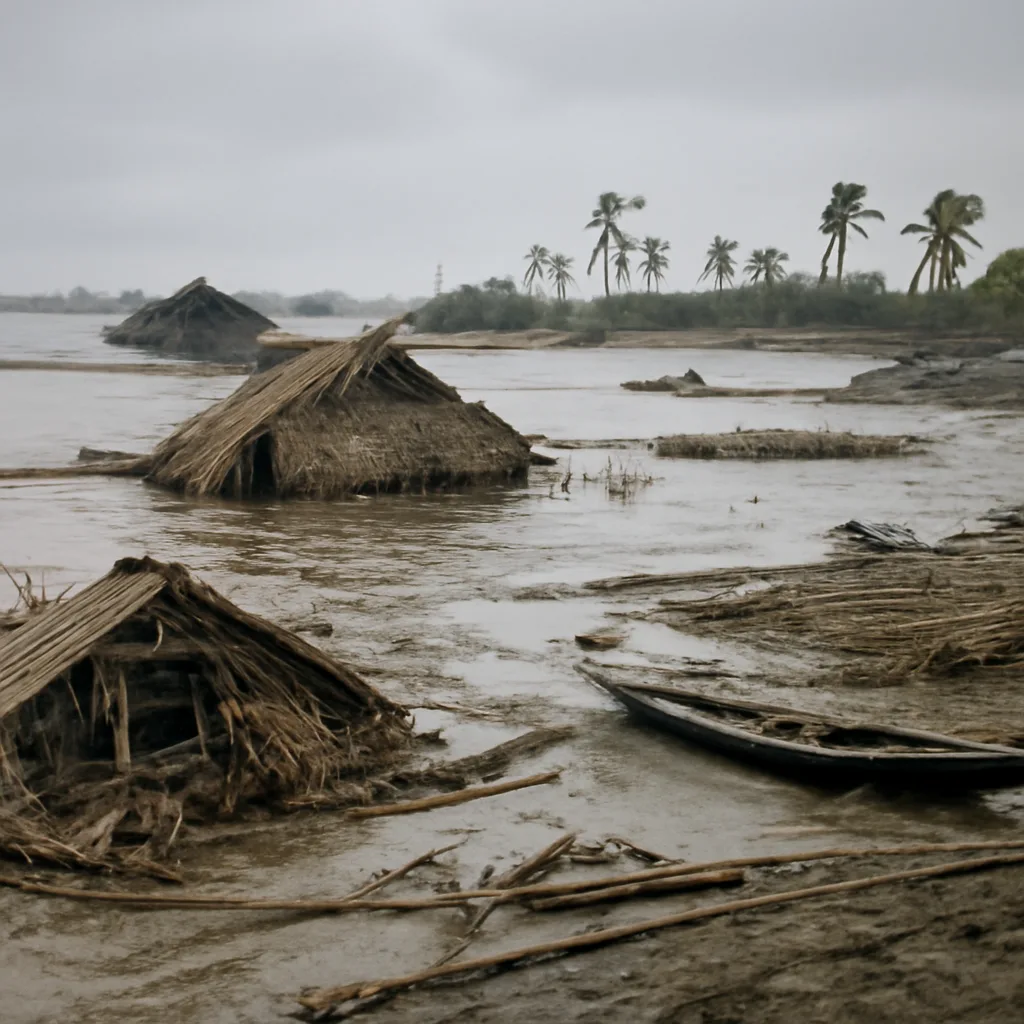
Coastal villages in the Ganges Delta inundated by storm surge waters after the 1970 Bhola cyclone, showing flooded low-lying land, damaged huts and debris along muddy shoreline.

On November 12, 1970, the Bhola cyclone struck the densely populated Ganges Delta in what was then East Pakistan, producing a storm surge that inundated low-lying coastal areas and caused one of the deadliest tropical cyclone disasters in recorded history.


On November 12, 1970, a powerful tropical cyclone—later known as the Bhola cyclone—made landfall on the low-lying coastal regions of the Ganges Delta in what was then East Pakistan (now Bangladesh). The cyclone produced a storm surge that swept across river estuaries, islands and densely populated coastal embankments, inundating villages and farmland. Exact fatality figures remain uncertain and vary by source; contemporary and later estimates place the death toll between roughly 300,000 and 500,000 people, making it widely regarded as the deadliest tropical cyclone on record.

The storm developed over the northern Bay of Bengal in early November and intensified as it moved northward. Its landfall coincided with high tide in several areas, amplifying the surge. Disaster impacts were concentrated in the low-lying districts of southern East Pakistan—particularly on the islands of the Meghna estuary, the coastlines of Bhola and Barisal divisions, and along the mouths of the Ganges and Brahmaputra rivers. Many coastal embankments and mud-built homes were overtopped or destroyed; survivors reported widespread washing away of settlements, livestock losses, and contamination of freshwater supplies.

Communications and transportation infrastructure were severely disrupted, hindering immediate rescue and relief efforts. Local and national authorities struggled to assess the scale of destruction amid destroyed roads, bridges and toppled telephone lines. International aid organizations and foreign governments later mobilized assistance, but logistical challenges, including flooded approaches and limited port access, constrained the speed and reach of relief operations. The disproportionate impact on the mostly rural Bengali population, coupled with dissatisfaction over the response, contributed to political tensions between East and West Pakistan during an already fraught period.

The cyclone highlighted several vulnerabilities: extreme population density in coastal settlements, limited early-warning and evacuation capacity, fragile embankment and shelter infrastructure, and seasonal dependence on riverine and coastal environments. In subsequent decades Bangladesh invested heavily in cyclone preparedness and coastal defense measures—such as improved forecasting, early-warning dissemination, construction of multipurpose cyclone shelters, and strengthened embankments—efforts credited with reducing mortality in later major cyclones.

Historical reports and scholarly analyses emphasize both the staggering human cost and the disaster’s broader social and political consequences. While numerical estimates of fatalities vary and remain contested in some accounts, the general consensus among historians and disaster researchers is that the Bhola cyclone was among the most lethal weather-related events of the 20th century and a pivotal moment in the region’s modern history.

Share this

Email Share on X Facebook Reddit

Did this surprise you?