
← Back
02/19/1878 • 6 views

Edison Patents the Phonograph, Ushering in Recorded Sound
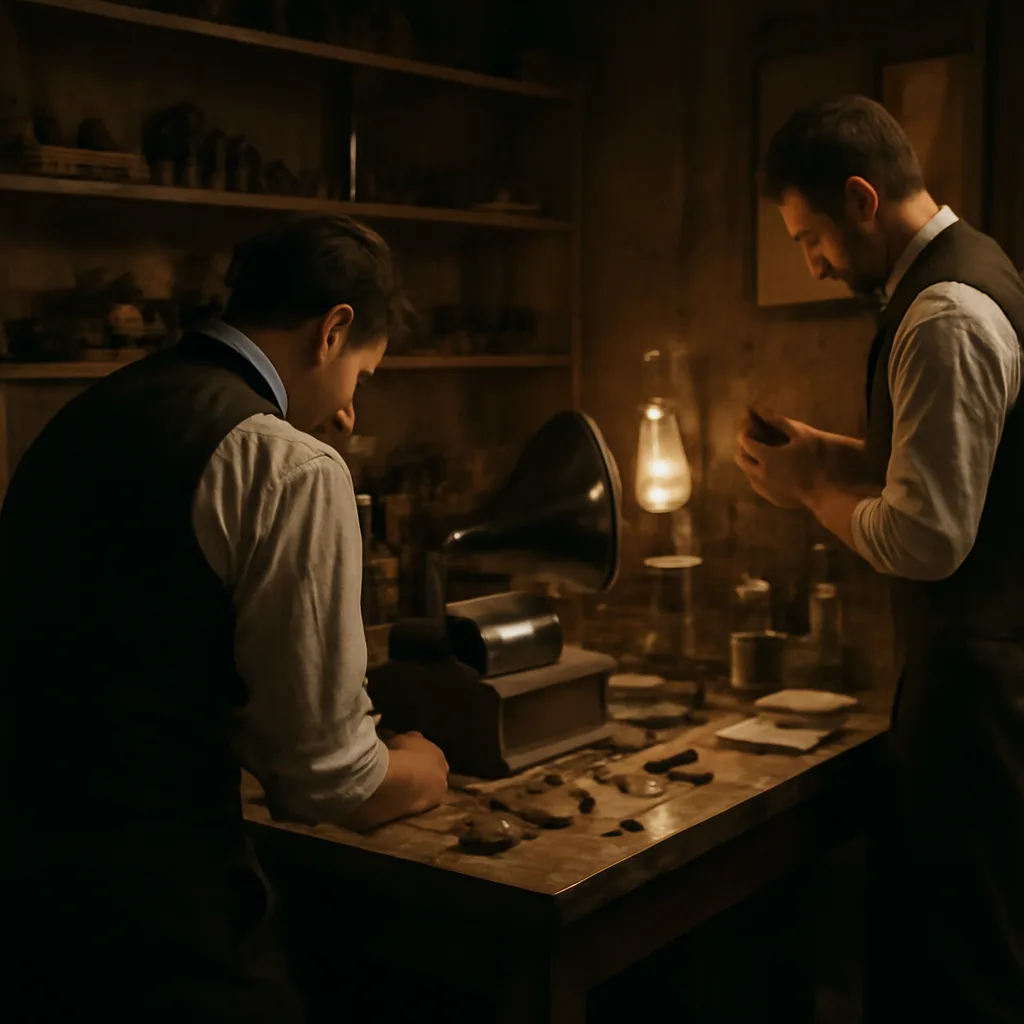
Late 19th-century workshop scene showing a table with an early phonograph cylinder device, tools, and wax cylinders; men in period work clothes examine the apparatus.

On February 19, 1878, Thomas A. Edison received a patent for the phonograph, a device that recorded and reproduced sound using a grooved cylinder—marking a pivotal step toward commercial recorded audio.


On February 19, 1878, Thomas A. Edison was granted U.S. Patent No. 200,521 for an invention he called the "phonograph," a machine designed to record and reproduce sound on a grooved cylinder. The patent described a method by which sound vibrations would move a diaphragm connected to a stylus; as the cylinder turned, the stylus would inscribe a pattern corresponding to the vibrations into a soft medium. Reversing the process, the stylus could trace the grooves and vibrate a diaphragm to reproduce the original sound.

Edison’s phonograph grew out of his broader work on telegraphy and telephony. He and his laboratory assistants experimented with diaphragms, styluses, and various recording surfaces. Early demonstrations used tinfoil wrapped around a grooved cylinder; subsequent practical designs experimented with wax and other materials to improve fidelity and durability. The 1878 patent codified the basic mechanical principles rather than a finished commercial product—Edison’s lab continued rapid iterative development after the patent was secured.

Contemporary reaction combined wonder and skepticism. The phonograph was reported as a novelty that could capture musical tones, speech, and even the sound of a human voice—an outcome that many observers found uncanny. Edison himself emphasized the device’s potential for business and scientific uses, predicting applications ranging from dictation and recordkeeping to modes of entertainment and preservation of voices. Critics and some inventors questioned the sound quality and the practicality of mass production, but the idea of recorded sound had been firmly established.

The patent’s technical claims focused on the mechanical linkage of a sound-responsive diaphragm and a stylus operating on a rotating recording medium. This basic architecture influenced later recording technologies, including improvements by other inventors and manufacturers who developed more reliable and higher-fidelity materials, playback mechanisms, and standardized recording formats. Edison’s company and rivals pursued competing systems—cylinders versus flat discs—setting the stage for decades of technological rivalry and commercial evolution in the nascent recording industry.

Historians note that while the 1878 patent was a landmark, the transition from laboratory prototype to widespread commercial product took years. Refinements were needed in recording materials, manufacturing, and playback stability. Moreover, legal disputes and overlapping claims among inventors and companies shaped the early marketplace. Edison’s prominence and publicity helped popularize the phonograph, but the medium’s technical and commercial maturation was collective and incremental.

The phonograph’s long-term significance lies in inaugurating a culture of recorded sound. It created new possibilities for disseminating music, preserving spoken testimony, and altering how people experienced performance—no longer bound to a single live event. Over subsequent decades, recorded audio would transform entertainment, journalism, law, education, and memory. While the machines and formats evolved—from cylinders to discs to magnetic tape and digital media—the conceptual breakthrough represented by Edison’s 1878 patent remains a foundational moment in the history of sound technology.

Note on sources and attribution: the patent referenced is U.S. Patent No. 200,521 (filed and issued 1878) and contemporary newspaper and trade reports document early demonstrations and reactions. Scholarly histories of sound recording review the technical details, subsequent refinements, and commercial developments that followed Edison’s patent.

Share this

Email Share on X Facebook Reddit

Did this surprise you?