
06/17/1947 • 4 views
First Public Demonstration of Weather Modification Held in 1947
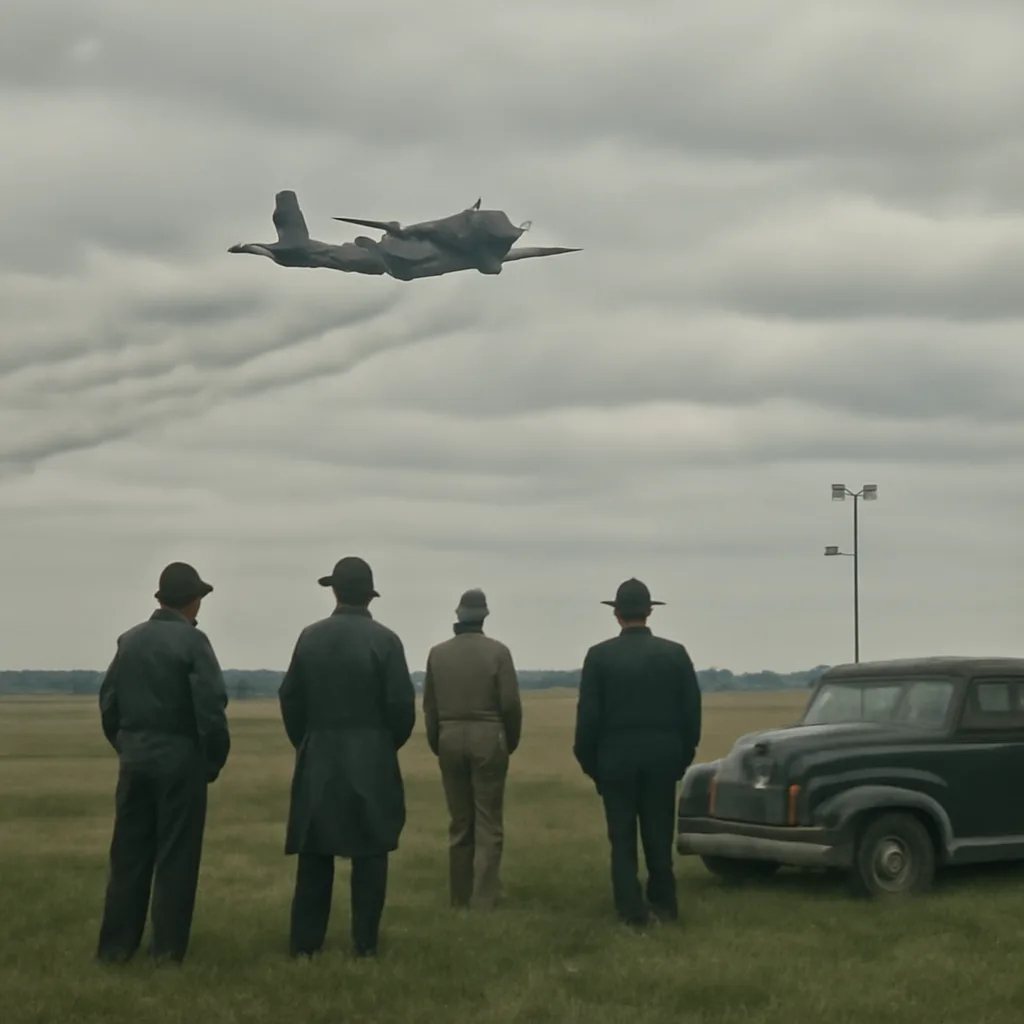
On June 17, 1947, a public demonstration of cloud seeding and other weather-modification techniques was reported, marking an early, controversial moment in attempts to intervene in atmospheric processes.
Background
Interest in altering weather intensified during and after World War II. Researchers had observed that introducing particles into clouds could influence precipitation processes. In the 1940s, chemists and meteorologists experimented with silver iodide, dry ice (solid carbon dioxide), and other condensation or freezing nuclei to encourage rain or suppress hail. Private companies, university laboratories, and military research programs pursued trials to determine whether cloud seeding could be used for agricultural benefit, flood control, or tactical purposes.
The demonstration
Contemporary newspaper accounts and institutional reports from 1947 describe public and semi-public demonstrations in which aircraft released seeding agents into clouds that were then observed for changes in precipitation. These events were intended to show that human intervention might stimulate rainfall in target areas. Demonstrators typically coordinated with weather observers on the ground who recorded any measurable changes in cloud behavior or rainfall following seeding.
Scientific context and uncertainty
Early demonstrations were experimental and produced mixed results. Atmospheric processes are complex and variable, making it difficult to attribute precipitation changes conclusively to seeding rather than natural variability. Even as demonstrations attracted public interest and press coverage, many scientists cautioned that the evidence then available was preliminary. Rigorous statistical methods and long-term controlled studies were still in development, and reproducibility of seeding results remained disputed.
Consequences and legacy
The 1947 demonstration and others like it helped spur formal research programs in the United States and elsewhere. By the 1950s and 1960s, government agencies, university groups, and private firms conducted larger-scale trials, some funded or supported by military and civil authorities. These efforts led to better understanding of cloud microphysics and seeded continued debate about the efficacy, ethics, and environmental impacts of weather modification.
Modern perspective
Today, cloud seeding is practiced in various regions as a potential tool to augment precipitation, reduce hail, or clear fog, but its effectiveness is still evaluated on a case-by-case basis. Scientific consensus recognizes that seeding can influence localized precipitation under certain atmospheric conditions, yet quantifying its impact requires careful experimental design and statistical analysis. Historical demonstrations such as the one in June 1947 are important markers in the development of atmospheric science, illustrating both early promise and the methodological challenges that shaped subsequent research.
Notes on sources
Contemporary press reports, archival materials from meteorological institutions, and later scholarly reviews of cloud seeding history provide the basis for this account. Specific results from early demonstrations are often presented with caveats by researchers of the period, and assessments of efficacy were—and remain—contingent on evolving methods and data.