
06/17/1994 • 4 views
O.J. Simpson's nationally televised slow-speed chase in a white Bronco
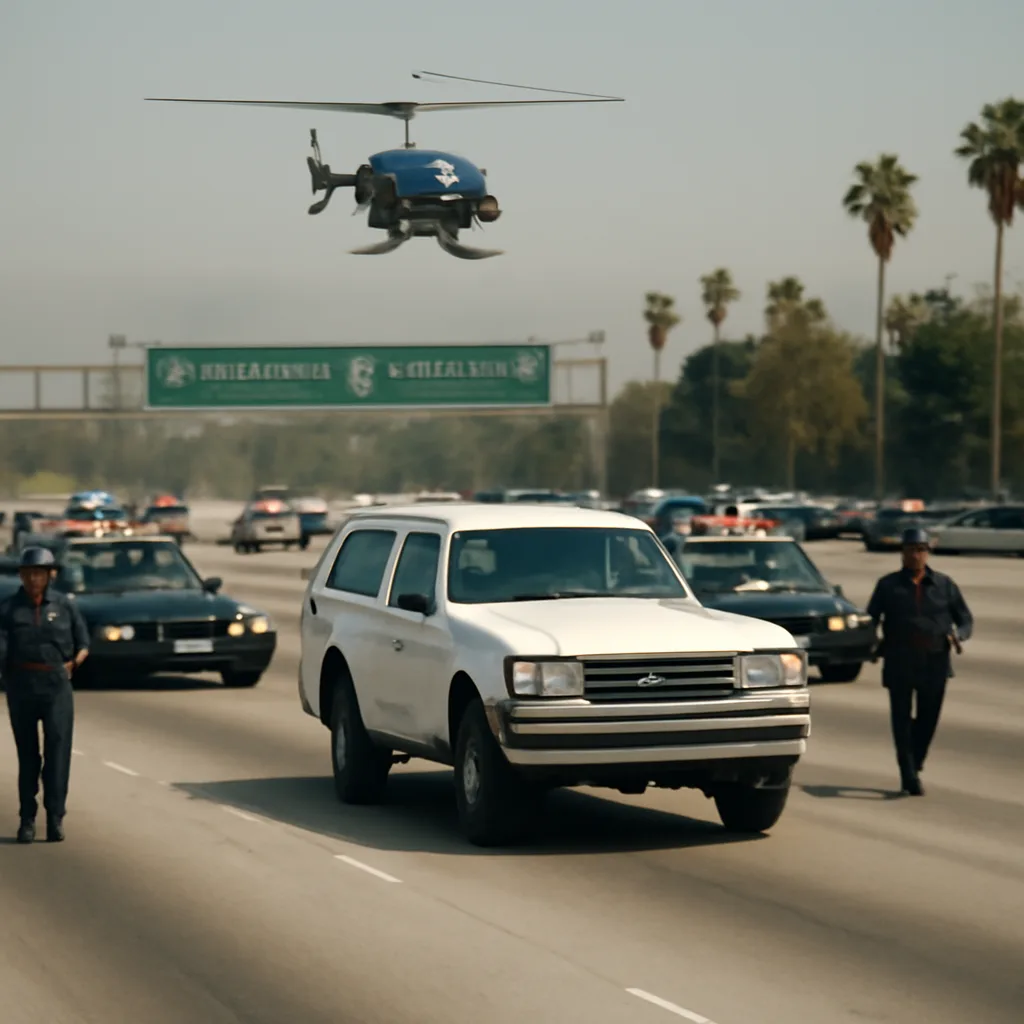
On June 17, 1994, former NFL star O.J. Simpson was the subject of a widely watched low-speed police pursuit in a white Ford Bronco driven by his friend Al Cowlings, broadcasting live across U.S. television networks and halting regular programming.
The pursuit commenced on Interstate 405 near Los Angeles and proceeded onto surface streets and highways at speeds reported mostly under 50 mph. Al Cowlings, a former NFL teammate of Simpson’s, was driving; Simpson sat in the back seat. The slow pace, heavy police escort, and the vehicle’s occupants created an atmosphere unlike typical high-speed chases, and live television networks interrupted regular programming to carry continuous footage. An estimated 95 million viewers watched portions of the pursuit, making it one of the most-watched television events in U.S. history.
Los Angeles County Sheriff’s deputies maintained contact with the Bronco and coordinated a perimeter as the vehicle traveled to Simpson’s home and then to the San Fernando Valley. The Bronco eventually returned to Simpson’s Rockingham estate in Brentwood, where the standoff continued for several hours. During that time, negotiators spoke by telephone with Simpson, who was reported to be armed. The situation ended peacefully that evening when Simpson surrendered to authorities at approximately 10:55 p.m. Pacific Time; he was taken into custody and later charged with two counts of murder.
The televised chase had immediate and lasting effects on American media and public life. It intensified scrutiny of live, rolling news coverage and raised questions about the responsibilities of broadcasters during unfolding criminal events. The spectacle also amplified public interest in the subsequent criminal trial, which became a major cultural and legal touchstone of the decade. The chase and its broadcast intersected with broader conversations about race, celebrity, policing, and the media’s role in high-profile criminal cases.
Journalists, scholars, and media watchdogs have examined the event’s impact on news norms, noting how the extensive live coverage influenced both public perception and the investigation. The chase remains a frequently referenced moment in studies of 1990s American television and the rise of 24-hour news cycles. While the sequence of events on June 17 is well documented, interpretations of the chase’s broader social meaning vary, and debates about media ethics and racial dynamics tied to the Simpson case continued through the subsequent trial and beyond.
This account focuses on the chase itself and its immediate outcomes: a slow-moving pursuit in a white Ford Bronco, national live television coverage, a prolonged standoff at Simpson’s estate, and Simpson’s peaceful surrender to police that night after an arrest warrant was issued in connection with the murders of Nicole Brown Simpson and Ronald Goldman.