
07/01/1917 • 6 views
U.S. Implements Large-Scale Draft as World War I Intensifies
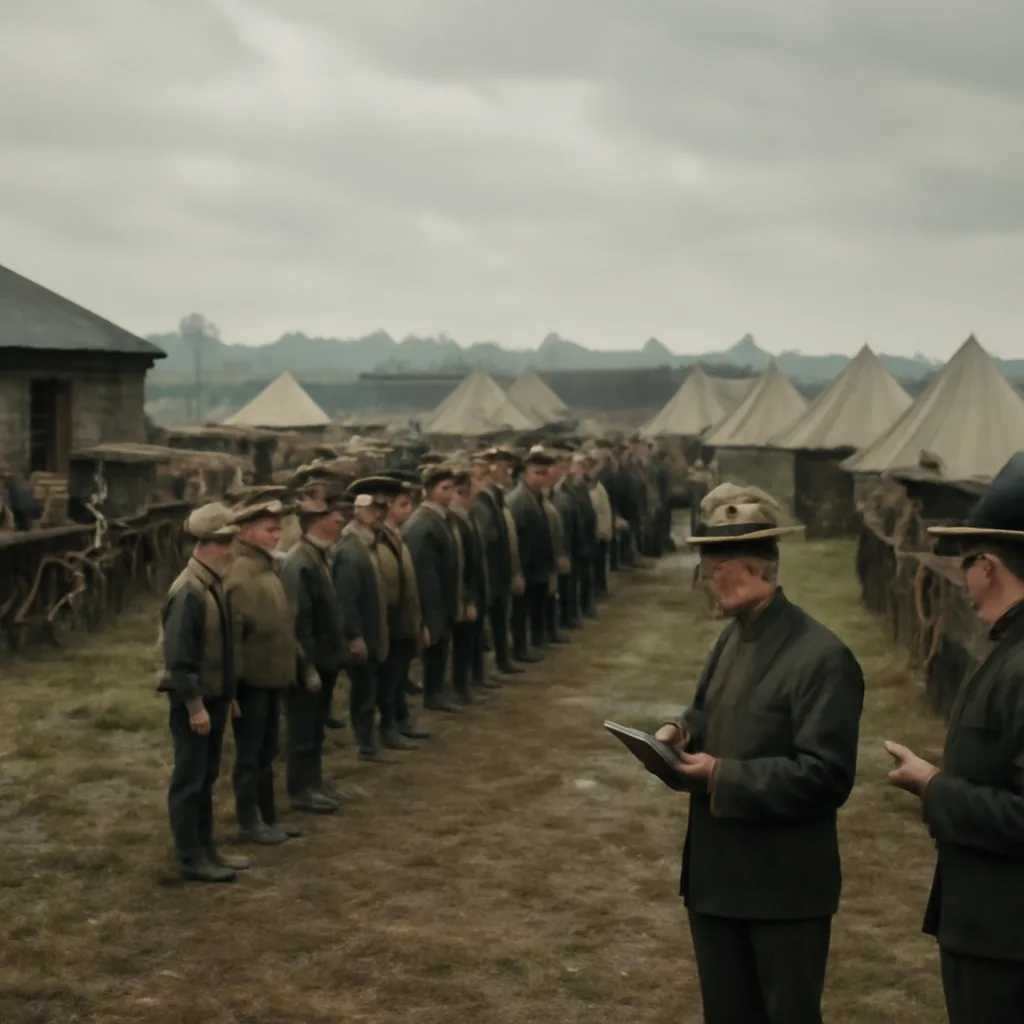
On July 1, 1917, the United States began large-scale conscription under the Selective Service Act to raise forces for the escalating conflict in Europe, marking a major shift from a small volunteer army to mass mobilization.
The draft represented a dramatic change for the U.S. military. Prior to the war, the Regular Army and the National Guard were relatively small; American planners estimated that Europe required a vastly larger expeditionary force. Conscription aimed to provide trained infantry, artillery, engineers, medical personnel and support troops. Local draft boards — composed of community figures and appointed officials — processed registrations, classified men by fitness and dependency, and assigned call-up dates. Exemptions and deferments were available for certain occupations, dependents, and health reasons, but the system also provoked disputes over fairness and local administration.
Mobilization was not only an administrative challenge but a logistical one. The War Department had to expand training facilities, construct new camps, recruit officers, and supply uniforms, weapons and transport. Training camps such as Camp Funston (Kansas), Camp Meade (Maryland), and others swelled with recruits who were drilled in basic soldiering, gas defense and bayonet practice. The scale of movement — from civilian life into concentrated military camps and then overseas transport — required coordination among federal agencies, railroads and shipping lines.
Conscription had significant social and political effects. It exposed regional, ethnic and class tensions: immigrant communities, rural populations and labor groups reacted variably to the draft. Some Americans embraced service as patriotic duty; others resisted on political, religious or personal grounds. Conscientious objectors sought exemptions on moral or religious grounds; some were granted noncombatant roles, while others faced imprisonment. The draft also accelerated drifts in the labor market as millions of men left productive civilian occupations, prompting employers and the government to recruit women and older men for industrial work and to alter labor practices to maintain wartime production.
Legally and constitutionally, the draft raised questions that were resolved through legislation and court rulings. The federal government defended conscription as necessary to meet national defense obligations; courts tended to uphold the law’s constitutionality, reinforcing federal wartime powers. Politically, conscription was broadly supported by major parties and national leaders who argued that only mass mobilization could ensure an effective American contribution to the Allied effort.
By the end of 1917 and into 1918, conscription had produced hundreds of thousands of trained American soldiers. Many of these troops would be shipped to France in successive contingents as the American Expeditionary Forces expanded under General John J. Pershing. The draft-era mobilization transformed the United States into a modern mass army and had lasting effects on military organization, civil-military relations and American society.
Historians note that while the draft succeeded in rapidly enlarging U.S. forces, it also revealed challenges in administration, equity and the integration of diverse populations into a single fighting force. Debates about conscription’s impacts — on liberty, labor and national identity — continued long after the armistice in November 1918.