
07/01/1518 • 6 views
The 1518 Strasbourg Dancing Plague: Europe's first well-documented mass hysteria
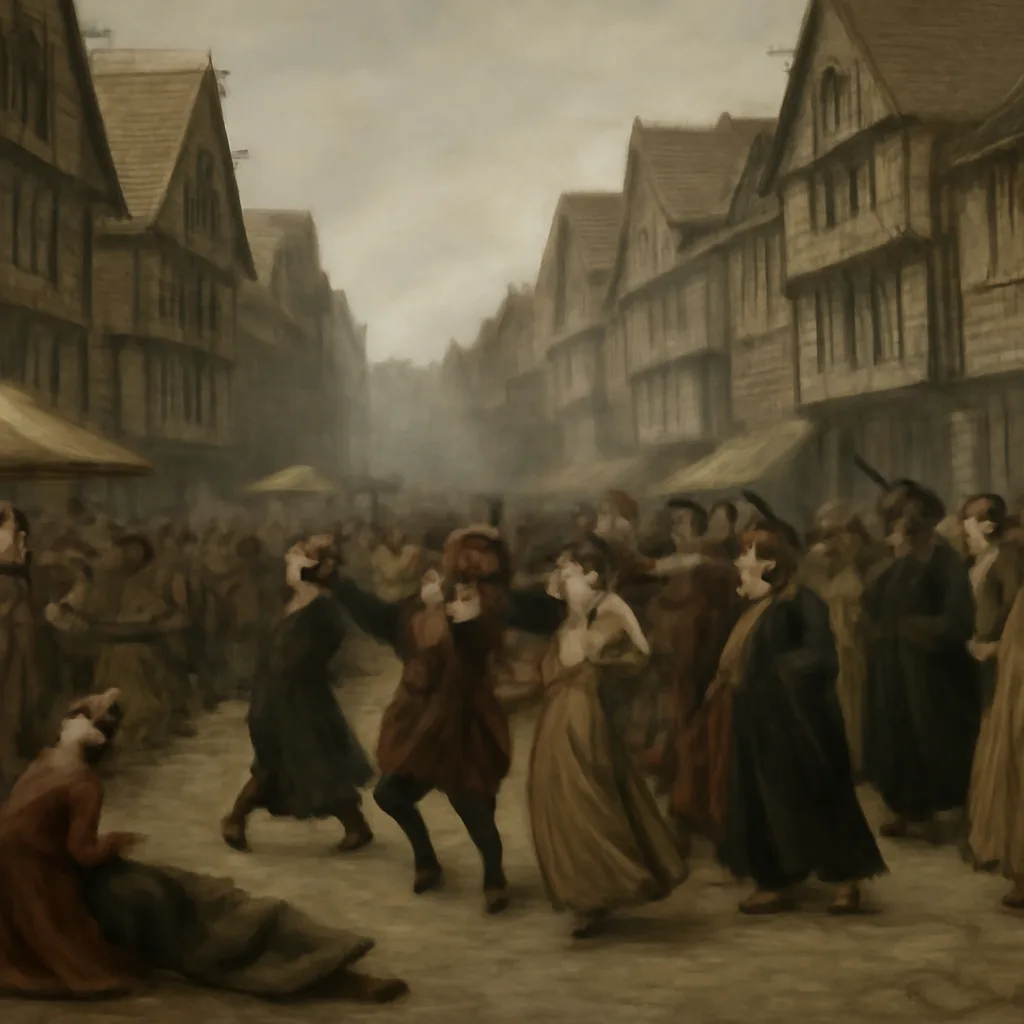
In July 1518, residents of Strasbourg (then in the Holy Roman Empire) experienced a prolonged outbreak of compulsive dancing, later recorded by municipal and medical sources and often cited as the earliest well-documented case of mass psychogenic illness.
Primary documentary traces are limited but significant: city council records, physicians' notes, and a sermon survive that together form the basis for historians' reconstructions. Those sources report that magistrates attempted several responses: initially local religious authorities treated the phenomenon as a spiritual or moral affliction and organized prayer; civic officials later arranged for dancers to be removed to a secular hall and provided with food and musicians — measures intended to control or placate the group but which contemporaries later criticized. Some accounts say a number of sufferers died from exhaustion, though precise casualty numbers are uncertain and debated among scholars.
Modern scholarship situates the 1518 event within the frameworks of mass psychogenic illness (also called mass sociogenic illness) and cultural expression. Researchers emphasize that the episode likely reflected multiple converging factors: extreme social stress and anxiety, endemic illness and malnutrition, religious beliefs and rituals common in late medieval Europe, and local explanations that framed unusual behavior in moral or supernatural terms. The label "dancing plague" or "dancing mania" has been used for earlier and later instances across Europe, but the Strasbourg episode is often highlighted because of the relative abundance of municipal documentation.
Interpretations vary. Some historians treat the event as an archetypal case of collective psychological disturbance shaped by specific cultural and environmental conditions. Others caution against simplistic modern diagnoses; the historical record does not permit definitive biomedical conclusions, and the terminology of "hysteria" or single-cause explanations imposes later categories on early modern experiences. Alternative explanations proposed over time — from ergotism (a fungal toxin) to neurological disease — have been examined and critiqued; none have achieved consensus among specialists.
Why the event mattered then and why it continues to draw attention now lies in what it reveals about social stress, communal response, and the meaning of bodily expression in history. The Strasbourg episode shows how communities and authorities attempted to interpret and manage collective disturbances, blending religious, medical, and civic strategies. It also underscores the limits of historical evidence: surviving records offer glimpses but not a complete account, so scholarly reconstructions remain cautious and often present multiple plausible readings.
For readers seeking more detail, reliable secondary treatments include scholarly histories of early modern Europe and medical-historical studies of mass psychogenic illness; primary source references are found in edited municipal records and contemporary medical and ecclesiastical documents. When discussing the 1518 dancing event, responsible accounts note both the documentary basis for the episode and the uncertainties that prevent a single definitive explanation.