
← Back
07/12/1979 • 4 views

Disco Demolition Night at Comiskey Park Sparks Riot and Forfeited Game
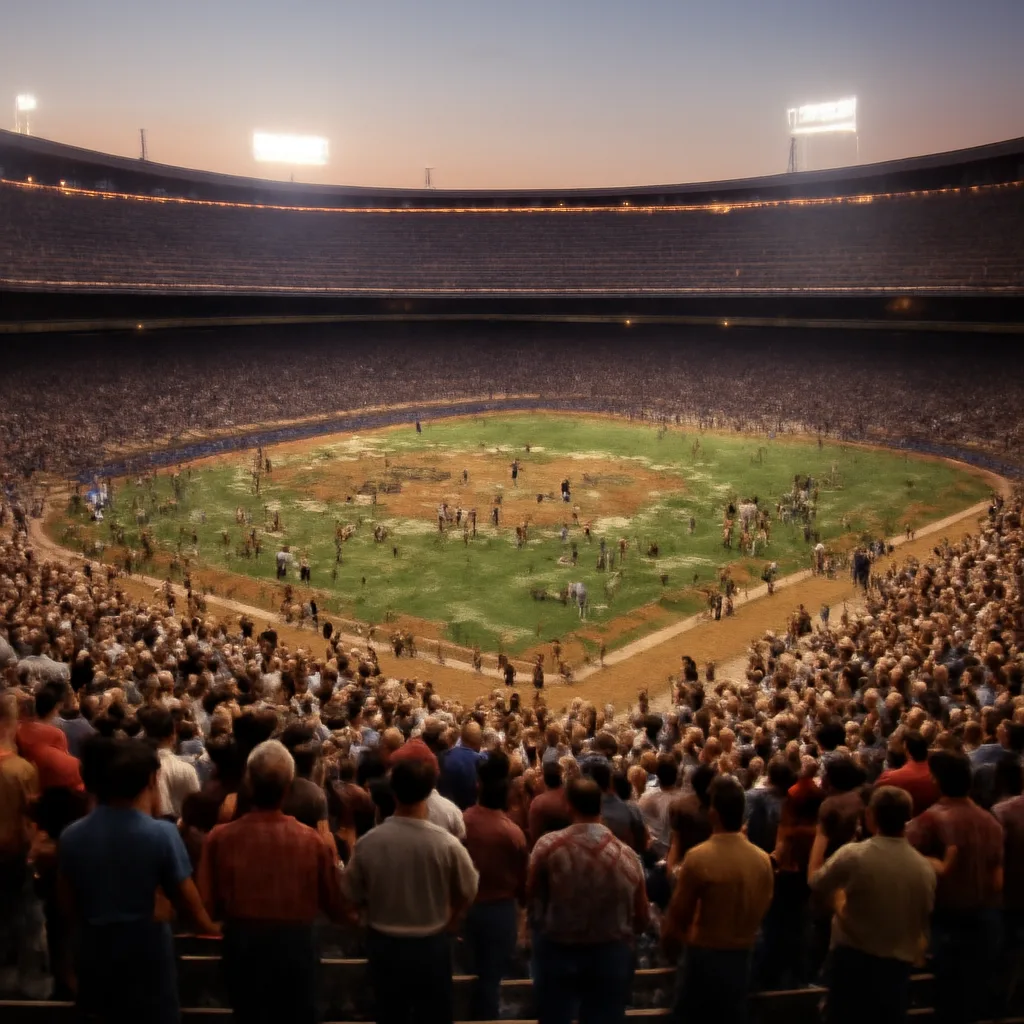
Crowd-filled Comiskey Park in 1979 shortly after a record-destruction stunt, with debris on the field, fans on the diamond, and visible damage to seating areas.

On July 12, 1979, a White Sox promotion that encouraged fans to bring disco records for a mass-destruction stunt at Comiskey Park devolved into a chaotic field invasion and a forfeit by the White Sox after damage and safety concerns made continuing the game impossible.


On July 12, 1979, the Chicago White Sox held a promotional event at Comiskey Park dubbed “Disco Demolition Night.” The promotion, organized by the team and radio DJ Steve Dahl, offered discounted tickets to fans who brought disco records to be collected and destroyed between games of a scheduled doubleheader against the Detroit Tigers. The intent was a publicity stunt tapping into anti-disco sentiment; it instead culminated in mass disorder, field damage, and the forfeiture of the second game.

Approximately 50,000 spectators attended the doubleheader, far more than a typical crowd for such a night, and many arrived specifically to participate in or witness the record-destruction spectacle. After the first game concluded, boxes of vinyl records placed on the field were detonated on the center-field warning track. The explosion of records—intended as a symbolic act—produced a large cloud of paper and debris and drew thousands of fans onto the playing surface. What began as a boisterous celebration quickly escalated into uncontrolled trespass: fans tore up seats and seats cushions, ran onto the diamond, looted merchandise, vandalized the field, and set fires with debris. Reported injuries occurred among fans and some team personnel, though most injuries were minor.

With the field strewn with debris and the turf damaged in several areas, stadium and team officials deemed the playing surface unsafe. The White Sox, facing a chaotic crowd that had not dispersed and with cleanup efforts unable to restore safe playing conditions in a timely manner, refused to take the field for the scheduled second game. The American League later ruled that the White Sox had forfeited the second game to the Tigers, recording the contest as a 9–0 win for Detroit. The episode generated widespread media coverage and public debate about promotions, crowd control, and the cultural backlash against disco music that had been prominent in some segments of popular culture at the time.

In the aftermath, the White Sox faced criticism for inadequate planning and security. Promoters, team management, and the radio station involved were faulted for underestimating the size and fervor of the crowd and for permitting a stunt that undermined fan and player safety. The event became an infamous example of a promotional stunt gone wrong and is frequently cited in discussions about stadium security, liability for promotional events, and the social tensions of the late 1970s. Historically, Disco Demolition Night has been interpreted variously as a misguided publicity event, an instance of popular antipathy toward a musical genre, and an episode reflecting broader cultural and social frictions of the era.

Contemporary accounts and later retrospectives note that while many participants framed the event as an anti-disco statement, the crowd’s motivations were mixed and included elements of spectacle-seeking and opportunism. The exact balance of motives—musical taste, cultural backlash, and simple revelry—remains a subject of interpretation among historians and commentators. The forfeited game and the riot at Comiskey Park endure in sports history as a cautionary tale about the potential consequences when promotional hype, crowd psychology, and insufficient security converge.

Share this

Email Share on X Facebook Reddit

Did this surprise you?