
02/18/1935 • 5 views
Referee Awards Goal After Dream Inspired Call in 1935 Match
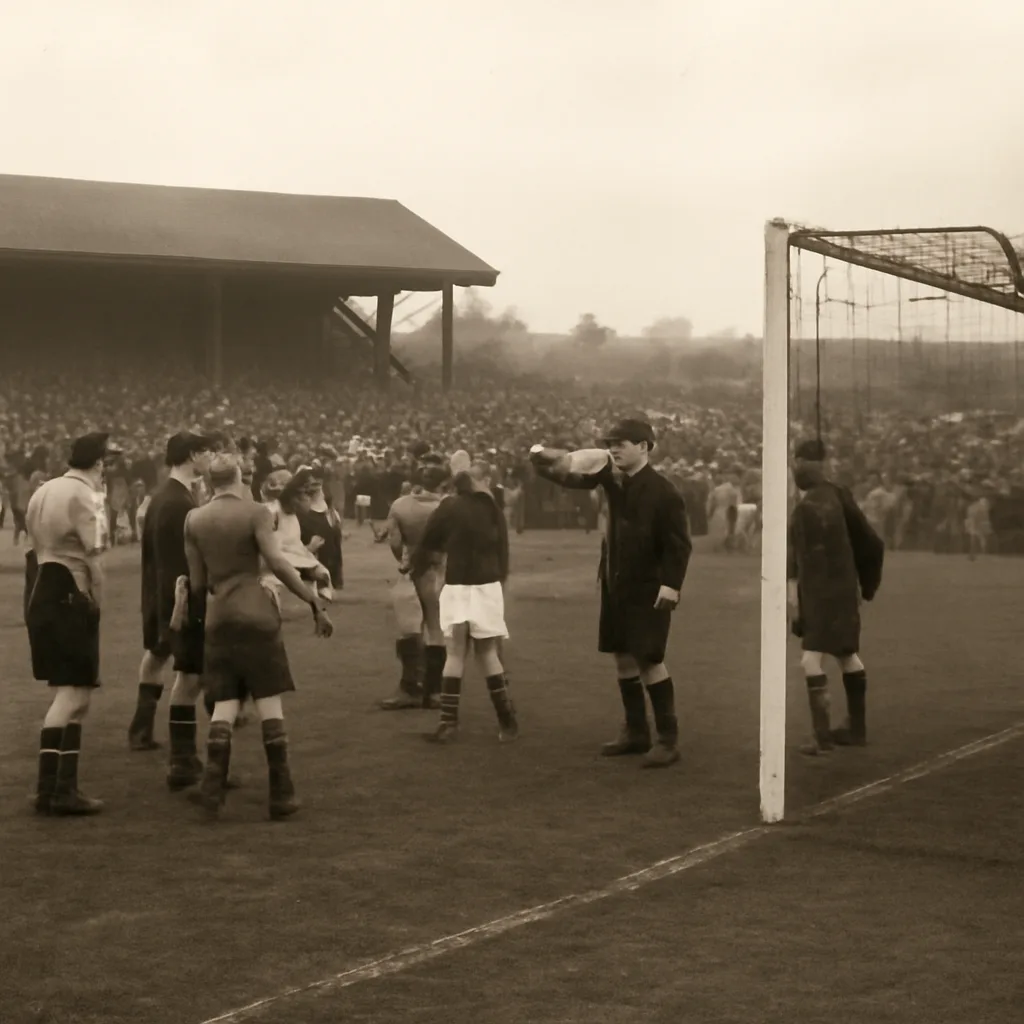
On 18 February 1935 a British referee reportedly awarded a goal after saying he had dreamed the ball had crossed the line; accounts of the incident circulated in contemporary newspapers but details and motivations remain disputed.
Context
By the mid-1930s association football in Britain was followed avidly in local and national press. Match reports frequently included colorful anecdotes and human-interest items alongside standard play-by-play coverage. Referees were expected to make instantaneous, observable decisions; claims that a match official relied on a dream to adjudicate would have been striking and newsworthy.
What contemporary reports say
Newspaper briefings and local press items from February 1935 relate that during a match played on 18 February a referee halted play, conferred with players or other officials, and then awarded a goal, later explaining that he had dreamed the ball had crossed the line. Accounts differ on the fixture level (some describe a local cup tie, others a friendly) and on whether the decision affected the match outcome. Reports emphasize the anecdotal nature of the claim rather than providing corroborating evidence such as witness statements or club records.
Interpretations and uncertainty
Several plausible interpretations can explain the story. One is that the item was a lighthearted or sensational human-interest report, meant to amuse readers rather than document a formal officiating rationale. Another possibility is that the referee made an ordinary decision—perhaps relying on sight or consultation with an assistant—but later offered an eccentric explanation that reporters seized upon. The lack of consistent, detailed primary records makes it impossible to confirm whether the referee literally meant a dream, was using a metaphor, or that the press embellished the report for readership.
Why this matters
The episode illustrates how sports reporting in the pre-television era could blur strict factual record-keeping with anecdote. It also highlights the cultural space afforded to referees and officials: their authority was strong, but public perceptions could be shaped by singular, memorable stories. For historians of sport, such items are useful not as definitive events but as evidence of contemporary attitudes toward officiating, reportage, and the interplay of fact and folklore in sporting life.
Sources and reliability
The account rests on contemporary newspaper circulation rather than club minute books or refereeing association records; researchers should treat it as anecdotal. Where specific match identifiers are absent or contradictory in surviving press items, the incident should be described cautiously and framed as reported rumor or anecdote rather than established fact.
Conclusion
The 18 February 1935 item about a referee awarding a goal after dreaming the ball crossed the line remains an intriguing anecdote from interwar British football. Surviving reports confirm that such a story was published at the time, but key details—exact fixture, match significance, and the referee’s precise meaning—are disputed or unverified. As with many colorful press items of the era, it is best read as a window onto contemporary sporting culture rather than a settled, documented officiating precedent.