
← Back
07/12/1979 • 7 views

Disco Demolition Night at Comiskey Park, July 12, 1979
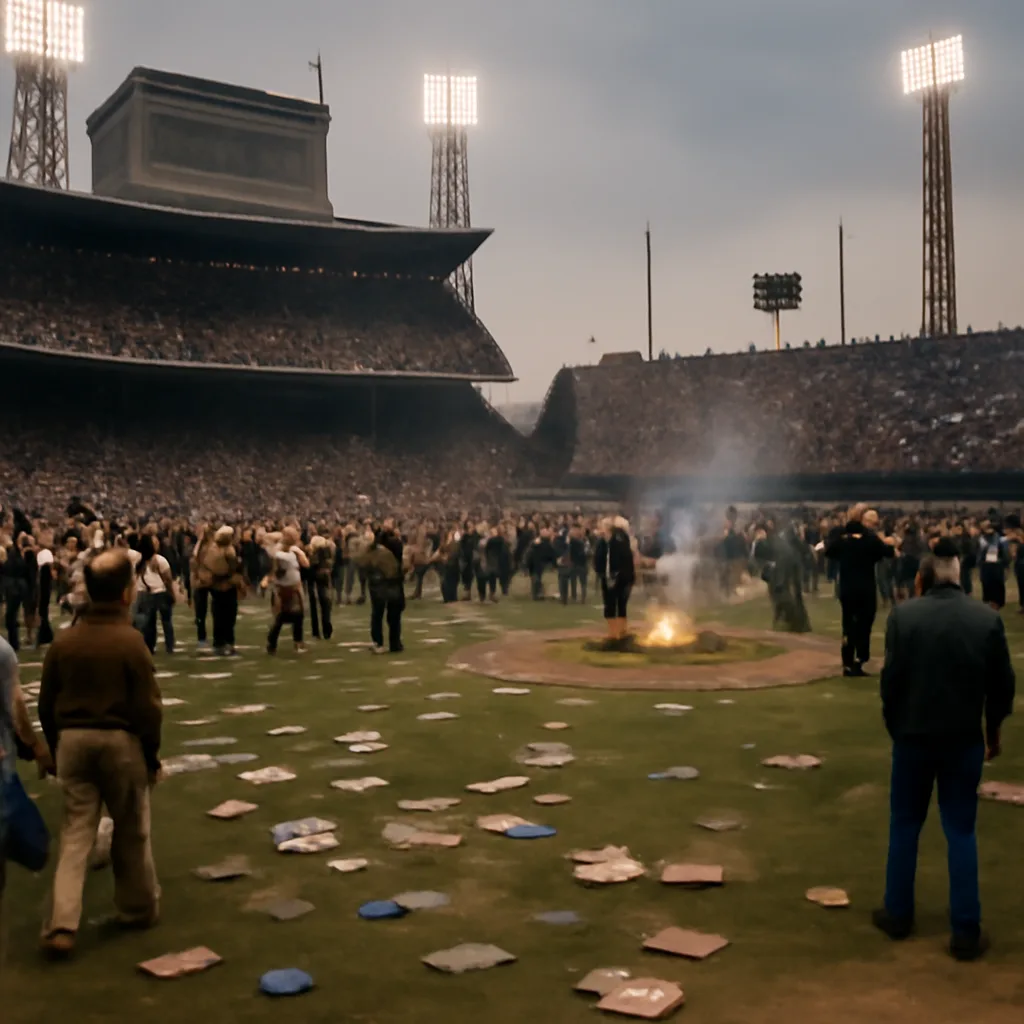
Crowded Comiskey Park stands and a littered baseball field after a promotional explosion; fans on the field, debris including broken records and small fires, stadium architecture of late 1970s Chicago visible.

On July 12, 1979, a promotional event at Chicago's Comiskey Park that encouraged fans to destroy disco records escalated into a chaotic field invasion, forcing the cancellation of the second game of a doubleheader and leaving lasting cultural and sporting ramifications.


On the evening of July 12, 1979, Comiskey Park in Chicago hosted a promotional event billed as “Disco Demolition Night” during a White Sox–Tigers doubleheader. The promotion, organized by local radio DJ Steve Dahl in collaboration with the radio station WLUP and the ballclub, invited fans to bring disco records to be destroyed between games at a sharply discounted admission. Thousands attended, many drawn by opposition to the then-popular disco genre and by Dahl’s anti-disco persona.

After the first game, patrons were encouraged to throw disco records onto the field. A crate of records was exploded on the center field pitcher's mound using a small pyrotechnic charge. The explosion and debris sparked immediate disorder: large numbers of fans — estimates vary but run into the thousands — streamed from the stands onto the playing surface. Some spectators set fires with fragments of records and other debris, others looted items from the field, and attempts to restore order were overwhelmed by the crowd size and intensity.

Because the field was damaged and unsafe, White Sox management and American League officials declared the field unplayable. Major League Baseball forfeited the second game of the doubleheader to the visiting Detroit Tigers; the Tigers were awarded a 9–0 victory per league rules. The incident resulted in arrests and numerous injuries of varying severity, though no mass fatalities were reported. The White Sox organization and the radio station attracted substantial criticism for promoting an event that encouraged destructive behavior.

Beyond the immediate physical consequences, Disco Demolition Night resonated culturally. The event is frequently cited as a flashpoint in the backlash against disco music, intersecting with tensions around race, sexuality, and popular taste — disco’s roots in Black, Latinx and LGBTQ+ communities have led some scholars and commentators to interpret aspects of the backlash as entangled with prejudice. Historians and music critics debate how directly the promotion and ensuing riot reflect broader societal forces versus the specific dynamics of the Chicago event.

In the years since, Disco Demolition Night has been examined in sports and cultural histories as an example of a promotion gone disastrously wrong and as a symbolic moment in late-1970s American culture. The White Sox faced sanctions and reputational damage; Steve Dahl’s career continued in radio, though the event remains controversial. Contemporary accounts, photographs, and later analyses provide the primary documentation for the incident; some details — including precise crowd size, the sequence of security responses, and individual motives — are reported with variability across sources. Nonetheless, the cancellation of the second game and the field invasion are well-attested facts.

Share this

Email Share on X Facebook Reddit

Did this surprise you?