
09/03/1974 • 4 views
Supreme Court Upholds School Busing in 1974 Ruling
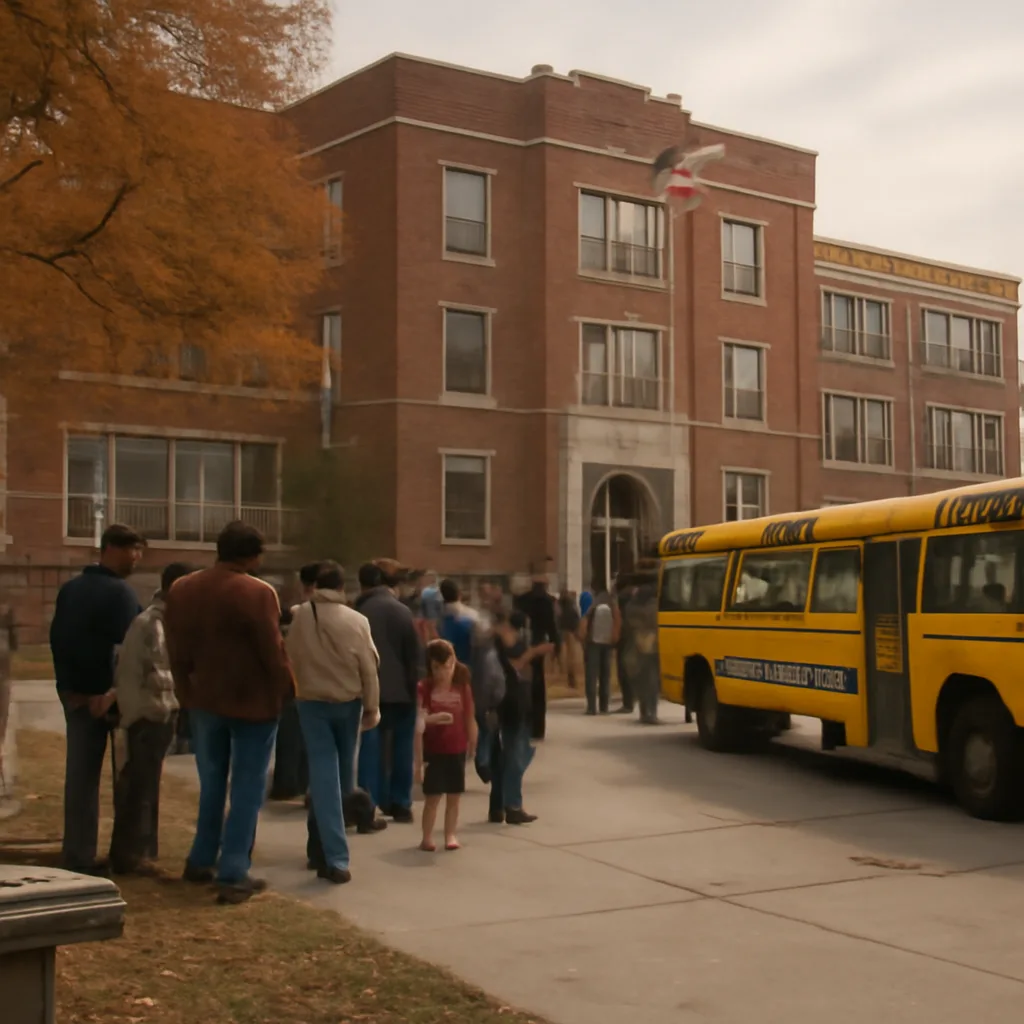
On September 3, 1974, the U.S. Supreme Court issued a decision affirming that federal courts could order busing to remedy proven school segregation—clarifying limits but preserving judicial authority to enforce desegregation.
Background
After Brown, many school districts—particularly in the South but also in other regions—resisted meaningful desegregation. Over the next two decades, federal district courts and courts of appeals frequently devised remedies to dismantle segregated systems. Those remedies ranged from redrawing attendance zones and reassigning teachers to broader measures such as court-ordered student transfers and interdistrict busing. The latter prompted intense political and social controversy, as opponents argued it unduly interfered with local control and burdened students and families.
The 1974 decision
The Court’s September 3, 1974 ruling addressed the scope of judicial remedies available when a court finds that a school system has practiced intentional segregation—whether de jure or as a product of prior official policies. While the decision’s specifics varied with the case before the justices, the overall legal holding reaffirmed that federal courts retain authority to order remedies tailored to eliminate the effects of proved constitutional violations, including busing, when narrower measures are inadequate to achieve compliance with the Constitution.
Legal significance
The ruling clarified two related principles. First, a court must base remedial orders on findings that a school district or other state actor engaged in purposeful segregation or maintained policies that produced segregated schooling; remedies could not rest on generalized predictions of racial imbalance. Second, once a court makes such findings, it has broad equitable power to fashion remedies reasonably calculated to eliminate the vestiges of past discrimination. Busing therefore remained a permissible tool when it was necessary to dismantle the dual school systems created or perpetuated by official action.
Impact and reaction
The decision reinforced lower courts’ ability to impose comprehensive remedies in entrenched segregation cases and guided subsequent rulings on desegregation across the country. It also intensified public debate: supporters of desegregation viewed the ruling as essential to enforcing constitutional equality in education, while opponents framed it as judicial overreach that disrupted communities and local governance. Political and social backlash in some localities led to legislative and electoral responses aimed at limiting court-ordered remedies.
Long-term context
The 1974 ruling did not end disputes over busing or desegregation remedies. Over the following decades, the Court and lower courts continued to refine the standards for when and how remedies could be imposed, balancing equitable relief against considerations of unitary status, the cessation of discriminatory policies, and changing demographics. Subsequent decisions narrowed or adjusted remedies in various contexts, but the 1974 ruling remains a key moment confirming that courts may require significant measures—including pupil assignment changes—to remedy intentional segregation.
Caveat
Specifics of the Court’s language and the precise case holdings vary with each appeal and the factual record before the courts; summaries like this describe the ruling’s general legal effect rather than offering the text of the opinion. For direct quotations and exact legal reasoning, consult the Supreme Court opinion and lower-court records for the particular case decided on September 3, 1974.