
09/03/1978 • 5 views
Human Footprints Found in Sealed Cave in 1978
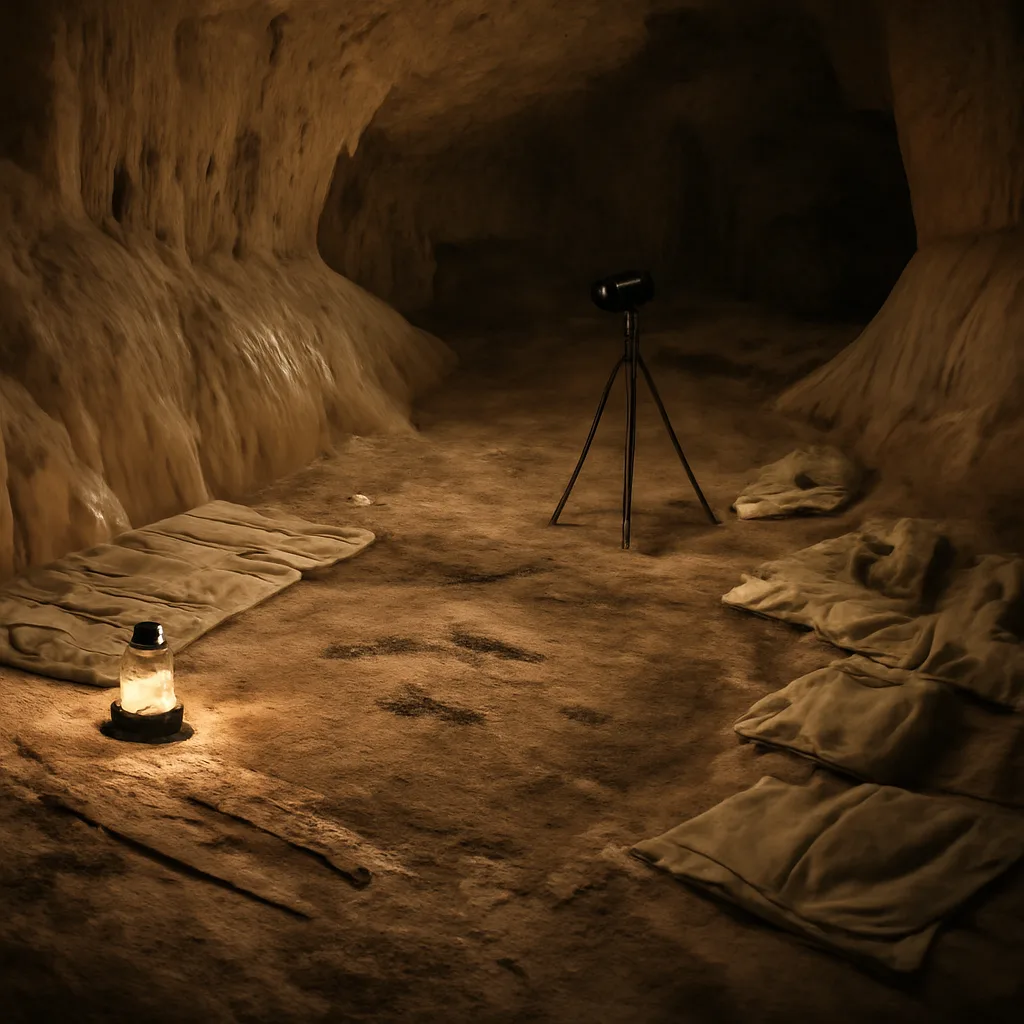
On September 3, 1978, researchers reported discovering human footprints beneath flowstone in a sealed cave chamber, prompting debate about the prints’ age and how they were preserved.
What was found
Investigators described impressions interpreted as human footprints on a substrate later overlain by flowstone. Flowstone forms when mineral-rich water flows across cave surfaces, precipitating calcite that can encrust or seal underlying sediments and impressions. When footprints become covered by such deposits, they may be protected from surface disturbance, offering a window into past activity inside a cave.
Why this matters
Footprints sealed beneath cave calcite are significant because the calcite can be dated using methods such as uranium-series (U-Th) dating. If the flowstone that overlies prints yields a minimum age, it sets a terminus ante quem (latest possible date) for when the prints were made. Conversely, dating the underlying sediments or organic material associated with the impressions can provide a terminus post quem (earliest possible date). Such stratigraphic relationships can help place human or hominin activity in a chronological framework, which is particularly important in regions where direct archaeological materials are absent or scarce.
Interpretation challenges
Interpreting foot- or track-like impressions within caves is complex. Factors that complicate analysis include: the possibility that nonhuman animals made similar impressions; post-depositional alteration of prints by water, calcite growth, or sediment collapse; and uncertainty about whether prints were made by adults, juveniles, or animals. In 1978, analytical techniques were less advanced than today, and many reports relied heavily on visual assessment and field notes. Later re-examination with more rigorous recording, micromorphology, or geochemical methods can change initial interpretations.
Dating limitations and debates
Dating flowstone provides constraints but not always precise ages for the prints themselves. Uranium-thorium dating yields the age of calcite formation, which may occur shortly after footprint creation or much later if there are hiatuses in deposition. Contamination, open-system behavior of uranium-series isotopes, or detrital thorium can complicate results. Because of these issues, claims that footprints are a specific number of thousands of years old are often treated cautiously without corroborating evidence from independent dating or archaeological context.
Historic and scientific context
By the late 1970s, cave research increasingly combined geological and archaeological perspectives, but many caves remained poorly documented. Discoveries of sealed prints have since proven important in some locales—when carefully analyzed, they can contribute to understanding human movement, local environments, and cave use. However, each case requires detailed stratigraphic recording, sampling for appropriate dating methods, and cautious comparison with known hominin morphology and behavior.
What remains uncertain
For the 1978 discovery itself, public accounts and scientific reporting vary in detail. Without access to original field notes, samples, or published analytical results tied explicitly to those prints, definitive statements about their age or makers remain tentative. Reassessment with modern techniques (high-resolution 3D scanning, micromorphology, and multiple absolute-dating approaches) would be needed to resolve outstanding questions.
Conclusion
The 1978 report of human footprints sealed beneath flowstone exemplifies both the promise and the challenges of cave-based evidence for past human activity. Such finds can provide valuable chronological constraints and behavioral insight when documented and dated rigorously, but initial reports should be treated as preliminary until validated by detailed stratigraphic records and reliable laboratory dating.