
← Back
05/07/1947 • 6 views

1947 Public Demonstration of Weather Control Techniques in the United States
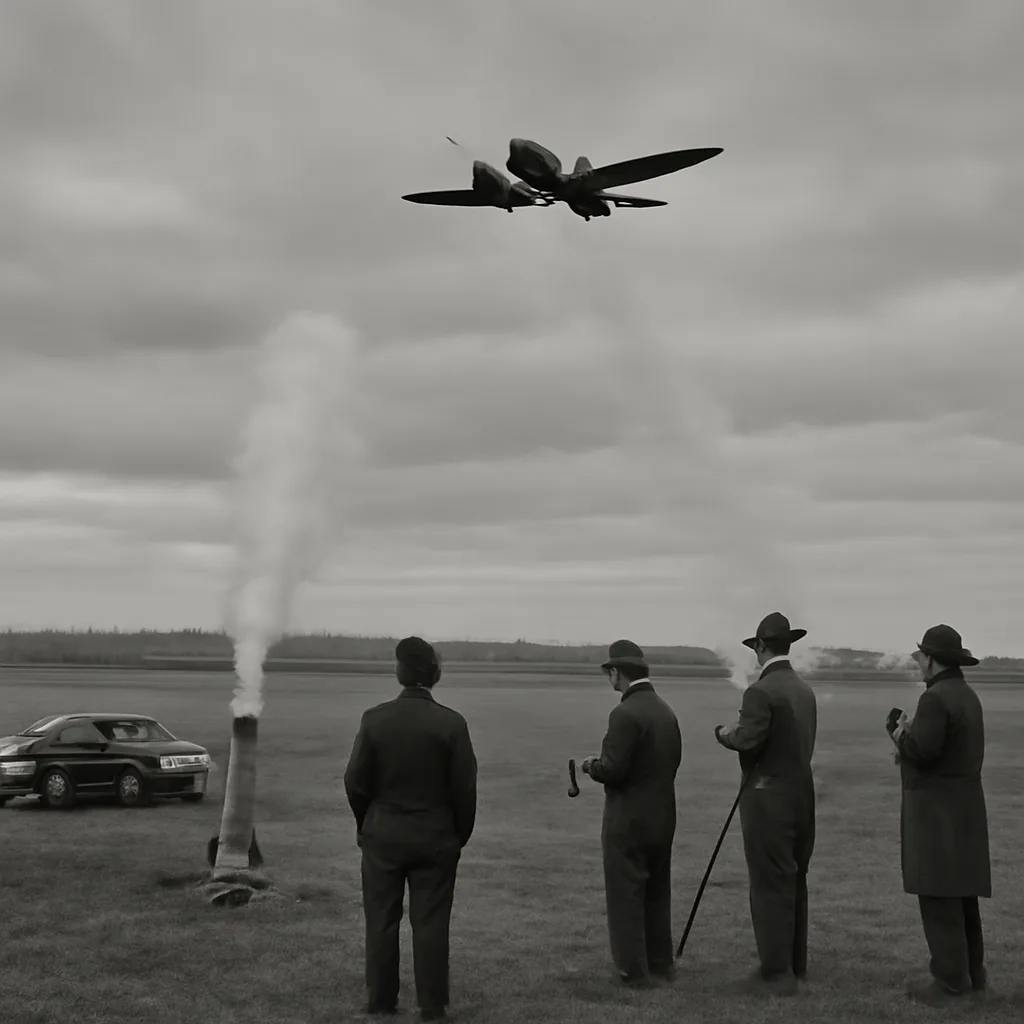
Mid-20th-century field demonstration of cloud seeding: an aircraft or ground generator dispersing dry ice or smoke into low clouds above a rural landscape with onlookers and vehicles typical of the 1940s.

On May 7, 1947, researchers staged one of the earliest public demonstrations of deliberate weather modification—cloud seeding experiments—presenting techniques intended to influence precipitation to the public and press.


On May 7, 1947, a public demonstration connected to early weather modification research took place in the United States, part of a broader wave of postwar interest in influencing atmospheric processes. The demonstration showcased cloud seeding methods developed and tested in the 1940s, a period when scientists and private companies began experimenting with ways to enhance or induce rainfall by dispersing substances into clouds.

Background

Interest in deliberate weather modification dates to scientific inquiries in the early 20th century, but the modern era of cloud seeding is commonly traced to experiments in the 1940s. In 1946 and 1947 researchers such as Vincent J. Schaefer and Irving Langmuir, working at General Electric’s research laboratories, reported laboratory and field results showing that dispersing dry ice or silver iodide into certain supercooled clouds could induce ice crystal formation and stimulate precipitation under some conditions. These findings attracted attention from government agencies, private industry, and the media.

The May 7, 1947 demonstration

Contemporaneous press reports and later historical accounts describe publicized field trials and demonstrations around this time intended to inform officials and the public about the potential of cloud seeding. On May 7, 1947, one such event—often described in period newspapers and corporate communications—presented seeding techniques to an audience that included scientists, officials, and journalists. The demonstrations typically involved aircraft or ground-based generators dispersing dry ice or silver iodide into clouds judged likely to produce precipitation if seeded.

Significance and limitations

The 1947 demonstrations were significant chiefly for bringing weather modification from laboratory research into public view and for prompting governmental and public debate about the scientific, practical, and ethical implications. Early trials suggested cloud seeding could enhance precipitation in some situations, but results were variable and dependent on cloud type, atmospheric conditions, and measurement limitations of the era. Researchers cautioned that seeding did not create clouds from clear skies and that outcomes could not be guaranteed.

Aftermath and context

Following demonstrations and experimental programs in the late 1940s and 1950s, both governmental agencies (including U.S. state and federal entities) and private organizations supported further research into cloud seeding and weather modification. Over ensuing decades studies produced mixed evidence regarding effectiveness, and methodological challenges—statistical controls, reproducibility, and environmental considerations—remained subjects of scientific discussion and regulatory attention.

Why the date matters

The May 7, 1947 demonstration is emblematic of the immediate postwar moment when new technologies, wartime scientific mobilization, and public interest combined to accelerate applied atmospheric research. It marks an early public instance where weather control concepts were presented outside specialized scientific venues, helping to shape subsequent policy initiatives and public expectations about human influence on weather.

Caveats

Historical records from the period include press accounts, corporate releases, and later historical analyses that sometimes vary in detail about specific demonstrations, participants, and reported outcomes. No demonstration on that date established weather control as a reliably reproducible technology; rather, it was an early and influential public step in an ongoing scientific and technical effort.

Share this

Email Share on X Facebook Reddit

Did this surprise you?