
07/19/1951 • 5 views
U.S. Conducts Early Hydrogen-Bomb Technology Test, July 1951
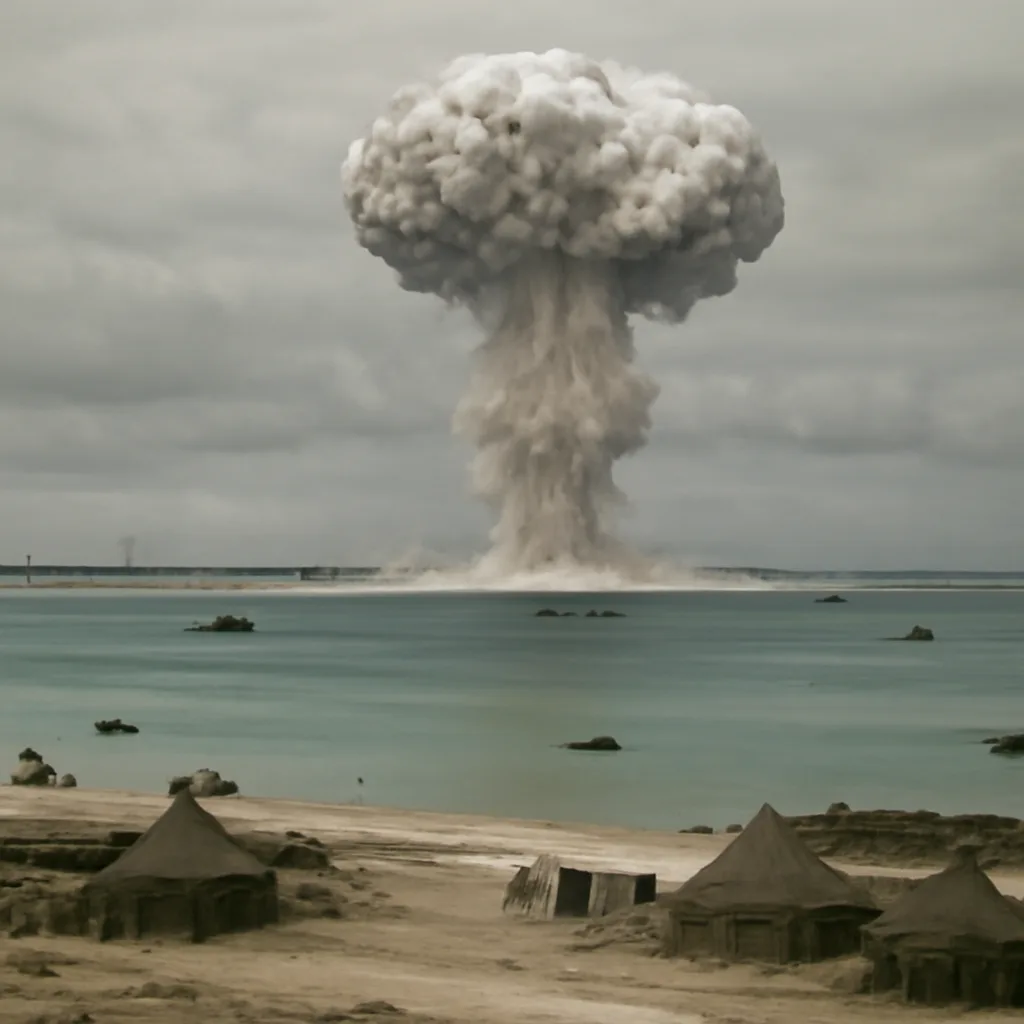
On July 19, 1951, the United States conducted an atmospheric test related to thermonuclear (hydrogen-bomb) technology as part of ongoing nuclear weapons experiments during the early Cold War; details and classification of such tests evolved as designs progressed through the 1950s.
Context
Following the Second World War and the Soviet Union’s first atomic test in 1949, U.S. nuclear policy and weapons laboratories (primarily Los Alamos and Lawrence Livermore, later the latter established in 1952) accelerated research into higher-yield thermonuclear weapons. Researchers explored multiple technical paths: improving fission weapons through boosting (adding deuterium-tritium gas to increase yield), studying radiation implosion mechanisms, and assessing materials, timing, and delivery systems. Tests in the early 1950s often combined diagnostic aims with incremental weapon improvements rather than full-scale two-stage thermonuclear detonations.
The 19 July 1951 test
Contemporary public records and later historical accounts indicate that U.S. atmospheric tests around 1951 were part of series intended to gather data on weapon performance, effects, and components that would feed into thermonuclear design work. Specific test nomenclature, yields, and classified technical details from individual 1951 events were often withheld or declassified only decades later. Some contributions from that year supported the understanding of boosted fission and other innovations integral to later hydrogen bomb development.
Classification and secrecy
At the time, many tests addressing thermonuclear principles were described publicly in limited terms or under broader test series names. Full disclosure of whether a given 1951 detonation was a pure fission test, a boosted device, or an experiment aimed specifically at thermonuclear staging is complicated by archival redactions and evolving technical terminology. Historians rely on declassified AEC documents, laboratory reports, and memoirs of scientists to reconstruct the technical trajectory from boosted weapons to true two-stage thermonuclear designs (demonstrated by the U.S. “Ivy Mike” test in 1952).
Significance
Tests in 1951 contributed empirical data on yield scaling, weapon components, and atmospheric effects. Though the first true thermonuclear (two-stage) device tested by the United States was Ivy Mike (November 1, 1952, at Eniwetok Atoll), experiments and component tests in 1951 were part of the necessary scientific and engineering groundwork. They informed decisions about materials, staging, and weaponization that shaped subsequent high-yield thermonuclear tests and the rapid expansion of the U.S. strategic arsenal.
Historical caution
Publicly available accounts vary in specificity. Some primary documents remain classified or partially redacted for extended periods, and contemporaneous public descriptions were intentionally vague. Therefore, while July 19, 1951, fits within the timeframe of U.S. tests relevant to hydrogen-bomb technology development, attributing any single 1951 atmospheric detonation unequivocally to a thermonuclear-stage test should be done carefully and with reference to declassified AEC and laboratory records.
Further research
Researchers seeking precise technical or classification details should consult declassified U.S. Atomic Energy Commission test reports, Los Alamos National Laboratory archives, published histories of the U.S. nuclear weapons program, and peer-reviewed scholarship that cites primary source documents declassified since the 1970s and later.