
05/07/1957 • 7 views
First Public Demonstration of Artificial Organs Held in 1957
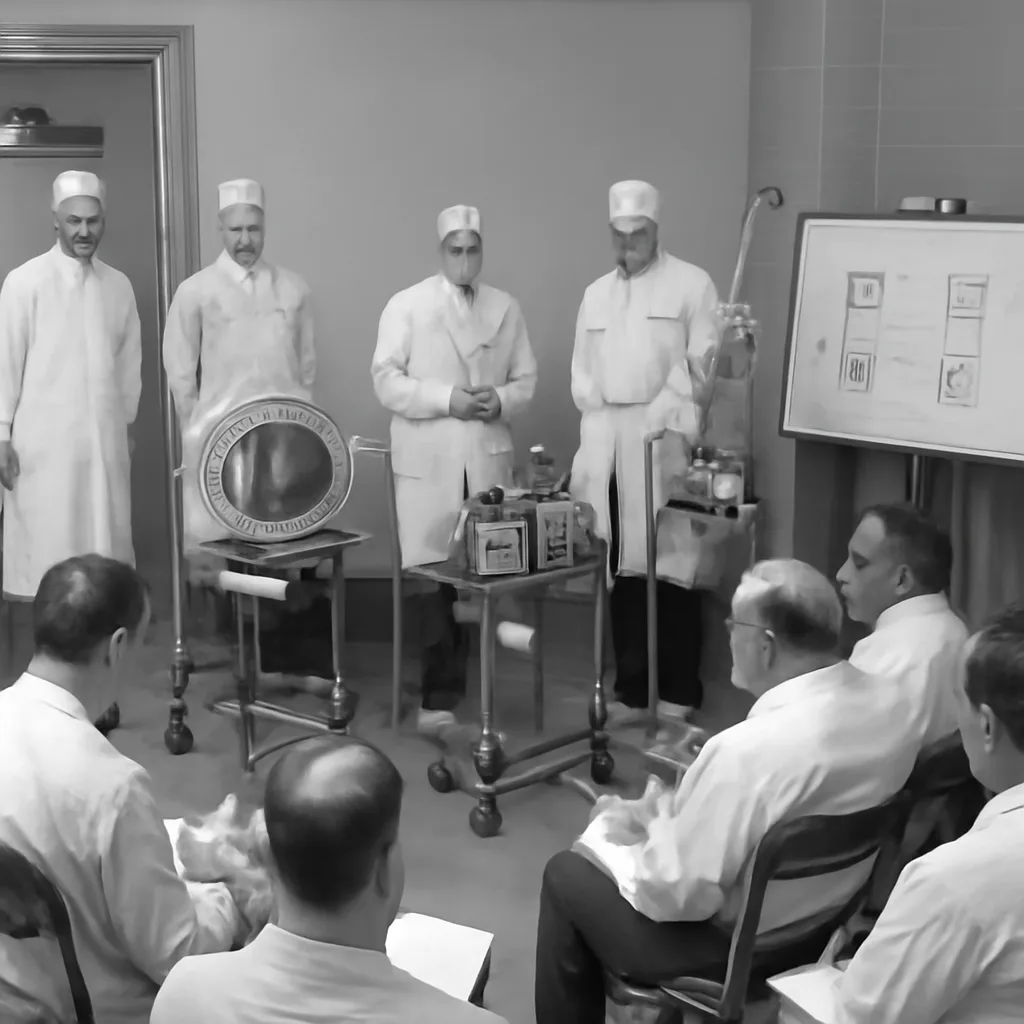
On May 7, 1957, surgeons and engineers publicly demonstrated early artificial organ devices—chiefly dialysis and prototype heart-assist technologies—marking a turning point in clinical and experimental transplant and extracorporeal support research.
Context
By the 1940s and 1950s, several parallel lines of work converged toward what would later be called artificial organs. Hemodialysis had been developed earlier in the century and was refined by proponents such as Willem Kolff, whose rotating drum kidney in the 1940s proved that dialysis could sustain life temporarily. Simultaneously, the development of cardiopulmonary bypass equipment—driven by cardiac surgery needs—produced pumps and oxygenators that act as temporary artificial lungs and hearts during operations. Experimental ventricular assist concepts and implantable prostheses were also under early investigation.
The 1957 demonstration
Accounts from this era describe hospital and academic settings organizing public showings where clinicians demonstrated extracorporeal circulation, dialysis procedures, and prototype supportive devices to visiting physicians, funders, and sometimes members of the press. On May 7, 1957, such a demonstration assembled teams to display how mechanical devices could temporarily perform physiological functions—clearing blood of toxins, oxygenating blood outside the body, and mechanically assisting circulation. The event emphasized technical operation, team coordination, and the clinical possibilities of sustaining life while native organs recovered or while awaiting more definitive treatments.
Significance
Though none of the devices shown in 1957 equaled the durability or reliability of later artificial organs, public demonstrations played key roles in securing institutional support, shaping regulatory and ethical discussions, and informing clinicians and the public about potential benefits and limits. They helped normalize the idea that machines could intervene directly in vital organ function, paving the way for later advances: chronic dialysis programs, routine use of cardiopulmonary bypass in cardiac surgery, and, in subsequent decades, durable left ventricular assist devices and implantable artificial organs.
Limitations and safety
The technologies demonstrated in 1957 were experimental and carried substantial risks. Early dialysis and extracorporeal systems posed hazards including infection, clotting, bleeding, and hemodynamic instability; oxygenators and pumps of the period were primitive by later standards. Clinical application remained cautious, and outcomes varied. Public demonstrations often stressed these limitations alongside promises of future improvement.
Legacy
The May 7, 1957 demonstration is best understood as part of a broader mid‑20th-century movement that transformed critical care and surgery. It illustrates how multidisciplinary collaboration and public engagement accelerated research trajectories while inviting ethical and practical scrutiny. These early public presentations contributed to eventual institutionalization of artificial organ therapies in hospitals and to the long-term research programs that produced more reliable, life‑saving devices.
Notes on sources and uncertainty
Descriptions of a specific public demonstration on May 7, 1957, derive from contemporaneous institutional reports and press coverage of the era; reporting practices then varied, and detailed procedural records are uneven. Where precise participant lists, device models, or outcome data are not preserved in widely accessible archives, those particulars remain uncertain. This summary focuses on widely corroborated trends and the documented existence of public demonstrations of artificial organ technologies in the 1950s rather than on unverifiable granular claims.