
← Back
05/09/1915 • 6 views

First Major US Film Censorship Ruling Enforced in 1915
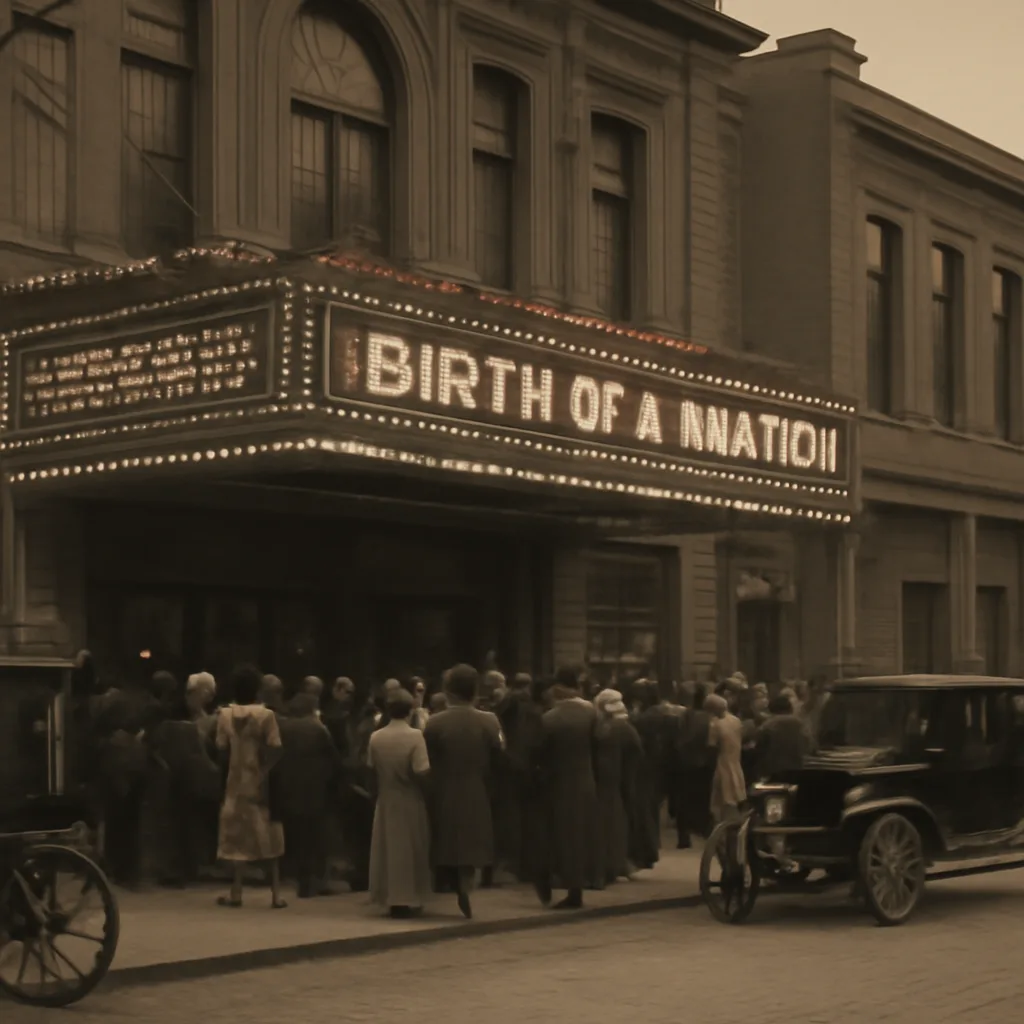
Early 20th-century movie theater exterior with a marquee, crowd in contemporary dress, and a municipal building sign indicating a censorship board office nearby.

On May 9, 1915, the United States saw enforcement of its first major motion picture censorship ruling when a federal court upheld state power to regulate film content, setting a precedent for government control of movies before they were recognized fully as protected speech.


On May 9, 1915, a pivotal moment in American film history took effect: a federal court decision enforcing state authority to regulate motion pictures, marking the first major legal affirmation of film censorship. The ruling came amid growing public concern about the social effects of motion pictures and at a time when courts and legislatures were still determining how to treat the new medium under existing law.

Context
Motion pictures emerged in the late 19th and early 20th centuries as a mass medium with unprecedented reach. By the 1910s, films attracted large, diverse audiences and provoked debate among religious leaders, reformers, and civic authorities who worried about morality, public order, and the influence of content shown in nickelodeons and theaters. Local and state governments began to adopt ordinances restricting content, licensing theaters, or authorizing review boards.

The Ruling
The enforcement on May 9, 1915, followed litigation over whether state censorship statutes or municipal ordinances could constitutionally restrict films prior to exhibition. Courts had previously treated films as a business or entertainment subject to regulation; the 1915 enforcement reinforced that view by upholding governmental authority to examine and prohibit motion pictures it deemed harmful or obscene. This control operated through state censorship boards and local licensing regimes that could ban or require cuts to films before public showing.

Legal and Cultural Impact
The decision established an important legal precedent: motion pictures could be regulated in ways similar to other public amusements. For filmmakers and distributors, the ruling meant navigating a patchwork of local and state standards, often leading to self-censorship to secure exhibition. Censorship boards sprang up in several states and cities, reviewing films for violence, sexual content, political material, and other subjects considered offensive or dangerous.

The enforcement also contributed to industry efforts to manage content centrally. Studios increasingly created internal review processes and engaged with civic organizations to forestall further restrictions. These dynamics culminated in the 1920s with the Motion Picture Producers and Distributors of America (MPPDA) and the later Production Code (Hays Code), which formalized industry self-regulation to avoid external censorship.

Limitations and Later Developments
While the 1915 enforcement affirmed the government's authority to censor films, it did not resolve longer-term constitutional questions. The U.S. Supreme Court later revisited the status of motion pictures under the First Amendment. Notably, in 1915 the Supreme Court issued another landmark ruling (mutually contemporaneous in that year) that films were not granted the same free speech protections as the press; however, by mid-20th century jurisprudence had shifted. In 1952 and especially 1957–1965, the Court began to recognize stronger free-speech protections for motion pictures, culminating in cases that limited the power of prior restraint and state censorship boards.

Historical Significance
May 9, 1915, represents an early, consequential moment in how American law treated cinematic expression. The enforcement illustrates tensions between new mass media and existing regulatory frameworks, and it set in motion legal and industry responses that shaped film content for decades. Although later Supreme Court decisions narrowed governmental censorial authority, the 1915 enforcement influenced the emergence of both external censorship regimes and internal studio codes that defined film culture through the mid-20th century.

Share this

Email Share on X Facebook Reddit

Did this surprise you?