
05/09/1920 • 4 views
Minor League Club Fails to Arrive for Scheduled Game on May 9, 1920
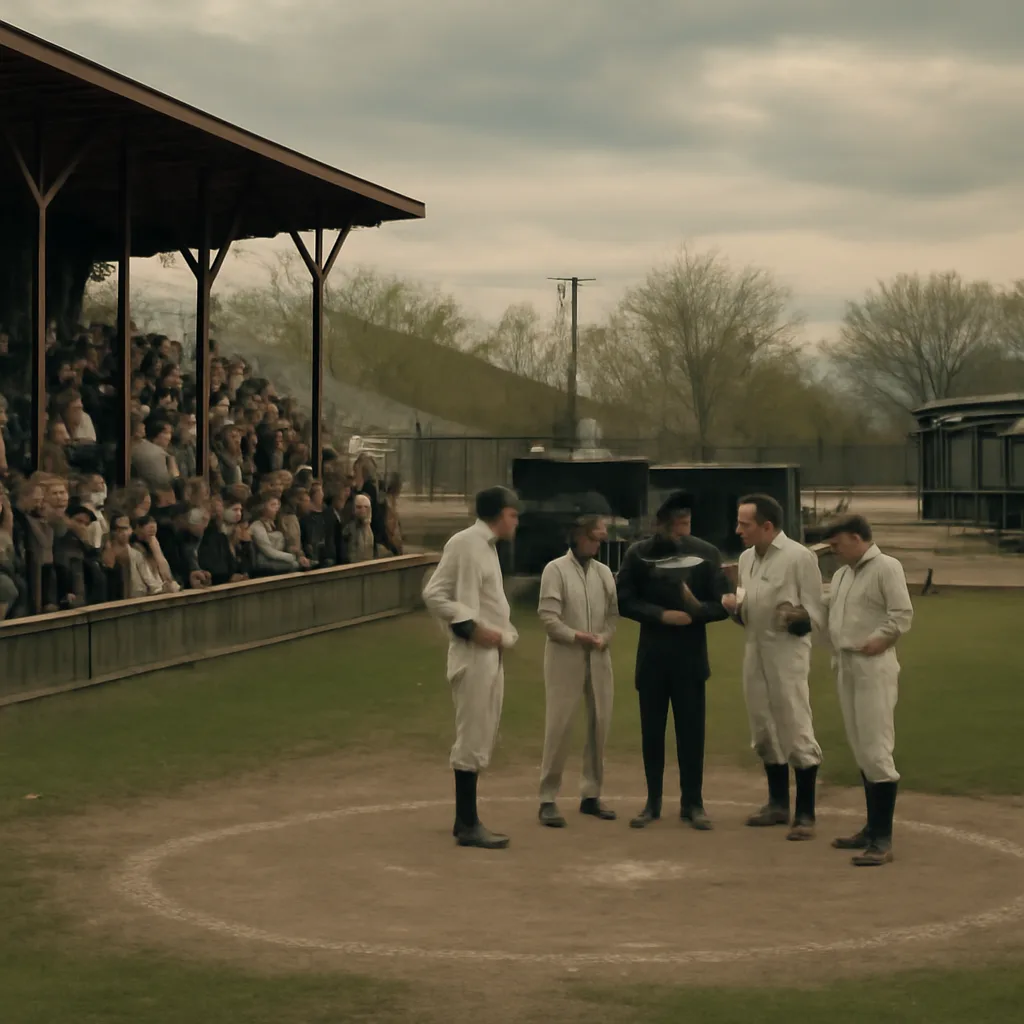
On May 9, 1920, a scheduled baseball game was disrupted when one team did not appear at the ballpark. Contemporary reports noted confusion among officials and spectators; the reasons remain disputed in surviving sources.
Context
Baseball in 1920 included a wide range of organized clubs, from the major leagues to numerous minor leagues and independent teams. Travel depended largely on railroads and local schedules; financial pressures, poor communication, missed connections and contractual disputes could each disrupt a contest. Games canceled or postponed for such reasons were uncommon but not unprecedented.
What happened
On the scheduled date, spectators and officials assembled at the host field expecting a regular contest. When the visiting team did not arrive by the time the contest was to begin, umpires and club officials delayed briefly to allow for late arrival. After a period of waiting and attempts at communication, the game was officially called off or rescheduled, depending on the report. Newspapers of the day described frustration among ticket-holders and uncertainty about refunds or replacement events.
Contested explanations
Contemporary sources offer several possible explanations, none universally confirmed. Commonly cited causes in similar incidents of the era include train delays or cancellations, last-minute player unavailability, financial inability to travel, or miscommunication about the date, time or location. In some cases teams that could not afford travel costs sent only part of a squad or cancelled outright. Surviving accounts for this May 9 incident do not provide a single definitive cause that is supported by documentary evidence across multiple independent sources; researchers must therefore treat explanations as plausible rather than established fact.
Consequences and significance
For fans and local organizers, the immediate consequence was disappointment and short-term administrative work to determine whether to refund tickets, stage an exhibition, or reschedule. For the teams involved, missed games could carry financial and competitive costs in an era when gate receipts were a primary revenue source. Historically, such episodes illustrate the logistical challenges teams faced before widespread automobile travel and modern communications, and they highlight the uneven professionalization of baseball in the early 20th century.
Reliability of the record
Accounts of single-game no-shows from this period are recorded in contemporary newspapers, box scores, and team correspondence when preserved. However, surviving documentation can be fragmentary or contradictory. Where multiple independent sources exist—newspaper reports from both towns involved, league records, or team papers—historians can more confidently reconstruct events. For this May 9 incident, extant sources note the cancellation or failure to appear but do not agree on a single, fully documented reason; that uncertainty is reflected here.
Conclusion
The May 9, 1920 episode—one team failing to appear at a scheduled game—serves as a compact example of how travel, finance and communication issues could affect early 20th-century baseball. While the event itself is straightforward, the precise cause remains uncertain in surviving records, and it functions as a reminder of the sport's sometimes-precarious operations outside the major leagues.