
06/29/1987 • 5 views
South Korea’s 1987 presidential vote marks first free election after authoritarian rule
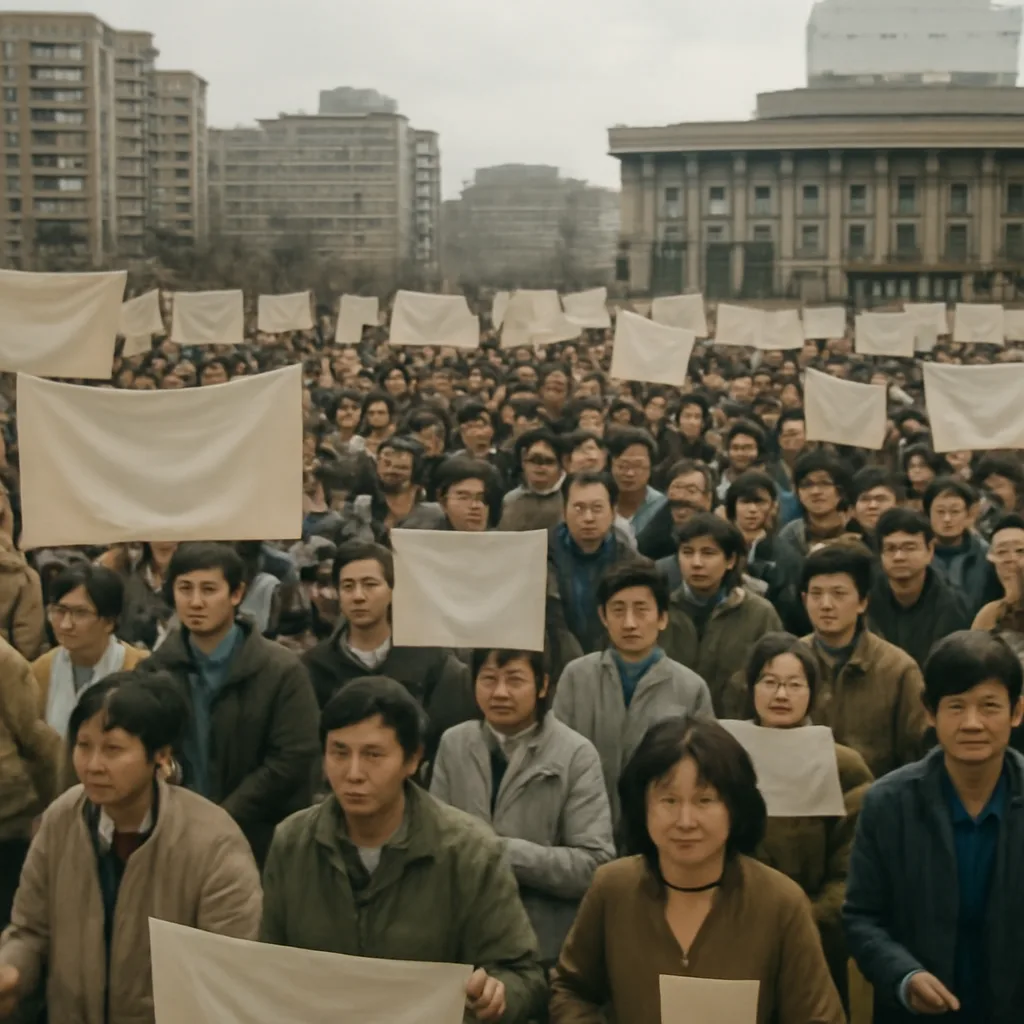
On June 29, 1987, South Korea held its first direct, competitive presidential election after mass pro-democracy protests and constitutional reforms earlier that year, ending a decade of tightly controlled military-backed succession politics.
From the early 1970s through the 1980s, South Korea was governed under successive authoritarian regimes that concentrated power in the executive and limited political freedoms. After President Park Chung-hee’s assassination in 1979, Chun Doo-hwan, a senior military officer, rose to power through a 1980 coup and led a regime characterized by political repression and restrictions on dissent.
Pro-democracy movement and June Struggle
By 1987, growing public frustration with authoritarian rule, economic inequality, and repression culminated in widespread demonstrations. The immediate catalyst was the death of student activist Park Jong-chul under police interrogation and the subsequent killing of another dissident, Lee Han-yeol, by a tear-gas canister during protests. Mass rallies, strikes, and sustained civic pressure forced a political opening known as the June Struggle (June Democratic Uprising). Facing nationwide unrest and potential instability, the ruling regime made concessions.
Constitutional reform and the 1987 election
In response to the protests, the government agreed to amend the constitution to restore direct presidential elections, limit presidential terms, and expand civil liberties. Those changes paved the way for competitive presidential campaigning and a scheduled nationwide vote on June 29, 1987. The election was the first in which multiple major candidates could compete in a genuinely open contest after years of authoritarian-managed successions.
The campaign and outcome
Prominent opposition leaders and conservative establishment figures contested the race. The campaign reflected deep divisions within Korean politics between forces seeking rapid democratization and those favoring continuity or gradual change. Voter turnout was high, reflecting the electorate’s engagement after months of activism.
Result and immediate aftermath
The election ended the era of uncontested selection of the head of state and marked a crucial transition toward democratic governance. While political divisions remained and subsequent administrations faced challenges consolidating democratic institutions, the 1987 election is widely seen as a watershed moment that opened South Korea’s path to stable, competitive democracy in the following decades.
Historical significance
The June 29, 1987 election is remembered as the culmination of a popular movement that forced authoritarian rulers to cede control over the presidential selection process. It initiated a constitutional order that limited executive power and enabled civic participation. Scholars and participants often trace South Korea’s rapid democratic consolidation and robust civil society in the 1990s back to the reforms and political realignments set in motion in 1987.
Caveats
Details about individual vote counts, candidate names, and narrow tactical developments are beyond this summary’s scope; those specifics are documented in archival election records and contemporary reporting. Historians debate the relative weight of elite concessions versus popular mobilization in producing the reforms, but most agree that mass protest was a decisive factor in prompting the government to permit direct elections.